
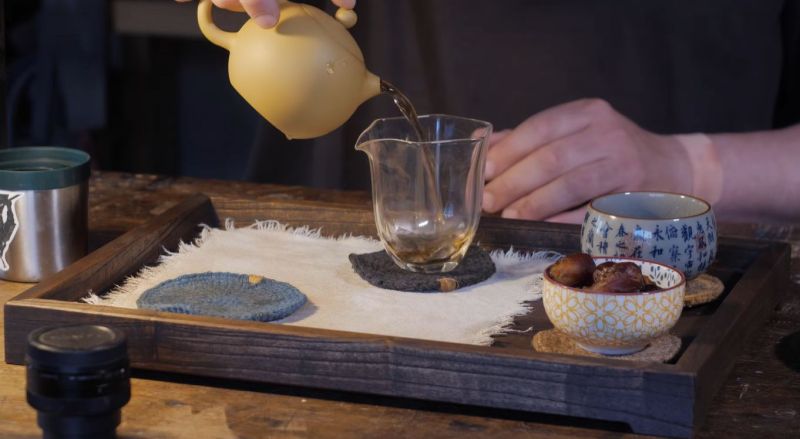
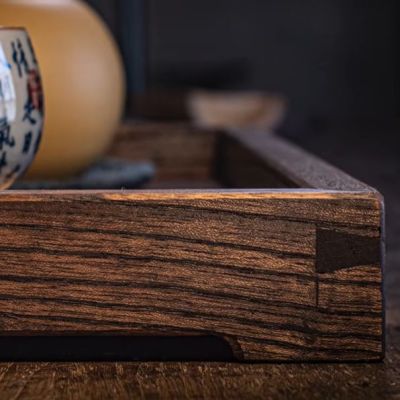
 Pallets are a wonderful way to package goods and move them around, but especially the wooden ones have a very finite lifespan. This means that many of them are discarded every day, even though there is still good wood on them. Even if it’s not the highest quality wood, you can still use it for some nice wooden items, like the tea tray that [GR Woodworking] recently put together.
The reclaimed wood is the typical fast-growing, soft type, with the suspicion of it being paulownia here. Of course, wooden pallets use a wide variety of wood varieties, so not all reclaimed wood is equally suitable for applications like this, and identifying the type can be a challenge in itself.
In the video it’s shown how the wood is planed to make it smooth and straight, before the joints are created and it is married to the poplar or aspen base plate. Of note is that absolutely no power tools or bulky things like router tables are used here, just basic hand tools that should make this kind of woodworking accessible to people even without that kitted-out woodworking shop.
After assembly it’s finished with Vararhana oil-based stain to give it a darker look and really bring out the grain. Naturally, since it’s a tea tray it has to be commissioned with a proper tea ceremony, which it passes with flying colors.












Inb4 “its not hacking”
but also in just in time to say “oh boy another youtube slop article”. What’s next; you gonna start posting those “restoration” asmr clickbait videos next?
Still not as bad the the table out of an old tire, twine and some plywood FA.
Editors: That is not a challenge.
“another youtube slop article”? God forbid that someone with a set of skills should make and publish quality videos about their projects. What an attitude.
How about you show us how well you can free hand cut boards using a Japanese wood saw?
How about you show us how well you can cut a dovetail joint?
How about you show us how well you can cut a groove in a board with a hand plane?
How well can you glue up a larger board from smaller ones?
Watching how this guy prepared the boards for gluing into a wider one taught me something about planing the edges.
There’s a lot of really sucky-ass youtube videos out there.
This one is pretty decent.
Just be careful to avoid the ones that have been treated with pesticide or stored at a dirty chemical plant.
Or sometimes the species of wood itself. In one of Roy Underhill’s books (The Woodwright Shop guy), he tells a story about using pallet wood to make a project with his daughter. It turns out that the type of wood used produced toxic dust (sort of like poison ivy, I took it). It caused respiratory problems for them. I don’t remember the title of the book, I read it in the ’90s, and the story stuck with me. I’ve been cautious of pallet wood since, but have had no issues.
There are not many tree species that are both directly toxic or harmful and grow big enough to make pallet wood, and are cheap enough to use as such.
A more likely scenario is that the pallet wood was infected with a toxic mold.
Could have been an allergy too. I am allergic to Maple, both the pollen and the saw dust. At least I’m ok with the syrup!
I’ve never attempted to make anything fine enough to need planing or devetail joints out of pallets, but I have had free fences and gates from them.
Pallets these days don’t seem to be as useful as they once were – poorer wood, fewer usable planks and harder to get apart without damage.
I’ve done the pallet-wood thing, and basically come to the conclusion that its a more expensive way to do things. Theyre full of dirt and grit, are hard on tools, and are time consuming to get into a ‘workable’ state. I still do use a lot of reclaimed wood, but mostly things like dunnage, hardwood flooring from reno projects, and anything else thats not got tons of nails and defects.
Another “table from FREE pallet”. I’m waiting to see someone making a pallet out of an old table.
I think I have seen that video.
That’s a sharp pencil!
Re woodworking without a shop full of tools: My usual resources in that direction are Paul Sellers (many videos online, and his book “Essential Woodworking Hand Tools” ) and Chris Schwartz (particularly his “Anarchist’s Tool Chest”, full book now available for free download IIRC). Both emphasize a core set of hand tools and techniques over power tools. (Paul admits that a bandsaw maybe useful enough to be an exception.) Both also have both free and paid-subscription blogs.
Chris also runs Lost Art Press, which is a good source for books about the history and design aspects of woodworking.
Caveats: Every time Paul mentions a new technique for using old tools, the price of that tool spikes on eBay. Both may make you question/regret some of your past investments in tools. And both will make you consider the differences between the joy of having a neat tool and the joy of actually using it. (I’m still working on trying to spend more time on the ladder and less money on the former.)
Latter. Can I blame autodefect?
Thanks!
“woodworking without a shop full of tools”
Rex Kruger has a series where he made projects with only basic tools and limited space. Often he revies cheaper tools and show they can still give you plenty options.
Full credit for its being not another “planer, powersaw and router” video.
He did nice work on the planing, was practiced enough to be able to saw a board lengthways (to reduce the thickness) leaving minimal marks, and his dovetail technique appeared good.
But I’d have been happier if he’d spotted the gaps in the corners at the trial assembly stage, and fixed them.