[Mr Beam] sent this in yesterday, but I didn’t have a chance to get it up til now. These guys are using a 2Kw laser to heat up their instant coffee and tea. Sure, it’s not a hack, but [Eliot] wanted it up, and who doesn’t want their own 2Kw Laser?
New Bling For Shmoocon!

[Eliot] and I are in D.C. at Shmoocon for the weekend. We’re armed with the latest Hack-A-Day sticker. Find us here and we’ll hook you up. Right now we’re checking out [H1kari]’s talk on using FPGA’s for high speed encryption key cracking. By using dedicated FPGA hardware, they’re smoking dual core Intel’s left and right for the calculations. He also talked about an interesting application called VileFault – it takes in a certain fruit vendors encrypted FS and spits out a decrypted image – once you’ve cracked the pass phrase. (Guess what makes finding that key way faster.) Now he’s getting into brute forcing bluetooth pins…
[Update so I don’t run off the page…]
The con’s first round of talks was pretty interesting. I definitely enjoyed the keynote by [Aviel Rubin]. He discussed his teams efforts to crack the Exxon Mobil Speedpass, which happens to be the same technology that’s used to RF disable several newer cars. They used some FPGA in a similar manner as [H1kari] – to speedily decrypt the encryption keys. The defeat of the Speedpass is pretty old news, but it was heartening to hear how Johns Hopkins University stood behind his team and was happy to saddle up their lawyers in dealing with the release of their paper.
The boys over at team hack-a-day – our unofficial Folding@home team (#44851) asked me to remind people that the PS3 folding client has been released – give those spare cpu cycles a home! The team has their own forums that hold quite a few gems. Not the least of with is a handy DXF of the Hack-a-day (and team Hack-A-Day) logo.
Nokia LCD In A Laptop

I was poking around and ran across this interesting mod in progress. It’s mostly a study in customizing an old laptop, but embedding a Nokia LCD in the palm rest is an interesting little hack. The LCD was taken from a Nokia 3310 and modded to connect to the parallel port. (Probably with a circuit like this one)
Make A Small Coilgun (aka Coilosapien Update)

Remember the coilosapien? I hopped over and found that [marcus] wrote a tutorial on his mini coil gun. He beefed up a disposable camera charging circuit with some extra capacitors to drive the coil, and used a small servo for his automatic reload mechanism. Everything you need to arm your robots.
Bonus: Buffalo Terastation Hacking
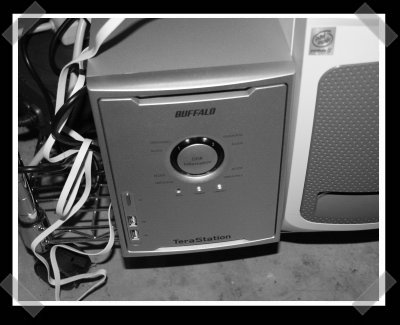
Just a bonus hack in honor of my new toy: a 1GB 1TB buffalo Terastation NAS. These puppies run embedded Linux, and have a decent user base. Mine came with 128MB of ram, four Samsung drives (each with their own IDE bus), RAID support, gigabit ethernet, USB 2.0 and a Motorola Sandpoint cpu. (Putting it on par with my old Powermac 8500) The wiki has instructions for all the the basic hacks. Installing some hacked firmware was pretty easy, and yielded telnet and root access. It has a serial port for UPS control, but there’s a nice clean hack for enabling serial console access instead.
XBox 360 Linux Bootloader Released

[XanTium] let me know that there’s finally an Xbox 360 linux boot disc. It takes advantage of the hypervisor vulnerability, and It takes some effort – compiling, executing over a serial cable, after loading some modified files, etc. It took long enough, but now you can roll your own if you want. (Personally, I just use an Ubuntu box with DVI and optical audio.)
DIY Colorimeter
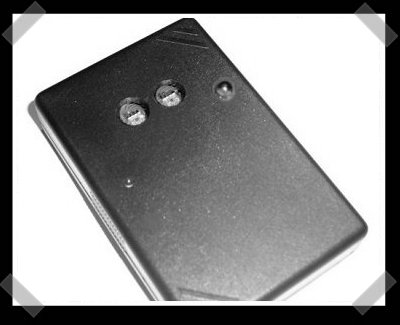
[brian] tipped me to this excellent colormeter project for calibrating your home theater/HD/etc It was designed specifically for the HCFR Colormeter software project. The project page is in english, but the probe writeup is in french. The fish well help you understand it while you resist the taunts avoid the flying cows. The device has at least one color sensor (a second is optional as well as an IR led or two for computer hardware controls) and connects to your computer via USB. The brain is a PIC 18F2550 (the fish calls it a PEAK) – no in circuit programming, you’ll need a programmer to build it.