T-Mobile SDA Unlocking, Overclocking And Skype

t-mobile sda

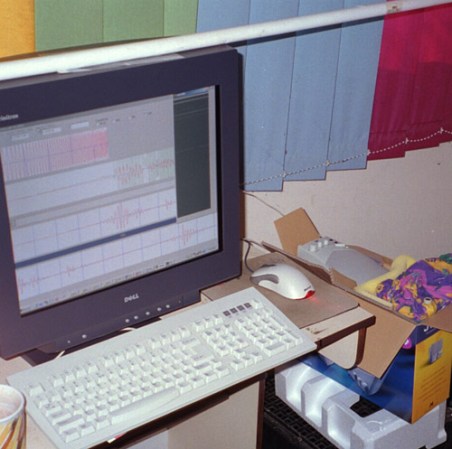
[Ken Keiter] has written up a guide to unlocking your T-Mobile SDA, overclocking it, and then adding Skype for use over WiFi. The unlock procedure is pretty simple and only needs some free software. The overclocking is just as simple. The OMAP processor needs to be overclocked to 240MHz otherwise Skype will have a lot of lag. The Skype install is straightforward except for one hitch: the phone doesn’t have a touch screen so you can’t click Sign-In. You can get around this using a piece of software called Pocket Controller which lets you click the button with your mouse. After that you can set Skype to auto sign-in so you’ll never need to use the mouse again. Ken’s final tip is how to change the T-Zones button so that it launches Skype.

Optically Isolated Parallel Port I2C Adapter

parport i2c

I2C is a simple communications bus similar to 1-wire, which we’ve talked about earlier. [hnch] has built a really simple I2C parallel port interface. It’s optically isolated so you don’t have to worry about a mistake frying your computer. I2C modules already come with the Linux kernel. It will even treat temperature sensors you attach exactly like the ones you have on your motherboard so you can monitor them using ordinary software like gkrellm. There are lots of other devices that use I2C as well. [hnch] has a nerdity gallery and will gladly write up any other project you’d like information on.

Continue reading “Optically Isolated Parallel Port I2C Adapter” →

DIY Powder Coating Gun

powdercoat gun

Master modder ZapWizard has completed work on version 3 of his home built powder coating gun. Powder coat is applied using air pressure to blow negatively charged thermoplastic particles onto a grounded metal surface. The metal part is then baked to make a hard finish. ZapWizard’s gun uses an air pistol with regulator at the bottom operating at 15 PSI. The powder is held in an acrylic kitchen canister with a reinforced seal. The final element is an ionizer element placed in front of the discharge nozzle. Version 2 had a trigger operated switch for the ionizer, but that was replaced with just a simple toggle.

Continue reading “DIY Powder Coating Gun” →

MacBook Pro Biometrics

biometrics

I’m amazed at how many people are willing to chop up their brand new toys. Take [edahc]’s brand new MacBook Pro. He decided to mount a Sony Puppy FIU-600 fingerprint scanner in the case. The device is powered directly from the DC board. I think the MacBook Pro may actually lend itself more to these types of modifications than most laptops because of the large flat metal surfaces on the case. More so than say your standard lumpy plastic Dell.

Continue reading “MacBook Pro Biometrics” →

Homebrew Sonar

echolocation

Eddie has an interesting writeup about his experience playing around with echo location. He uses a cheap computer speaker and microphone for all of the measurements. The program he wrote generates a sweeping chirp from 5-20kHz in the space of 4.5 milliseconds. Eddie knows what a perfect echo would look like so he can compare the measured values to the theoretical to determine the distance. For his final test he moved the box while it took 150 measurements. This data generated a parabola showing where the object was in the room. Have a look at his site for more details and his code if you are interested.

Continue reading “Homebrew Sonar” →

Using Radiosondes As Cheap GPS Trackers

radiosonde

A Radiosonde is an inexpensive sensor package that’s intended to be used with a weather balloon for atmospheric measurements. The device transmits data in the 403 MHz band after being launched and they usually aren’t recovered after use. You can pick them up for very little money on eBay so [Nick] thought they might work well as a low cost GPS tracker. Unfortunately the Radiosonde doesn’t transmit standard NMEA GPS data, but GPS doppler measurements. It’s hard to determine what those are actually useful for. Nick did find one other paper documenting an unsuccessful attempt which he has posted to his site. So now Nick is looking for some help either making the data more useful or coming up with a functional device that’s just as inexpensive. Anyone got any leads?

Continue reading “Using Radiosondes As Cheap GPS Trackers” →