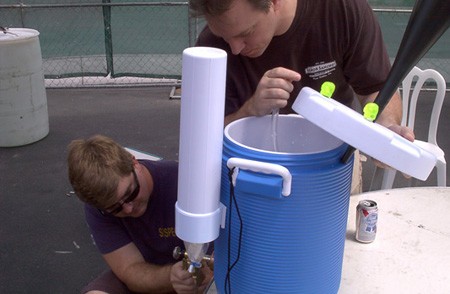
Let’s face it: no one likes warm beer. In the arid August air of Las Vegas, though, it’s difficult to get anything else. To combat this problem, Deviant has hosted a competition the last three years at Defcon called the Beverage Cooling Contraption Contest, or BCCC. We’re not talking about something as simple as a Coleman cooler or even a peltier cooler: the devices entered in this contest have to be able to take a beer from hot to cool and your glass within minutes.
cons1405 Articles
DefCon CTF 2008 Qualifier
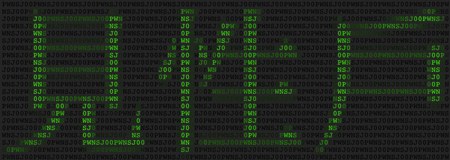
Kenshoto is back again to run the Capture the Flag competition at DefCon. CTF is a multiteam competition featuring creative attack and defense of servers and lasts the entirety of DefCon. Unreleased exploits are often seen during the competition. As in previous years, Kenshoto will be narrowing the field with a qualification round. Quals will start the evening of May 30th and run for 48 hours. NOPS-R-US has a solution guide for the previous two years so you can get some idea of what you’re getting yourself into. They’ve even got a couple write ups for last year’s final. The competition should prove entertaining even if you don’t make the final cut.
[via Midnight Research Lab]
Maker Faire 2008: Schwag
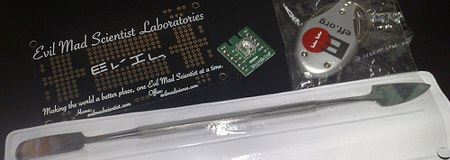
As our final Maker Faire post, we thought we’d talk about some of the curious items that were handed us during the event.
While checking out Evil Mad Scientist Laboratories‘ latest generation CandyFab were given their AVR business card breakout board.
[Garrett] gave us a handful of ShiftBrites to play with in a future project.
We donated to the EFF, as we’re wont to do, and received a super bright blue flashlight for spotting the yellow tracking dots on color laser printouts. If you’re not familiar with this topic, you should check out bunnie’s blue light scanner.
Our final stop was at ifixit to pick up a free set of spatulas (spudgers?) for popping open iPods. All around a decent haul.
Maker Faire 2008: Puzzlemation
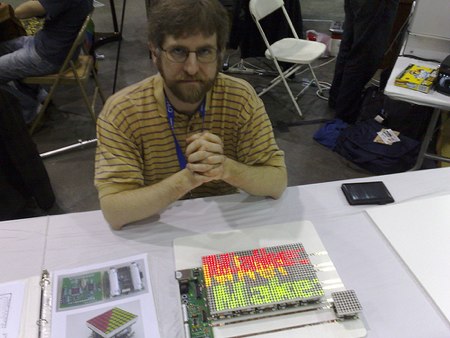
[John Peterson] showed us his Puzzlemation, animated tile puzzle at Maker Faire. It was originally designed for the Microchip 16-bit Embedded Control Design Contest. The puzzle is made from multiple modules each with an 8×8 LED grid. The tiles are battery powered and each one has PIC24FJ64GA004 microcontroller. They sit on a tray with flat copper strips as a serial bus. The tray controller broadcasts the animation to the tiles. Each tile waits for its unique identifier and saves that portion of the animation. The tiles don’t actually know what order they’re in so once the animation is in motion you can figure out their proper order; rearranging them so the animation is correct. We’ve got a video of it in action after the break.
Maker Faire 2008: RoboGames And Warships
Today’s episode of BoingBoing TV comes straight from Maker Faire. The first segement is about RoboGames arena combat. The second segment covers a favorite exhibit of mine. Western Warship Combat Club brought their 1/144th scale battleships to fight it out in a large pool. The RC boats fire ammunition up to 1/4-inch ball bearings and the even feature bilge pumps to keep them afloat. Scoring is based on where on the hull the strike happens. Here’s a direct link to the mp4.
Maker Faire 2008: ShiftBright RGB LED Module
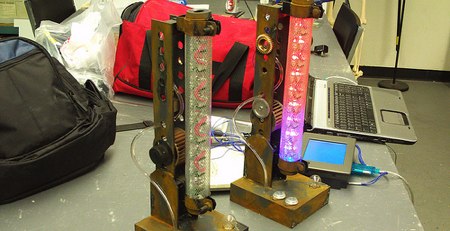
We made a point to stop by [garrett]’s booth at Maker Faire to to see what he had been working on. You may remember him from his random caps locker shenanigans. He’s just recently released the ShiftBright RGB LED module which makes it easy to implement a string of individually addressable LEDs. The module is based on the Allegro A6281 3-Channel Constant Current LED Driver. The driver chip is capable of displaying a billion colors using an RGB LED. The 3x3mm package is mounted to the backside of the board while a bright common-anode RGB is mounted to the front. The modules are designed to be daisy chained together and are individually addressed using a serial interface. You can find Arduino example code on the site and more info on how the item was developed. Read on for close up images.
Continue reading “Maker Faire 2008: ShiftBright RGB LED Module”
ToorCon Seattle 2008: Lightning Talks
The second ToorCon Seattle got off to a quick start last Friday with a round of Lightning Talks at the Public Nerd Area. Each talk was limited to 5 minutes and covered a broad range of topics. Some talks were just supplying a chunk of information while others were a call to action for personal projects. Here are a few of the talks that we found interesting.