After getting called out in the field to troubleshoot a large PV solar installation, [Derek] found himself suddenly in the midst of an arc flash, causing burns all over his face and arms. In a recent video he goes over the scenario that led up to this unfortunate event, as the holes in the Swiss cheese slowly lined themselves up, culminating in a high-current 480 VDC discharge nearly giving [Derek] a fatal embrace.
Despite being a professionally trained and certified professional, being called out to diagnose a weird issue on a slightly unusual solar farm’s electrical installation already worked against him. After having spent some time doing said troubleshooting, he finally tracked down the auxiliary transformer that normally powers the low-voltage gear, along with the spicy parts that should absolutely be unpowered after flipping the breaker into the ‘off’ position.
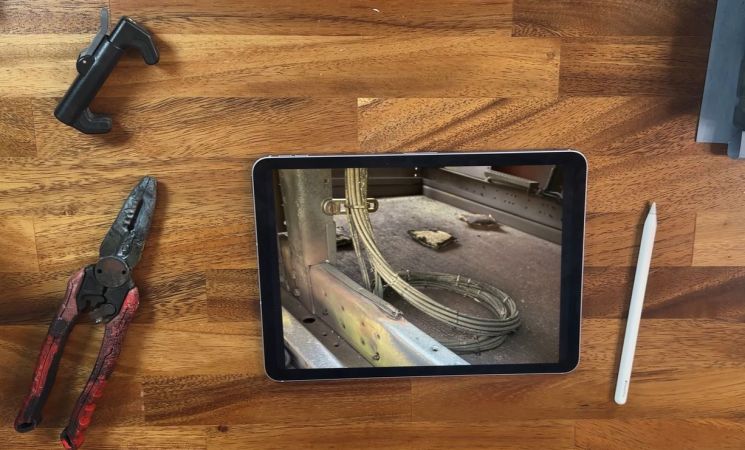
Testing for no power confirmed that the power had indeed been cut, which was when the wiring that normally connects the auxiliary transformer was spotted still lying just out of reach in the back of the cabinet. Clearly this was the cause behind one of the issues that the owner had been having.
This was when [Derek] decided to go to the light reach for this spool of wiring with a pair of pliers, into the – as it turned out – still live high-voltage side. One massive arc flash and hospital recovery later, [Derek] learned that the layout of the lines in the cabinet were different from usual, with the position of the roll of loose wiring being a potential hint that something was off.
The problem here was one of habituation, and the assumption that the system that he was working on was de-energized. The reason that he’s still with us being that the pliers acted as the current path instead of his body, and the arc flash cooked only the exposed parts of his skin, being mostly parts of his face and his hands.
Terrifyingly, [Derek] was working alone, and was forced to dial 911 somehow, with fingers that no longer registered on the iPhone’s touch screen on account of the skin having been turned into charcoal. While he doesn’t remember exactly how he managed to reach 911, it’s likely that the voice assistant finally connected him. The property owner also arrived and did what he could do to help before the ambulance arrived.
Overall, the lesson here is that complacency and assumptions are the killers here. Even if the layout of a high-voltage circuit is different in a way that makes no sense and there ought to be industry standards, when it’s you reaching into that cabinet such trivial details matter less than having ensured that there’s absolutely no power on anything, even if you know that there shouldn’t be. Reality only has to disagree with you once there.
[Derek] was lucky in the sense that the cabinet mostly shielded him from the arc flash’s intense heat, but over 19% of his skin was still burned, requiring skin grafts and an ongoing, very painful recovery. By sharing his story he hopes that he can prevent at least one other person reaching into that cabinet with some pliers for that ‘let me just quickly…’ moment.