
The Kalman Filter Exposed

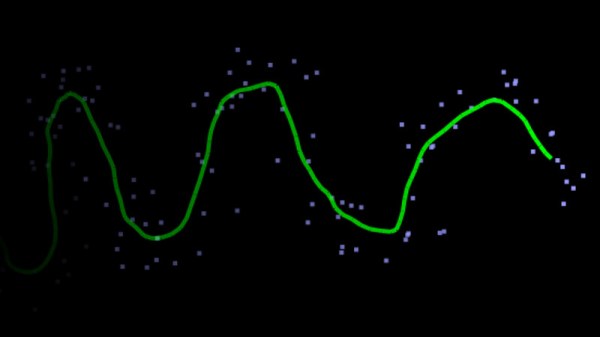
If we are hiring someone such as a carpenter or an auto mechanic, we always look for two things: what kind of tools they have and what they do when things go wrong. For many types of embedded systems, one important tool that serious developers use is the Kalman filter. It is also something you use when things go “wrong.” [Carcano] recently posted a tutorial on Kalman filter equations that tries to demystify the topic. His example — a case of things going wrong — is when you have a robot that knows how far it is supposed to move and also has GPS coordinates of its positions. Since the positions probably don’t agree, you can consider that a problem with the system.

The obvious answer is to average the two positions. That’s fine if the error is small. But a Kalman filter is much more robust in more situations. [Carcano] does a good job of taking you through the math, but we will warn you it is plenty of math. If you don’t know what a Gaussian distribution is or the word covariance makes you think of sailboats, you are going to have to do some reading to get through the post.


Continue reading “The Kalman Filter Exposed”

Over Engineering Windshield Wipers To Sync To Music

In the late 90s, Volkswagen aired a series of awesome television advertisements that won a few awards relevant to those in advertising circles. One of these ads was titled Synchronicity and showed a VW Jetta’s windshield wipers (among other things) syncing to music as the car drove down a rainy alley. [ch00f] thought beat tracking wipers would make for a great project, and we love the sheer amount of engineering that went into this build.

The build began with [ch00f] taking apart his wiper motor to get some specifics for his build. Ideally, a rotary encoder would be very useful for this project, but designing a durable encoder would be a pain anyway. [ch00f] had to settle with the ‘parking pins’ on the wiper gear motor that allow the wipers to be driven in intermittent mode.

[ch00f] spent a great deal of time writing code that would guarantee a constant wiper speed, but that didn’t solve the problem of phase, or having the wipers begin or end their cycle on the beat. This problem was somewhat solved (as you can see in the video after the break) by using a feed forward system – basically, the software would predict the change in phase needed and correct it by changing the speed.

The build still isn’t perfect, although that’s mainly due to the placement of wiper parking switch on the wiper motor. [ch00f] plans on spending a little more time correcting the wiper speed/phase control with software, but what he’s got now is still very impressive.

Continue reading “Over Engineering Windshield Wipers To Sync To Music”








