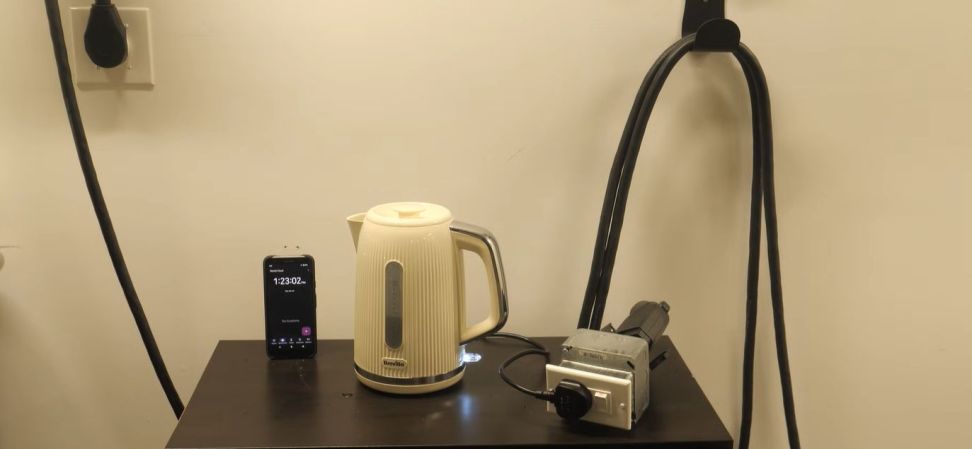
The topic of boiling water is apparently a rather divisive topic, with plenty of strong opinions to go around on what is safe and the most efficient way to go about it. Thus in a new video [Cahn] sought to address the many comments that came in after his previous testing of electric kettles on either 12 VDC or 240 VAC.
What’s interesting about this whole topic is that at its core the overall efficiency of boiling water is simply a matter of calculating the energy input minus energy losses, with the remaining energy going into the water.
As we can see in the video, using a higher battery voltage doesn’t really change the efficiency of a 12 VDC kettle, but the higher current draw does manage to melt a fuse that can’t take the heat — requiring a 20 amp fuse instead of the 15 A one.
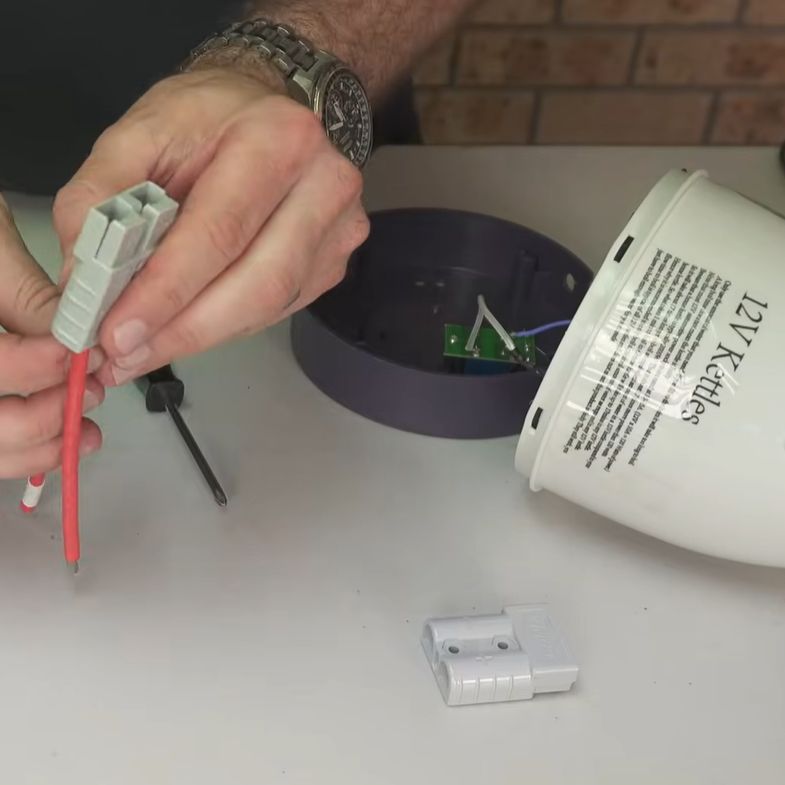
One change that does make a difference is how it’s connected. Replacing the thin gauge wiring and the attached cigarette lighter plug on the 12 VDC kettle with beefier cable and an Anderson plug made things run cooler, resulting in an efficiency bump of about 10%. This cut the time required to get the water boiling by around 6 minutes.
Added to this test were an induction hob and an iso-butane-powered Jetboil, both of which scored rather unimpressively. For the induction option it’s obvious that a lot of energy is wasted by having the pan radiate it away from the water, while burning iso-butane loses energy through the exhaust gases. Ultimately what you pick to boil water with should thus be mostly determined by convenience rather than sheer physics.
Continue reading “Addressing The Divisive Topic That Is Boiling Water”