Bouncing Ball Analog Computer

bounce

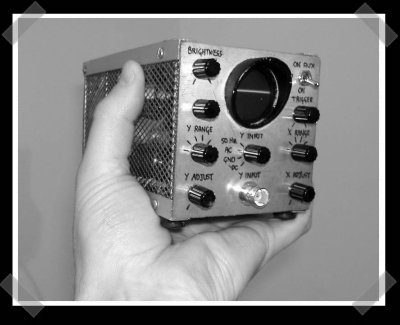
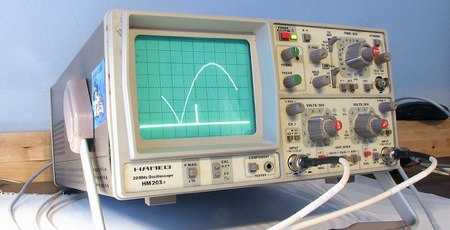
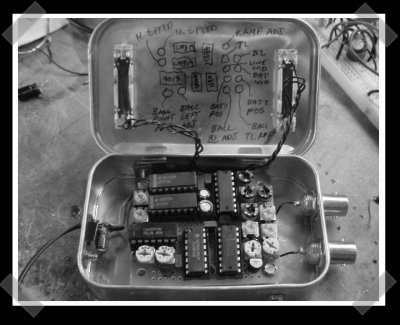
[Eric Archer] constructed an analog computer to model the physics of a bouncing ball. The core is a TL074 opamp that does all the integral math. He had no trouble finding descriptions of analog computers, but how to set the initial conditions was rarely covered. The controls include potentiometers to set the initial velocity, force of gravity, and coefficient of restitution (how much energy is lost in the bounce). The output is displayed on an oscilloscope. He mentions that this output could be used in electronic music, citing Aphex Twin’s Bucephalus Bouncing Ball. Watch the video below for a demo of all the features.
Continue reading “Bouncing Ball Analog Computer”

Tennis For Two Resurrected


The first video game every created is attributed to physicist William Higinbotham. Tennis for Two is played on an oscilloscope using two controllers. Each one has a knob that controls the trajectory and a button to hit the ball. The fine folks at Evil Mad Scientist Laboratories have recreated the game so you can play it on any oscilloscope. An ATmega168 is used to control everything. It takes user input from the paddles and outputs an the X and Y analog signals for the scope. An R-2R style DAC is used for the output stage which gives a 256×256 resolution. Everything is built on top of one of their business card sized project boards-which really shows how useful such a simple board can be. The source code is free and the write up includes plenty of detail. We’d love to see what modifications people come up with since the base game doesn’t even have scoring. There’s a video of EMSL’s system embedded below.

Continue reading “Tennis For Two Resurrected”