A Tale Of Cheap Hard Drives And Expensive Lessons

When it comes to electronic gadgets, I’m a sucker for a good deal. If it’s got a circuit board on the inside and a low enough price tag on the outside, you can be pretty sure I’ll be taking it home with me. So a few years ago, when I saw USB external hard drives on the shelf of a national discount chain for just $10, I couldn’t resist picking one up. What I didn’t realize at the time however, was that I’d be getting more in the bargain than just some extra storage space.

It’s a story that I actually hadn’t thought of for some time — it only came to mind recently after reading about how the rising cost of computer components has pushed more users to the secondhand market than ever before. That makes the lessons from this experience, for both the buyer and the seller, particularly relevant.

What’s in the Box?

It wasn’t just the low price that attracted me to these hard drives, it was also the stated capacity. They were listed as 80 GB, which is an unusually low figure to see on a box in 2026. Obviously nobody is making 80 GB drives these days, so given the price, my first thought was that it would contain a jerry-rigged USB flash drive. But if that was the case, you would expect the capacity to be some power of two.
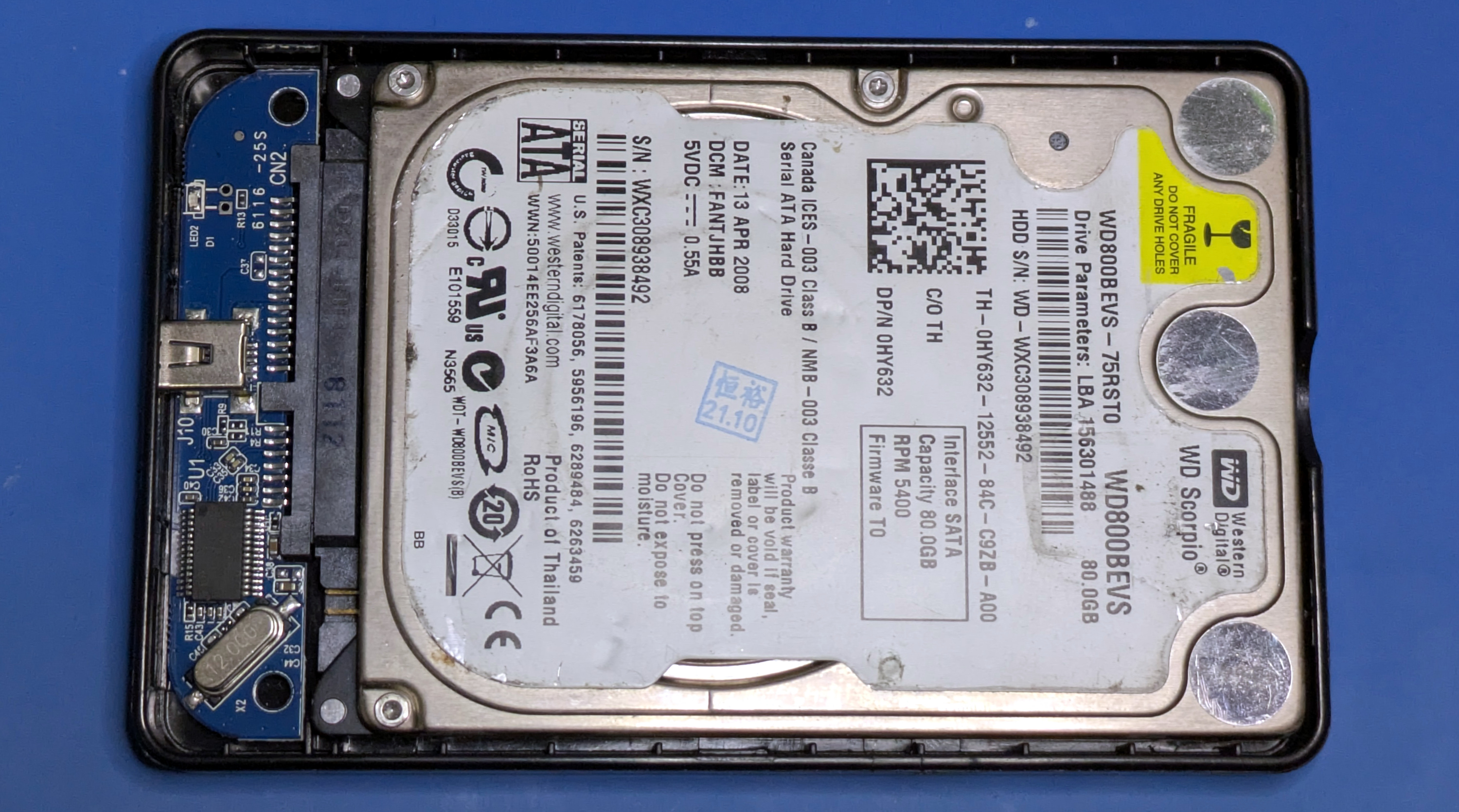
Upon opening up the case, what I found inside was somehow both surprising and incredibly obvious. The last thing I expected to see was an actual spinning hard drive, but only because I lacked the imagination of whoever put this product together. I was thinking in terms of newly manufactured, modern, hardware. Instead, this drive was nearly 20 years old, and must have been available for pennies on the dollar since they were presumably just collecting dust in a warehouse somewhere.

Or at least, that’s what I assumed. After all, surely nobody would have the audacity to take a take a bunch of ancient used hard drives and repackage them as new products…right?

Continue reading “A Tale Of Cheap Hard Drives And Expensive Lessons”

Recovering Photos With PhotoRec

photorec

A coworker approached us today with a corrupted SD card. It was out of her digital camera, and when plugged in, it wasn’t recognized. This looked like the perfect opportunity to try out [Christophe Grenier]’s PhotoRec. PhotoRec is designed to recover lost files from many different types of storage media. We used it from the command line on OSX, but it works on many different platforms.

It’s a fairly simple program to use. We plugged in the card and launched PhotoRec. We were prompted to select which volume we wanted to recover. We selected “Intel” as the partition table. PhotoRec didn’t find any partitions, so we opted to search the “Whole disk”. We kept the default filetypes. It then asked for filesystem type where we chose “Other” because flash is formatted FAT by default. We then chose a directory for the recovered files and started the process. PhotoRec scans the entire disk looking for known file headers. It uses these to find the lost image data. The 1GB card took approximately 15 minutes to scan and recovered all photos. This is really a great piece of free software, but hopefully you’ll never have to use it.

Open Source Data Recovery Tools


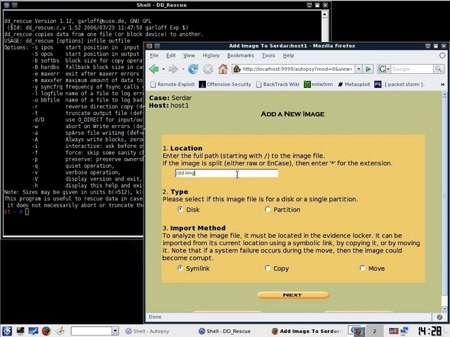
InformationWeek has great article on open source data recovery tools. What type of tools you use will depend on the severity of the situation. You can use live Linux distros designed for recovery like SystemRescueCD or Partedmagic (the latter being more user friendly). Security tools distrubutions like BackTrack can also be helpful; Helix in particular was designed for forensics work. dd is a standard *nix tool for imaging drives, but something like TestDisk can help you repair partition tables for whole disk recovery. Most deletion operations don’t overwrite the data which means you can use file carving to capture the lost files. PhotoRec is able to find files in a number of common formats. Finally, if you’ve got some serious forensic work ahead of you there’s The Sleuth Kit and many other command line tools.

As an addendum, OStatic put together a list of 5 freeware tools for protecting your system.