
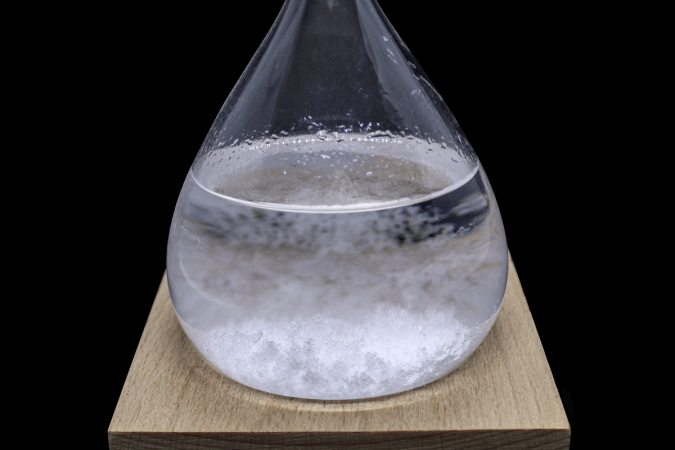
FitzRoy’s Glass: Victorian Weather Marvel Or Glorified Thermometer?

Everyone talks about the weather. This is doubly true for sailors, where bad weather could mean a very bad day. So it isn’t surprising that navies around the world have had a keen interest in weather forecasting. But how did you predict the weather before modern instruments, radar, and satellite images? Vice Admiral Robert FitzRoy had great faith in “storm glasses,” a glass chamber containing some chemicals that he didn’t invent, but did document and promote heavily during the 1860s.

Did it work? Apparently not, but the device is still interesting in its own right. FitzRoy was a pioneer of meteorology, replacing folklore with actual observations and attempts at scientific rigor. While he did arm observation stations with conventional things like thermometers and barometers, he was also a proponent of the weather glass. Continue reading “FitzRoy’s Glass: Victorian Weather Marvel Or Glorified Thermometer?”

Brewing Up Gunpowder With Household Products

When the zombiepocalypse comes you’re not going to want to run out to the store for more ammo. But you can always reload great grandpa’s musket with some homemade gunpowder. All kidding aside, the invention and proliferation of gunpowder had a profound effect on the world. Here you can see just how easy it is to make with chemicals that are common in our modern world.

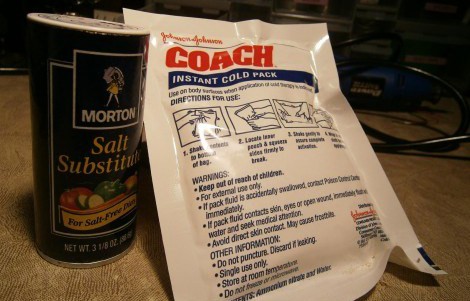
The two compounds that go into this experiment are ammonium nitrate and potassium chloride. Where can you get your hands on these materials? Instant cold packs use ammonium nitrate and water to start an endothermic reaction. The potassium chloride can be found in the grocery store as a table salt alternative.

The chemicals need to be measured by weight. [William Finucane] didn’t have a digital scale on hand so he made a balance using a wooden ruler, two plastic component drawers, and a Bic lighter as a fulcrum. With approximately equal parts of the two materials he sets about dissolving in water, filtering, and heating of the concoction to produce saltpeter. Combine this with powdered sugar and you’ve got gun powder. Don’t believe that it works? You can see the fiery goodness in the clip after the break.

Flammable and explosive materials are dangerous to work with, so you probably shouldn’t do this yourself. But then again, it can’t be as dangerous as working with thermite. Continue reading “Brewing Up Gunpowder With Household Products”








