
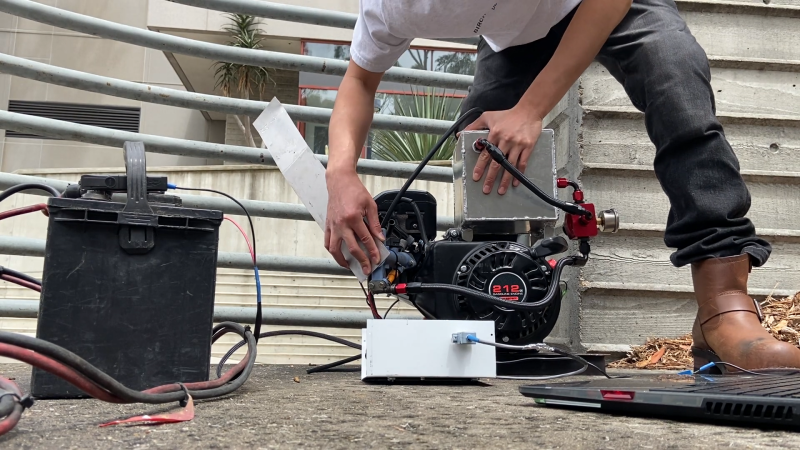
Small Engine Gets DIY EFI Upgrade

Small internal combustion engines usually keep things simple, relying on carburetors to handle metering the correct amount of fuel and air. Recently, [Carlos Takeshita] decided his small engine could use an upgrade in the form of electronic fuel injection (EFI).

The build began with a Predator 212, a popular gasoline engine from Harbor Freight. [Carlos] set about kitting it out with a missing tooth trigger wheel to measure the crankshaft position with a hall effect sensor. The engine also scored a custom-built aluminium fuel cell, complete with a high-pressure fuel pump and regulator suitable for driving the solitary fuel injector installed in the custom intake manifold. A Teensy 4.0 is charged with monitoring a manifold air pressure (MAP) sensor and the crank position, and choosing when and how long to fire the injector to dose the engine with the correct amount of fuel. Files are on GitHub for those eager to dive deeper.

It can be quite a job to convert an engine to run with electronic fuel injection, but you’re certain to learn a lot during the install and tuning process. We’ve featured similar builds many times over the years.
Continue reading “Small Engine Gets DIY EFI Upgrade”

Small Engine Failure Leads To Impromptu Teardown

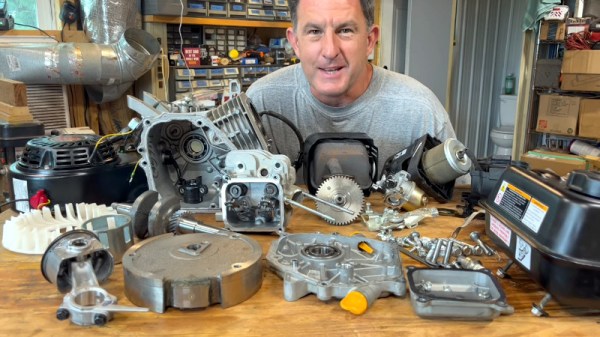
When the 6.5 HP (212 cc) Harbor Freight Predator engine in his kid’s go-kart gave up the ghost after some particularly hard driving, [HowToLou] figured it would be a good time to poke around inside the low-cost powerplant for our viewing pleasure. As a bonus, he even got it up and running again.

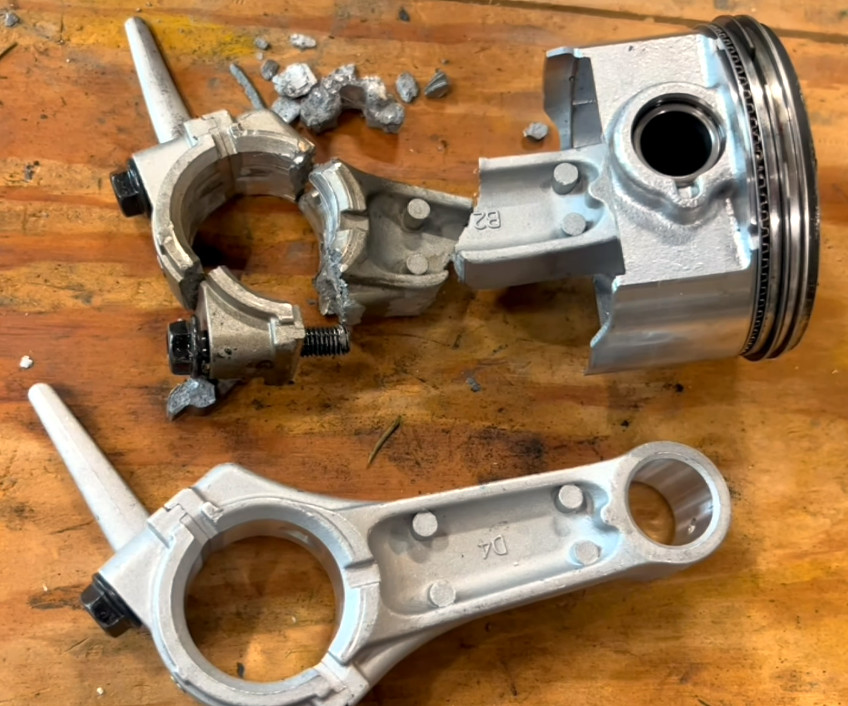
The shattered rod, and its replacement.

For an engine that has a retail price of just $160 USD, we’ve got to admit, the inside of the Predator doesn’t look too shabby. Admittedly, [HowToLou] determined that the cause of the failure was a blown connecting rod, but he also mentions that somebody had previously removed the engine’s governor, allowing it to rev up far beyond the nominal maximum of 3,600 RPM. No word on who snuck in there and yanked the governor out, but we’re betting it wasn’t the 7-year old driver…

Replacing the connecting rod meant taking most of the engine apart, but for our education, [HowToLou]  decided to take it a bit further and remove everything from the engine. After stripping it down to the block, he re-installs each piece while explaining its function. If you’ve ever wanted to see what makes one of these little engines tick, or perhaps you’ve got a Predator 212 cc in need of a repair or rebuild, the presentation is a fantastic resource.

Incidentally, this isn’t the first time we’ve seen the go-kart in question — back in June, we covered the unique electric reverse that [HowToLou] came up with for it.









