ARM Prototyping On-the-cheap With STM32 Discovery

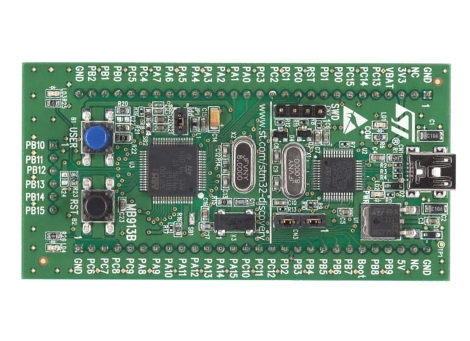
STMicroelectronics has another inexpensive development board out; the STM32 Discovery is an ARM Cortex-M3 prototyping platform. Coming in under $10 puts it right along the lines of their 8-bit offering, but this one is 32-bits with 5 KB of RAM and 128 KB of programming memory. It runs a bootloader and has on-board USB for easy programming. They’ve even got a trio of crippled IDE’s to get you started.

Unfortunately this is following a growing trend with the exclusion of Linux support. [Gordon] wrote in to let us know that there is hope in a couple of forms (but not using the USB functionality). The first is a serial programmer using the RS232 that [Paul] came up with (there’s a lot more on his blog so spend some time there). But you can also use the serial debug protocol to program the board.

Either way you’ll still need a method of compiling the code. We’ve had great success rolling our own GNU ARM cross compiler using this guide. Or you can grab a pre-built package by downloading Sourcery G++ lite.

Thinner Client Using STM32 And NTSC Monitor

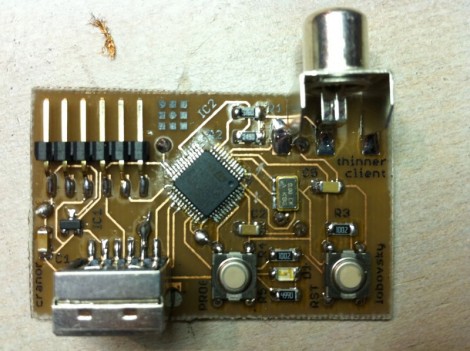
[David Cranor], along with [Max Lobovsky’s] help, managed to build a thin client that uses an NTSC television as a monitor for only $6. This is his first foray into the world of ARM architecture and he has vowed to never use an AVR again. The powerful little chip uses timers to manage sync and DMA to transfer the full 480×240 frame buffer to the screen. Overclocked at 80 MHz there’s a lot of potential in this little board and he plans to take on the challenge of a full-color display for his next trick.

Maple Beats Up Arduino, Takes Its Shields

maple

The Atmega168 at the heart of every Arduino is an eminently capable chip; its ilk have been seen working as a basic web server, playing back digital audio, even generating TV signals. But as projects continue to grow in sophistication, reality rears its ugly head: Arduino can handle any one of these tasks very well, but it often requires squeezing every last instruction cycle or bit of memory in the device. Even the ’368 chip and the Arduino Mega are stopgap measures. Sooner or later, you have to graduate to long trousers—move up to a more capable microcontroller platform—an uncomfortable change usually involving a hefty investment in new hardware and an intimidating learning curve. Leaf Labs’ Maple aims to change all that…
Continue reading “Maple Beats Up Arduino, Takes Its Shields”