Video: Learning Eagle CAD part I – Schematic & Custom Parts

posted Aug 29th 2011 7:00am by
filed under: news

This week we are starting in on a series of videos that are pretty different from the past few. Most hackers go through a phase where they etch their own circuit boards. This lasts for a few projects until they need to use a surface mount part, need many circuit boards to be made, or just don’t have the time needed to do everything themselves. In this video [Jack] starts a multi-part series about how to use Eagle CAD, which is a program that allows you to design your own circuit boards that you can then send out to be manufactured. Eagle CAD has a free version of their software that fits just perfectly with a beginner’s budget. There are other free layout programs out there but this one is arguably the best. Eagle CAD has a steeper learning curve than others but has some pretty powerful features to justify the extra effort that you have to expend to get going with it.

This video starts showing the schematic and library portions of the program. We have also added several supplementary videos on our YouTube channel that explain some of the tools in the tool palette in greater detail.

Announcing the next theme: Engine Hacks

posted Aug 29th 2011 6:00am by
filed under: Engine Hacks

Engine Hacks Theme banner

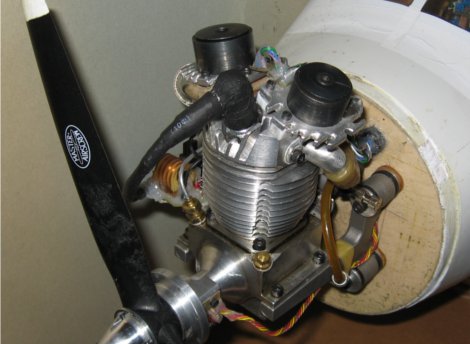
We had some interesting High Voltage posts over the past couple of weeks. Today we are announcing the next theme: Engine Hacks. Each day for the next two weeks we will be doing a new post about some sort of interesting engine project. We’ll be showing projects where engines are built from scratch, engines are modified to work in a new way, or where an engine is used in an manner that it wasn’t originally intended. If you or someone you know has an interesting project that you think might fit well within this category, please let us know through our tip line.

Pictured above is an EVIC (Electronic Valve Internal Combustion) engine. This type of engine doesn’t have a cam shaft to actuate the valves. Solenoids are used instead and are paired with a small processor and some sensors to determine when and how long to open the valves. This type of engine allows you to do things like vary the amount of fuel coming into the cylinder on a continually variable basis. If you paired this with electronic ignition, you could even make the engine run in reverse!


Run unsigned code on any xbox

posted Aug 29th 2011 4:02am by
filed under: xbox hacks

A ton of people sent in the latest development on the Xbox homebrew front. A console hacker that goes by the name of [GliGli] released a new exploit that boots any Xbox into a Linux loader.

The hack requires some hardware – in this case an Xilinx CLPD. The hack works by sending a tiny reset pulse (no word on what ‘tiny’ means) that glitches the hardware and gets around the hash checks during boot. If that’s not technical enough for you, check out the readme on the project’s github.

This isn’t a silver bullet to cracking Xboxen wide open. The glitch only has about a 25% chance of success for each boot. The glitch also take a few minutes to boot into unsigned code. This being said, the hack works on all 360s, including the slim models that can’t be opened up with the JTAG method.

Check out the demo of one of the beta testers demonstrating the exploit after the break. Again, thanks to everyone for sending this one in.

Read the rest of this entry »

BASIC programming on an Arduino

posted Aug 28th 2011 3:05pm by
filed under: arduino hacks

[Mike] sent in a project he’s been working on – a port of a BASIC interpreter that fits on an Arduino. The code is meant to be a faithful port of Tiny BASIC for the 68000, and true to Tiny BASIC form, it fits in the very limited RAM of the Arduino.

True to Tiny BASIC’s assembler roots, [Mike]‘s C port makes extensive use of the “infinitely-abusable” goto statement. Kernighan and Ritchie said themselves, “code involving a goto can alway be written without one” but [Mike] found that using goto left a lot more room available for BASIC code. The BASIC interpreter eats up around 600 bytes in the Arduino RAM, leaving about 1.4 kB for BASIC code. Not much, but more than the lowest-end BASIC Stamp.

[Mike] says he started this project to see how ‘old bearded ones’ conjured up so many impressive programs with a few kB of RAM. Tiny BASIC was originally conceived for the Altair 8800 that shipped with 256 bytes of RAM stock, so it seemed like a perfect fit. Right now, all we know is we’ll be spending the weekend digging through our copies of Dr. Dobb’s Journal.

Build a clock using dials instead of hands

posted Aug 28th 2011 12:00pm by
filed under: clock hacks

[Doug Paradis] found a simple way to use dials instead of hands on a clock. Actually, that’s pretty much the entire hack… use dials instead of hands. He grabbed a battery-operated clock movement from the hobby store, then printed out one dial for hours, another for minutes, robert’s your mother’s brother, and you’ve got a new clock. The case seen above is laser cut, with a window and index line that helps you read the time precisely.

But instead of building a case, we’d like to try this with some retro equipment. The first thing that pops to mind is to replace the disks on a broken strobotuner, like the big-dialed model that Conn used to make. If you’re not down with the bulky music hardware-turned-clock perhaps there’s an old multi-meter, or a panel gauge that can be repurposed for this. We know [Doug] already has some needle meters sitting around that would be perfect for this.


The “AlarmTock”, a Chumby Hacker Board Alarm Clock

posted Aug 28th 2011 10:03am by
filed under: clock hacks

[Thomas] wrote in to tell us about his latest project, the “AlarmTock”. Like many hacks, this was inspired by some outdated hardware, a radio alarm clock from 1992.

After finally getting fed up with his old alarm clock, [Thomas'] wife purchased him a new one for around $10 from a local retail store. Although most likely an improvement, [Thomas] wondered why after so many years he still had to listen to either an annoying “beep” sound or whatever song the DJ on the radio decided to play.

In true hacker form, he decided to do something about it. [Thomas] crammed a [Chumby Hacker Board], which has much of the same hardware as the [Chumby One] device, into his clock radio. RSS-driven text-to-speech was used to tell him exactly what he wanted to know every morning. A sample .wav file is provided as well as the python script used to execute his morning wakeup routine. For another fun hack from [Thomas] check out his Google treadmill hack here!

DIY Segway: fast, silent, and open

posted Aug 28th 2011 8:00am by
filed under: transportation hacks

This is a picture of the guts of a diy Segway project (translated). Everything fits into a tiny space under the platform upon which the rider stands. It’s tight, but makes for a sleek look when the diamond plate is covering up all of the internals.

An ATmega644 controls the vehicle. It does so by using a PID control scheme to monitor a gyroscope, driving the wheels to maintain the center of balance. Electronically, the most complicated part of the build is the motor controller. It seems to be an original design, using an ATmega48 and several other integrated circuits. It was hard for us to figure out how this was implemented, but with some intensive study of the three schematics that go into the module we’d bet you can get to the bottom of things. We certainly like the outcome, as this personal transport is whisper quiet. Take a look at the clip after the break to hear for yourself.

Note: Be careful if you’re reusing the code from the translated link at the top. Google translator also translates the variable names in the code and might break how it works due to inconsistencies in the translation.

Read the rest of this entry »

High voltage hacks finale: Do not try this under any circumstances

posted Aug 28th 2011 5:00am by
filed under: hardware

Over the last two weeks, we’ve seen some pretty crazy and potentially dangerous stuff, like a stun glove and modern day alchemy. For our high voltage theme finale, we couldn’t pass up [Photonicinduction]‘s YouTube channel.

Best known for his self-destructing washing machine (the source of this animated .gif), [Photonicinduction] is also the brainchild behind the hair dryer flame thrower and his homemade fifty thousand amp transformer.

While we do like his Not Safe For Work ammeter (yes, it really is NSFW), some of [Photonicinduction]‘s videos – charging a car battery in 4 minutes, making a kettle boil without a heater element, pressurizing coconuts to over 200 psi, and exploding rabbits – are hilariously dangerous and should not be attempted by anyone.

We need to say you should not attempt to emulate [Photonicinduction]‘s hijinks under any circumstances. Cleaning up a puddle of burning gasoline with a vacuum cleaner may sound like fun, but copying [Photonicinduction] will eventually get you killed. This man must know his stuff, because we’re honestly shocked he hasn’t exploded yet. The best way to enjoy three hundred thousand volts is probably grabbing a coffee and watching [Photonicinduction]‘s YouTube channel.


Hack a Day serves up fresh hacks each day, every day from around the web as well as hacking related news.

Send us your hacks


Hacks

Resources