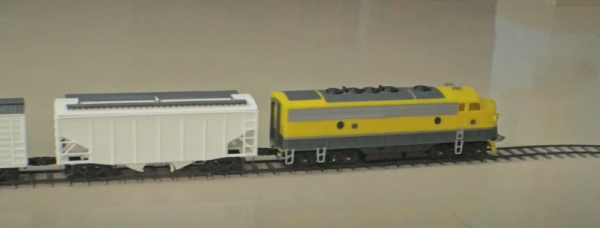
We know many people who put much effort into building model train setups. But [Rambros] has an entire set 3D printed, and the files are open source, so you can print your own or modify it to suit you. When we first read “complete open source ecosystem,” we thought it might have been a bit of hyperbole, but it isn’t. The S-scale set includes two locomotives, a tanker, a box car, a hopper car, and a gondola car. There are different sections of track, customizable with Fusion 360. The “Dragon Railway” takes a few mechanical parts and electronics, of course. You can see one of several videos about the system below.
You can control the whole system using Bluetooth and a smartphone. The electronics are pretty simple, consisting of an ESP32 board, some motor drivers, N20 motors, and a few miscellaneous parts. We expect it would be compatible with other off-the-shelf S scale tracks and cars, but we don’t know that for sure.
Although you’ll need Fusion 360 to customize, there are plenty of ready-made STL files if you want to get started quickly. Some of the track items, like the crossing and turnout are not customizable, anyway. One particularly impressive item is a printed auto-coupler; while a small item, getting that to work reliably with printed parts seems like it may be the most difficult part of the whole thing.
Maybe an OLED display would be the next thing? We’ve seen other printed trains, but this seems like a real labor of love.
Continue reading “I’ve Been Printing On The Dragon Railroad…”
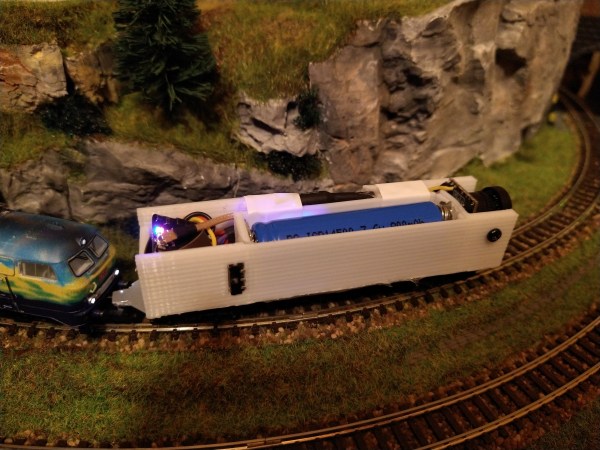
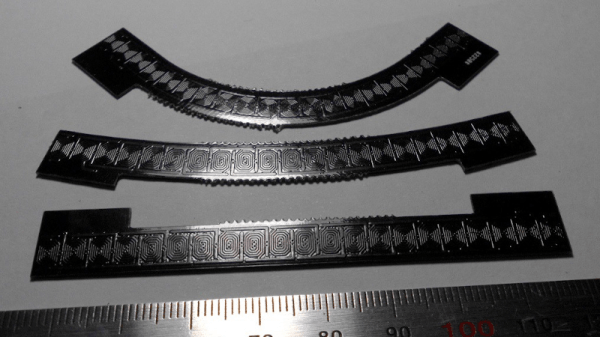
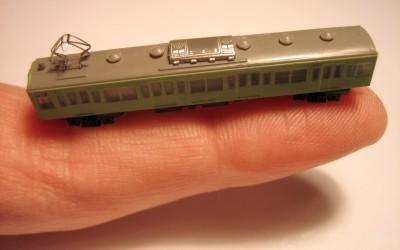
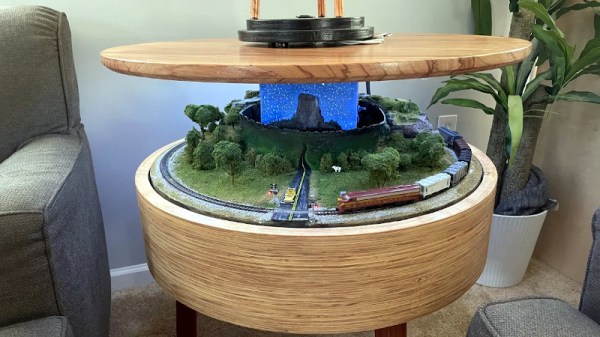
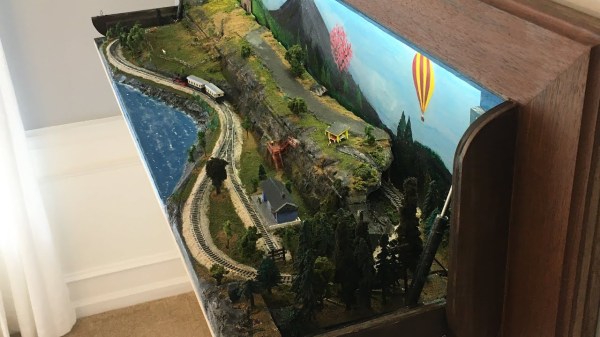
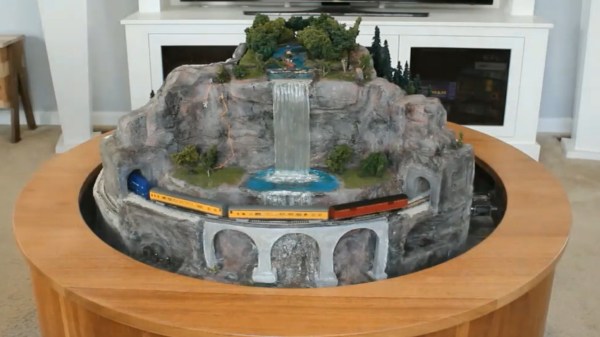
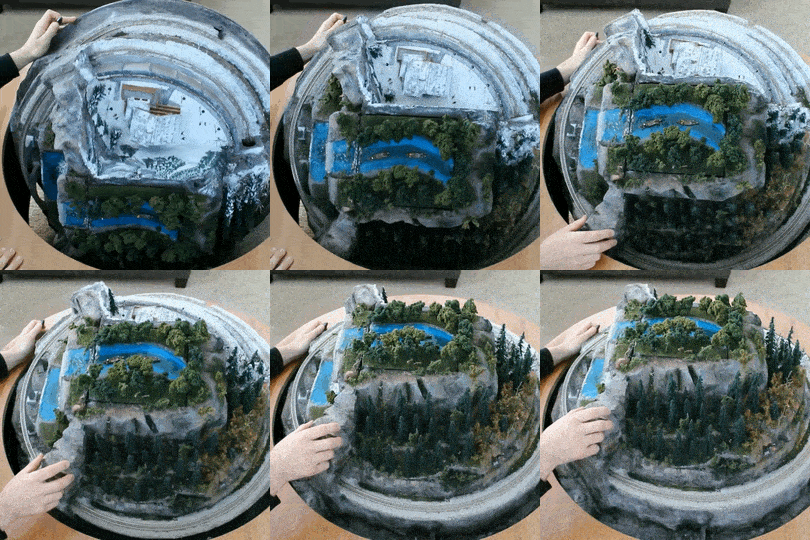 This isn’t [Peter’s] first rodeo. In his demo video below he shows off a coffee table train he built 20 years ago using a rectangular layout under glass. This time the circular design means a spherical volume can rotate around two skateboard bearing pivot points, revealing the mountainous scene on one side and the boring old wood table on the other. But what happens to the N-scale train itself when gravity is reversed? There’s a brilliant solution to that!