

We’re taught how to call emergency numbers from a young age; whether it be 911 in the US, 999 in the UK, or 000 in Australia. The concept is simple—if you need aid from police, fire, or ambulance, you pick up a phone and dial and help will be sent in short order.
It’s a service many of us have come to rely on; indeed, it’s function can swing the very balance between life or death. Sadly, in Australia, that has come to pass, with a person dying when their Samsung phone failed to reach the Triple Zero (000) emergency line. It has laid bare an obscure technical issue that potentially leaves thousands of lives at risk.
Peril
Australia’s Triple Zero emergency service becoming a hot-button issue. September 2025 saw widespread failures of emergency calls on the Optus network, an incident that was tied to at least three deaths of those unable to reach help. A series of further isolated cases have drawn more attention to edge case failures that have prevented people from reaching emergency services.
A bigger potential issue with the Triple Zero service has since bubbled up with the increased scrutiny on the system’s operation. Namely, the fact that a huge swathe of older Samsung smartphones cannot be trusted to successfully call 000 in an emergency. The potential issue has been on the radar of telcos and authorities since at least 2024. Since then, on November 13 2025, an individual in Sydney passed away after their phone failed to dial the emergency line. Their phone was using a Lebara SIM card, as managed by TPG and using the Vodafone network, when the incident occurred. Subsequent investigation determined that the problem was due to issues already identified with a wide range of Samsung phones.
The issue surrounds the matter of Australia’s shutdown of 3G phone service, which took place from 2023 to 2024. If you had a 3G phone, it would no longer be able to make any calls after the networks were shut down. Common sense would suggest that phones with 4G and 5G connectivity would be fine going forward. However, there was a caveat. There were a number of phones sold that offered 4G or 5G data connections, but could not actually make phone calls on these networks. This was due to manufacturers failing to implement Voice-over-LTE (VoLTE) functionality required to carry voice calls over 4G LTE networks. Alternatively, in some cases, the 4G or 5G handset could make VoLTE calls, but would fail to make emergency calls in certain situations.
Communication Breakdown
It all comes down to the way voice calls work on 4G and 5G. Unlike earlier 2G and 3G cellular networks, 4G and 5G networks are data only. Phone calls are handled through VoLTE, which uses voice-over-IP technology, or using Voice over NR (VoNR) in a purely 5G environment. Either way, the system is a data-based, packet-switched method of connecting a phone call, unlike the circuit-switched methods used for 2G and 3G calling.
The problem with this is that while 2G and 3G emergency calls worked whenever you had a tower nearby, VoLTE calling is more complex and less robust. VoLTE standards don’t guarantee that a given handset will be interoperable with all LTE networks, particularly when roaming. A given handset might only like IPv4, for example, which may be fine in its home region on its regular carrier. However, when roaming, or when doing an emergency call, that handset might find itself only in range of a different network’s towers, which only like IPv6, and thus VoLTE calling will fail. There are any number of other configuration mismatches that can occur between a handset and a network that can also cause VoLTE calling to fail.
Usually, when you’re in range of your phone’s home network with a modern 4G or 5G handset, you won’t have any problems. Your phone will use its VoLTE settings profile to connect and the emergency call will go through. After all, older models with no VoLTE support have by and large been banned from networks already. However, the situation gets more complex if your home network isn’t available. In those cases, it will look to “camp on” to another provider’s network for connectivity. In this case, if the phone’s VoLTE settings aren’t compatible with the rival network, the call may fail to connect, and you might find yourself unable to reach emergency services.
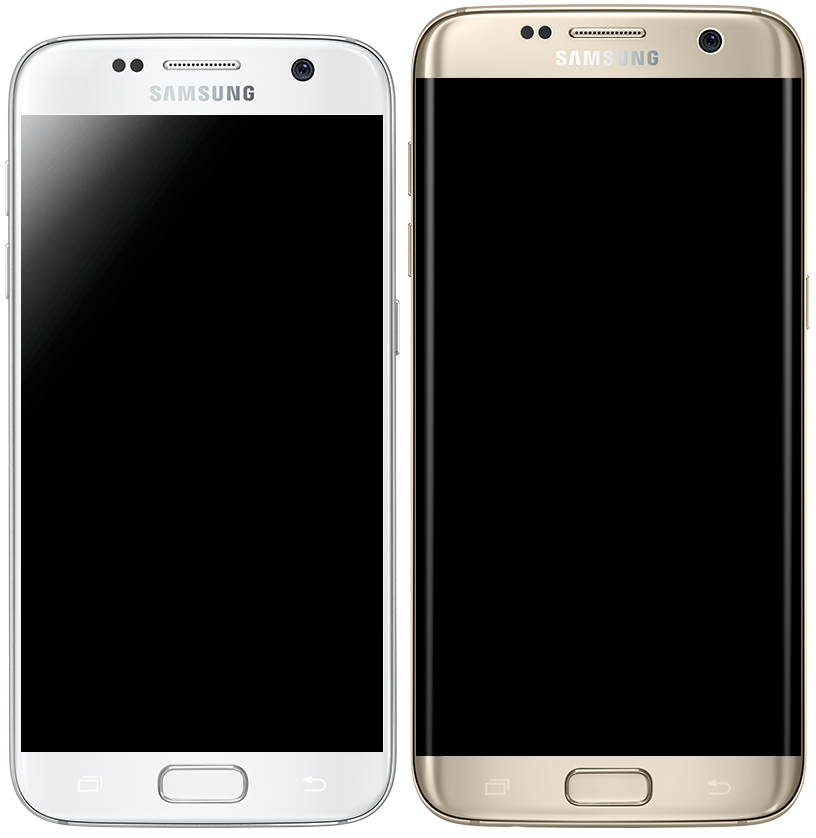
Specifically, in the Australian case, this appears to affect a range of older Samsung phones. Testing by telecommunications company Telstra found that some of these phones were unable to make Triple Zero emergency calls when only the Vodafone network was available. These phones will happily work when a Telstra or Optus network is available, but fallback to the Vodafone network has been found to fail. Research from other sources has also identified that certain phones can reach Triple Zero when using Telstra or Optus SIM cards, but may fail when equipped with a Vodafone SIM.
For its part, Samsung has provided a list of models affected by the issue. Some older phones, mostly from 2016 and 2017, will need to be replaced, as they will not be updated to reliably make emergency calls over 4G networks. Meanwhile, newer phones, like the Galaxy S20+ and Galaxy S21 Ultra 5G, will be given software updates to enable reliable emergency calling. Telecom operators have been contacting users of affected phones, indicating they will need to replace or upgrade as necessary. Devices that are deemed to be unable to safely make emergency calls will be banned from Australian mobile networks 28 days after initial notification to customers.
Broader Problem
This issue is not limited to just Australia. Indeed, European authorities have been aware of issues with VoLTE emergency calling since at least 2022. Many phones sold in European markets are only capable of making emergency calls on 2G and 3G networks, and could fail to reach emergency services if only 4G connections are available. This issue was particularly noted to be a risk when roaming internationally, where a handset sold in one country may prove inoperable with VoLTE calling on a foreign network.
Some blame has been laid on the loose standardization of the VoLTE standard. Unlike 2G and 3G standards, global interoperability is pretty much non-existent when it comes to phone calls. This wasn’t seen as a big issue early on, as when 4G devices first hit the market, 2G and 3G phone networks were readily available to carry any voice calls that couldn’t be handled by VoLTE. However, with 2G and 3G networks shutting down, the lack of VoLTE standardization and interoperability between carriers has been laid bare.
While Australia is currently tangling with this issue, expect it to crop up in other parts of the world before long. Europe is currently working towards 2G and 3G shutdowns, as our other jurisdictions, and issues around roaming functionality still loom large for those taking handsets overseas. Ultimately, end users will be asking a very simple question. If 2G and 3G technologies could handle emergency calls on virtually any compatible network around the world, how did it go so wrong when 4G and 5G rolled around? Old networks existed as a crutch that avoided the issue for a time, but they were never going to last forever. It surely didn’t have to be this way.







Seems like a problem avoided by not kicking handsets off of the network. I understand when handsets are no longer radio compatible with the towers, nothing can be done about that, but a functional phone even without a subscription or the latest updated software shouldn’t be barred from connecting to emergency services, especially if it worked fine previously.
Of course, these companies only think about money first and only rarely do lives of consumers get any thought.
Don’t think they’re being actively barred, the simple version seems to be they’re failing to place a VoIP call because they don’t know how to talk to the network. That’s not really the network operator’s fault; sounds like Samsung failed to implement it correctly (potentially because a 3G switch off was not even in the horizon when those phones were made)
And the drive to turn off 3G is driven by the need to repurpose the spectrum.
What I’m not clear on is if or why this only affects emergency calls.
These phones are fine when on their home network. However, emergency calls are expected to work on any available network, and that’s where these phones fail. They’re unable to make 4G VoLTE calls on Vodafone towers.
It doesn’t just affect emergency calls. If you try to use some of these devices on these incompatible networks you have the same issues. The problem is with emergency calls your handset is supposed to roam freely.
Greed rules,it’s a drug…
I should be able to
Yep. People should have a choice. What if I don’t want to be able to call 000. There’s still pay phones. The dictatorship forcing people to replace phones at their own expense due to their own inadequacies is absolutely unreal. I’d be happy to sign a waiver to not have the ability to call 000
Australian here. A decade ago I would have dismissed this as paranoia, but unfortunately it’s true. See also, mandatory banking apps (I’m looking you, Commonwealth.)
Wow nobody would have thought a non-standardized, proprietary communications protocol like volte would cause issues
/sarcasm
VoLTE is not proprietary. It’s a standard specified by the 3GPP.
You can (and people have) operated their own private RANs with VoLTE implementations.
It was a flakey proposed standard in the era these phones were made.
Was just VoIP at the time, being 3G phones.
I had shit luck with it, switched it off and got much better service.
Show me a non-blob FOSS implement then.
Each carrier does it differently, which is why there isn’t widespread volte for mobile linux.
VoLTE might not be proprietary, but it certainly isn’t truly standardised either. Sword was right in saying that expecting it to work well, when each handset manufacturer and each network implements a different version of it, was hopeless. It is in exactly the kind of situation where maximum compatibility is needed, a protocol where different nodes in the system are owned by different people needs extremely tight, fully openly published with reference implementations, standardisation. The “cost” we should be paying for the lack of VoLTE standardisation is that we ought to be sacrificing bandwidth which could otherwise become extra 5G bandwidth and we ought to be keeping 2G running forever for calls and texts. 3G could be shut down everywhere tomorrow and nobody would notice, because any 3G phone can drop back to the (clearly properly standardised in practice) 2G networks for calls and texts, 3G is only necessary for data and if you’re using data on a phone then you’re probably using a 4G or 5G phone anyway. 2G shutdowns should all be cancelled or reversed, we know that 2G is a reliable standard for calls and texts even if it is not as bandwidth efficient as newer methods could be. Bandwidth is not an infinite resource, but we can afford to ringfence a section of it to carry 2G (calls/texts) forever and then develop faster data standards in all the other space.
It’s a service (…) it’s function can
It seems there is more than dialing emergency numbers on Samsung phones that is failing in AU…
I never understood why countries would choose an emergency number with all 3 digits the same. The increase of accidental butt dialing must have not been considered.
If your vision’s blurry or you’re about to black out, the likelihood of being able to hit the same key three times is probably higher than that of hitting two or three different keys. Better a small percentage of butt dialing than a failure to get through in an emergency.
on rotary is 0 longest to dial, exatly 30 time compared to 111… there goes your theory :D
Because these numbers were selected before “butt dialing” was a thing, youngling!
We used to have corded phones with rotary dials, and in the U.K. for example, 999 was selected as very easy to dial deliberately by touch without seeing the dial, but difficult to dial accidentally.
I actually had to do this once after a chilli-pepper-in-eyes incident – I can’t tell you how slowly each 9 seemed to take to dial!
This is why nationalized healthcare sucks.
I hope the operator told you to man up and stop misusing emergency services.
Right, a total waste of resources when the answer is rinse your eyes and wait.
Well I’m glad HaD commentators were not answering the call, which was after rinsing my eyrs out with a cold shower and a basin of water.
The answer was for someone to remove my absorbant contact lenses using surgical instruments, not something I could have done myself due to extreme swelling, not being able to see, and not having surgical instruments to hand; and then the application of a suitable alkali to neutralise the acidity, also not something I could have found in my not-seeing state even if I had something suitable; and then three weeks of an eye patch over the worst affected eye with a cream, I don’t know what, to help mitigate the damage to the surface of my eye, which still causes minor vision problems today.
Ouch. I am happy to hear it sounds like it ended with only minor vision problems after all. And boy that must have been some intense pepper – Sounds kinda like a tough serving of Bhut Jolokia or Carolina Reaper straight into the eye?
I also thought it was picked to stop the number being dialled due to a fault back when pulse dialling was a thing. So if birds landing on a telephone cable created a pulse for example it was unlikely they could generate the 3 long pulses needed to dial 999.
Hitchcock’s: The birds, would have been more interesting.
Doesn’t matter which 3 digit number is used, there still a 1-in-792 chance it’ll get butt dialed. 3 constructive number would be easier to dial in an emergency and easier to butt dial.
The 000 number was chosen in the 1960s when we had rotary phones on the wall. 0 was the furthest distance to dial so least likely to be accidental.
This article is a few years later during the roll out
https://trove.nla.gov.au/newspaper/article/109896694
And replaying correctingmyself (sorry) as I forgot to paste a picture of a typical phone from Australia in the 1960-1980s and didn’t realise the “dial in the dark reason” as I was always told as a kid it’s harder to accidentally dialed.
https://www.vintagephones.com.au/media/ccp0/prodxl/Red-Australia-802-front-refurbished-Large.jpg
From that you can see clearly how in the dark you could orient and find the 0 quickly using the finger stop without needing to slide your finger from that point to find the 9.
Young gun, they made it before mobile phones existed, On rotary phone, it’s the furthest so that children will not accidentally dialed it. But now times haves changed, and the irony is theat it will be more prone to butt dialing. 😁
On any mobile phone in any country, the number is 112
Hmm no one tested this? None of the OTA fixed this?
Really what good is the entire pipeline if such fundamental things get overlooked? CI/CD doesn’t have tests for stuff like this?
I’m guessing by the answer is – Who’s doing CI for an unsupported android version for a phone which was officially EoL years ago and isn’t getting security updates?
Aside from a few exceptions, Androids aren’t great at getting long term support.
<3
This was not an issue when mobile phones used simple microcontrollers instead of Linux.
Maybe people pushing for Kernel implementation in Rust were right after all and Linus Torvalds is just a bitter old cockroach stuck on C, while acting as if he’s the Lukashenko of open source.
It has literally nothing to do with Linux. The problem is caused by rushed standardization and implementation of VoLTE, which is a fault of 3GPP partners and telcos.
Blaming a wrong person won’t help resolving the problem.
So your telling me Android isn’t Linux eh? Maybe you should become a CEO of YouTube then.
If phones were still using simple microcontrollers we would never need to abandon 2G and this would not have happened. 🕌THOSE PEOPLE✈WOULD STILL BE ALIVE🕌
LTE project started before iPhone and Android was even a thing. It was started because telcos realized that the money is in data communication. Also, it could be used for a bit of marketing.
Since it is wasteful to operate 2G, 3G, and 4G network concurrently, they were going to phase out 2G/3G sooner or later. Smartphones may have sped that process a bit, but they are not “the cause” of the change.
Nonsense. Phone sellers would find a way to implement planned obsolescence of phones even if they still ran on “microcontrollers”.
Involves a 555 no less.
And if phones remained dumb brick that only do SMS and phonecalls, and relatively expensively at that how many of these people wouldn’t bother to have one!!? I know I’d not have bothered, though at that point my parents are still paying for things and want a way to keep in touch as young adult me roams around, so I’d have one and use it. But now with my own money I’d only have one if keeping it for the occasional phonecall/SMS that can’t wait was cheap enough to be worth it – not hard to turn up at the place your mates are meeting you as arranged in advanced through the internet video/voice chats etc, and even if you split up in the city centre for a while its not hard to track down your buddies assuming you actually know anything about them and feel the need to rather than wait for them to show up – Jimbo is the Lego lover, so after that run to their bank you just know they are going to have been drawn in to the Lego store between it and the Pub etc…
However, smartphones bring so much utility, and so many functions of daily life have become ‘use our app’ that going without is tricky, and the move to a more data oriented network has made them as a rule much much cheaper to operate. So even if all you want is a text messaging device while roaming it is now really really affordable to do that – a few kB a message of data that when charged by the GB works out basically cost free.
Any business that tries such shenanigans with me gets dumped right away, and a scathing letter sent to their head office. Even with the cost of stamps I’m in front financially, and have made my position clear the the clowns trying to milk their customers.
Turning off these networks has consequences. Here (Netherlands) they are planning on ending the 2G services in 2027 which will result in issues. Most elevators are on a 2G network for emergency use, which results in the elevators not being able to have emergency calls, which is a legal requirement. If that fails they aren’t allowed to have the elevator operational. I’ve already heard from a store owner that he is likely to board up his elevator as it’s too expensive to modernize it with all the regulations and certifications required. It’s too bad as it means that the store will be less accessible to people with disabilities.
And it’s not just elevators. Most alarm systems, tons of smart meters, farm equipment, climate control systems, etc, commonly use 2G systems and are designed to operate for decades and usually not operated by people who can easily afford to change things over (except maybe the smart meters). They also want to end AM/FM radio in favor of low quality on/off radio (DAB), which means that most emergency radio’s wont operate anymore.
It’s one of those “paradigm shifts” that the wall street crowd is so fond of.
Equipment based on plain analog telephone lines has worked reliably for about the last 100 years. The modern stuff based on whatever standards has a far FAR shorter life span. Infrastructure I put in seven years ago is already going end of life and will need full replacement.
This not a sustainable path for society.
Farm equipment with extension cords. What could possibly go wrong?
What exactly does this nonsense have to do with DKE’s comment or the article in general? Go away.
DAB (specifically DAB+) doesn’t have to be low quality. The protocol is quite capable of supporting high quality streams, but that takes more bandwidth, which means less radio stations overall, which means the regulator can sell less broadcast licenses.
On the upside, we can now use our “telephones” to watch funny cat videos in HD
If newer emergency call handling is similar to GSM and 3G, the handset selects the strongest tower to send the emergency call to, even if it’s not your usual operator. So, if there is some incompatibility between your phone and that network (IPv4 vs IPv6 for example) the phone my work fine normally, but not be able to make an emergency call. Probably an edge case someone forgot to test.
Ah! Fantastic – that explains why it could be affecting emergency calls and not all calls.
VoLTE interoperability problem was (and is) pretty serious here in Korea. One of our telcos was switching from CDMA (3GPP2) to LTE, and wanted to have the VoLTE capability as quickly as possible. So, it rushed to implement VoLTE. Other telcos, not wanting to miss out, also followed.
Because of this, Korea was one of the first country to launch VoLTE. And poorly at that. Due to the rushed, quirky implementation, there were (and are) a lot of roaming-related issues (especially with imported cellular devices).
Interesting
That seems pretty crazy to me, if the device still works for the user often enough they haven’t felt the need to get a new one forcing them to buy a new one, and assuming they can just afford it… I don’t mind notifying the devices ‘hello, this device probably won’t work very well outside of these cities, so you should think about an upgrade as soon as you can’ seems fair, as its not forcing you off so quickly! Heck the 2 and 3G shutdowns around here were months and months of warning, and then didn’t actually happen that fast in many cases…
It IS crazy. Unfortunately it’s also true. Australian telcos are awful, and our regulators have chosen to do nothing to try and rein them in.
Source: I live in Australia and have talked to the Telecommunications Ombudsman, the Australian Communications and Media Authority, technicians from Telstra (our biggest telco. I have it in writing from the techs that coverage is worse since the shutdown of 3G and Telstra has no plans to fix it) and even tried to get in touch with my local politicians. Voice service has declined across the country since about 2010, and at this point is worse than when I got my first 2G dumbphone in 1999.
It’s not just the telcos and the regulators though. If you have shares in Telstra, Optus (singtel) or Vodafone, you are oart of the problem too.
How are you reading my TNETENNBA, get out of my head.
There is an international standard where on cell phones 112 is the universal alert number and that will also work.
Addendum from Wikipedia:
“In some countries, calls to 112 are not connected directly but forwarded by the GSM network to local emergency numbers (e.g., 911 in North America, 999 in the United Kingdom and Hong Kong, and 000 in Australia).
A new account for every comment – eh Eknup?
Snooping as usual I see.
I have no idea why it changed my nickname in that manner, I mean I don’t even have such an A on my keyboard, the L I might have done missing the K key though.
Even my nokia 3310 did that in 2002: Dial 911 or 999 and get connected.to the european 112!
That’s definitely not quite right for the UK. I distinctly recall BT payphones saying you can dial 112 as well. Those don’t use GSM in the vast quantity of cases, so it’s got to be a core network component other than the cellular side.
I am still unclear, what was wrong with keeping 2G dedicated to emergency calls only?
900 MHz is now used by FPV drones which have become hot stuff for modern armies. If you can destroy a tank (for example Leopard 2 or Challenger 2 with Javelin which costs $2 million or $100 FPV which can be rapidly constructed by any grunt armed with zip ties I think the choice is obvious. It’s simply more profitable to have 2000 drones flying and killing tanks than one, single-used Javelin missile.
I don’t suppose majority of the countries are in the war zone, nor will be any time soon (hopefully NOT).
Having said that, spread-spectrum (ie frequency hopping) can make sure allocated bands are not overwhelmed with signals. 900 Mhz is still a lot of bands to hop over, upper and lower side bands, etc. I’d even designated some of these to civil emergencies only, unencrypted, and keep it that way. If I remember right, advanced allocation/scheduling was what made 3G possible, and 4G was another major step – meaning, the same advanced allocation can now be used with 2G, too (obviously, throttled down for the lower frequencies).
Equipment exists already (most was rid of fairly recently), well-known and can be made again, upgraded and all, so I do not know what stops our beloved FCC (in the US) from returning 2G for civil emergencies only.
Hold your optimism strong. Putler is a step from Munich equivalent and after Tibet is now an island in the queue. And even Startrek is forecasting something big dirty before advent of atomic 3D printing.
Profit.
It’s a mess. Samsung cant tell me if my affected phone will get an upgrade or not. I’m just told that at this stage im ‘likely’ to be booted of the network and my phone wont work. You would thing the manufacturer could be more definitive…
The 3G shutdown is not a problem, nobody strictly needs 3G. The 2G shutdown is where the trouble would be. All phones which are designed for 3G can also drop back to calls/texts over 2G when only a 2G network is available. Infact, phones for 4G and 5G should all drop back to 2G calls/texts when there’s no compatible 4G/5G network in range. 3G’s only advantage over 2G is for data, any anyone using data on a phone has, by now, got themselves a 4G or 5G device. Anyone with an older 2G or 3G phone is using it solely for calls and texts. The sensible move at this point would be to keep 2G running forever, accepting it will take up some spectrum space which would otherwise be available for 5G to carry data much more efficiently than 2G can, whilst shutting down the barely-used 3G (data) networks. I, for one, run an ancient 2G phone because I want to ensure all my interaction with the internet is through a Linux PC which I can properly control and maintain, rather than some creepy smartphone which updates itself without my permission.
who would they blame out of reach of signal? 2G or 3G, also samsung? lame ….
I don’t know why the title specifically mentions Samsung. Looking at the linked list of affected phones and they only have 2 models that are affected while Apple has 3 phones and 4 ipads that have the issue. Lots of brands are having the same issue.
Also, it is not corporate greed to not develop new firmware to support a 7-8 year old phone that is barely used, to deal with a problem that the government knew about for years. Maybe, the govenment should not have shut down the 3G system yet… let those phones age out for another 5 years to minimize how many people would be affected.
GSM has been kept running to support eCALL. Most vehicle manufacturers have no mechanism to update eCall systems install before about 2022 what the first eCall systems capable of 4G calling were introduced. Imagine if your 4 y.o. Car was obsoleted because the steering or gearbox stopped working.
One questionx, it may sound dumb, vlbut if they shut down 2g network, will these cheap burner phones still works?
In Australia they have already shut down 2G and 3G. Thousands of perfectly good phones and tonnes of perfectly good telemetry equipment, transport ticketing systems etc are now e-waste. It sucks.