
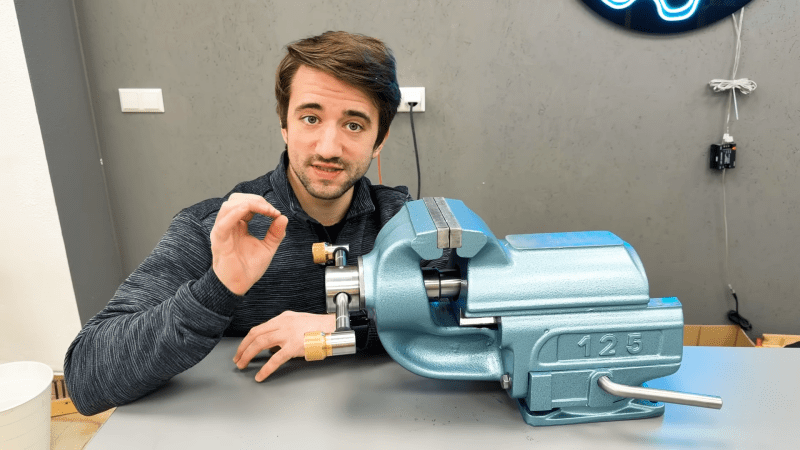
People say they don’t make em’ like they used to, and while this isn’t always the case, it’s certainly true that old vices rarely die with time. This doesn’t mean they can’t use a refresh. [Marius Hornberger] recently backed that up when he decided to restore an old vice that had seen better days.
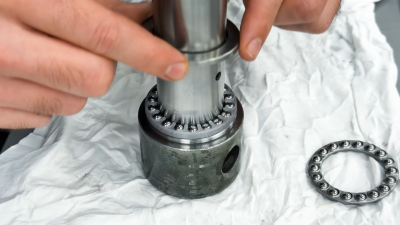
When refreshing old tools, you’ll almost always start the same: cleaning up all the layers of grease and ruined paint. The stories that each layer could tell will never be known, but new ones will be made with the care put into it by [Marius]. Bearings for the tightening mechanism had become worn down past saving, requiring new replacements. However, simply swapping them with carbon copies would be no fun.
[Marius] decided to completely rethink the clamping mechanism, allowing for much smoother use. To do this was simple, just machine down new axial bearings, design and print a bearing cage, machine the main rod itself, and finally make a casing. It’s simple really, but he wasn’t done and decided to create a custom torque rod to hammer in his vicing abilities. Importantly, the final finish was done by spraying paint and applying new grease.
Old tools can often be given new life, and we are far from strangers to this concept at Hackaday. Make sure to check out some antique rotary tools from companies before Dremel!











Saw “old vice” in the headline. Got completely different idea of what the article would be about until I saw the thumbnail.
Clarified by the OP actually spelling it “vise”.
Now going to wait for the actual vise experts to weigh in. Machinists I know have strong opinions about vises. Other people have strong opinions about vices.
Either way you spell it, they DO die. Survivorship bias is a wonderful drug. (being the proud keeper of somewhat more than 20 of the bench/machinist variety, and about the same in milling/drill press/shaper vises and several blacksmith types, as well, from roughly 1850 to the mid 20th cty)
I didn’t watch the video but from the thumbnail as someone with experience with vices, you don’t want to have a ball or roller bearing on the handle because that limits the ability to hold a torque on what you are clamping.
when it comes to vices the simpler the better, the quick shift mechanisms do break from my own experience, and if you can get one with a buttress thread on the screw it will be even stronger. also try to get one without the soft roll keys that shear when you are unscrewing. i have to open my vice with a hammer blow to the jaw now because i don’t have time to replace that key.
While you could use proper roller bearings (for high load) and just add a clutch/brake mechanism for holding the clamping power it does get complicated rather quickly.
You could always add some bearings, possibly with spring loaded backlash takeup, to the retract mechanism with impunity. Many could use one.
I do like how this vicse (ficxed it) has a stationary outer jaw, so it will always be as supported, unlike a more standard design that becomes weaker as the jaws open wider.
Vice and vise are both accepted. I’ve always spelled vice and so did people around me. Even within English languages, there are spelling variations by regions like color and colour, and vice and vise.
Where I come from, a “vice” was understood to be something that came in a glass bottles, cigarette cartons, or fishnet stockings.
“Vise” was something used to hold work when while cutting or drilling.
While it’s certainly true that “old vices rarely die with time”, I think the word you are looking for here is “vise”.
Unless you’re from a country that uses proper English.
imo once i did the double take and digested it, i really thought it was brilliant because it is true that old vices rarely die with time. and, i’d say, for the same reason…you’re habituated to not breaking your vise.
i broke a vise (or, i watched my friend break my vise) very early in my vise-ownership, and the replacement vise has not suffered from 15 years with me. I imagine it could be inherited for decades so long as every owner is habituated to using a pipe wrench when they want a pipe wrench.
A powerful vice became the subject of a movie, some years ago.
… he was a wise vise king by not having vices …
He had great vise-roy to help run it though.
We used to smoke Belarussian Viceroy cigarettes a lot when we were at high school. They were cheap and pretty strong.
Vise or vice, both are valid. Even enshittified English is still English.
ads?
not using ublock?