Real LED TVs Are Finally Becoming A Thing

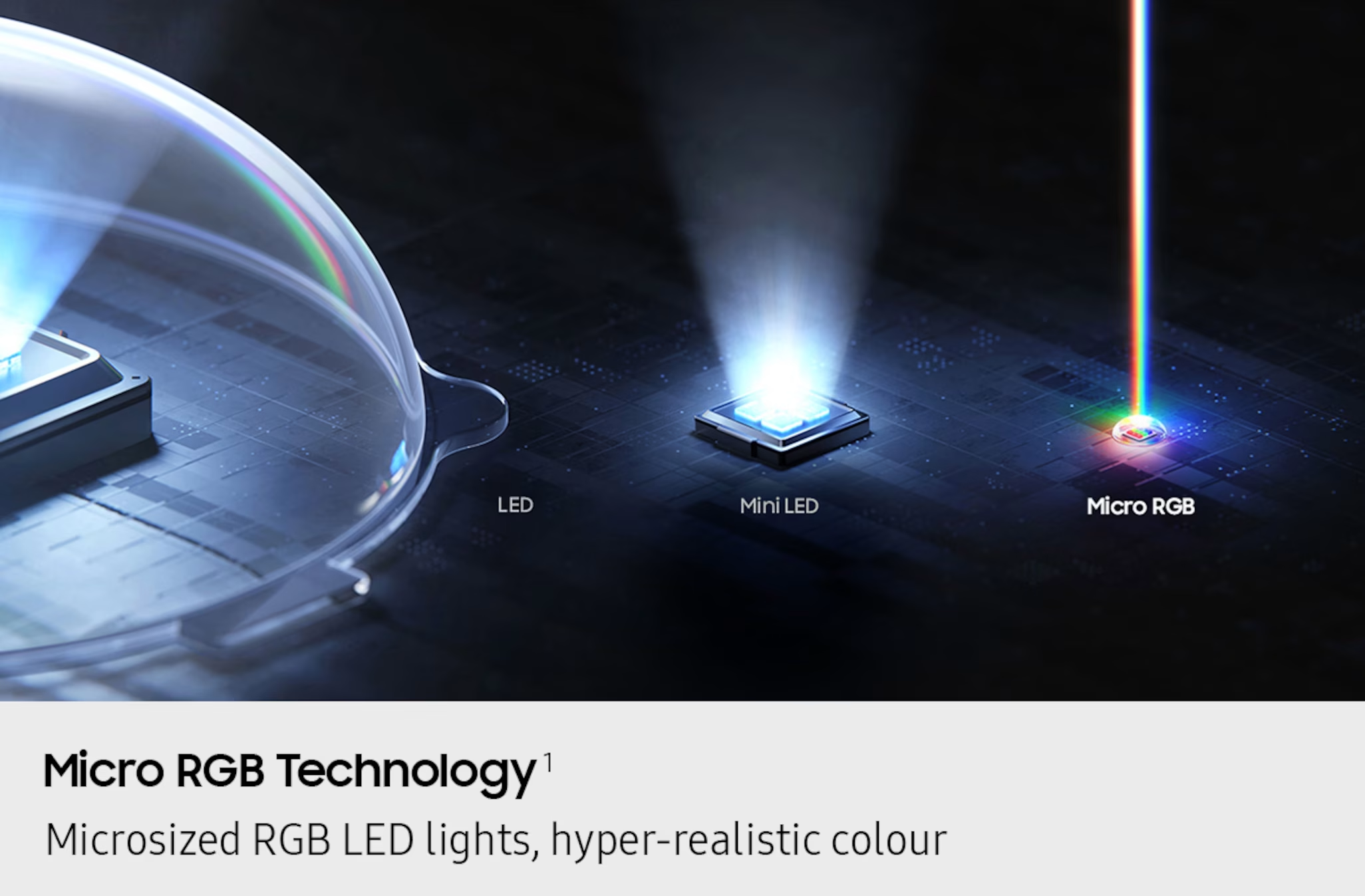
Once upon a time, the cathode ray tube was pretty much the only type of display you’d find in a consumer television. As the analog broadcast world shifted to digital, we saw the rise of plasma displays and LCDs, which offered greater resolution and much slimmer packaging. Then there was the so-called LED TV, confusingly named—for it was merely an LCD display with an LED backlight. The LEDs were merely lamps, with the liquid crystal doing all the work of displaying an image.

Today, however, we are seeing the rise of true LED displays. Sadly, decades of confusing marketing messages have polluted the terminology, making it a confusing space for the modern television enthusiast. Today, we’ll explore how these displays work and disambiguate what they’re being called in the marketplace.

Continue reading “Real LED TVs Are Finally Becoming A Thing”
A Novelty Clock Makes The Best Tiny Mac Yet

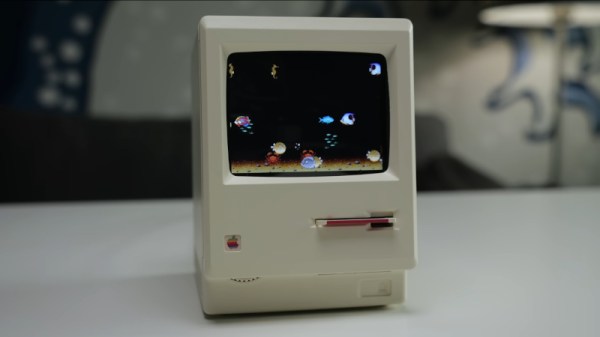
We’re lucky enough in 2026 to have cheap single-board computers fast enough to emulate machines from the 1990s, touching on the 32-bit era. We’ve seen a few projects as a result, emulating the Apple Macs of the 68000 era, but even with the best 3D printing, they can disappoint when it comes to the case. So when [This Does Not Compute] saw a novelty alarm clock using a very well-modelled mini replica of an early Mac, putting a Mac emulator in it was the obvious way to go.

The project uses a Raspberry Pi with a small colour LCD.  The video below the break takes us through the process of gutting it and mounting the Pi and display on a custom 3D-printed bracket. In an unexpected touch, parts of the original LCD are used to give the curved corners, which owners of an original Mac will remember. It may have a little further to go in that its fake floppy drive is begging to be converted to an SD card slot, and it has a now-unused brightness dial. But we’d say it’s one of the best little Mac emulators we’ve seen so far, if perhaps not the smallest.

Continue reading “A Novelty Clock Makes The Best Tiny Mac Yet”

Inside A Fake Mean Well DIN-rail PSU

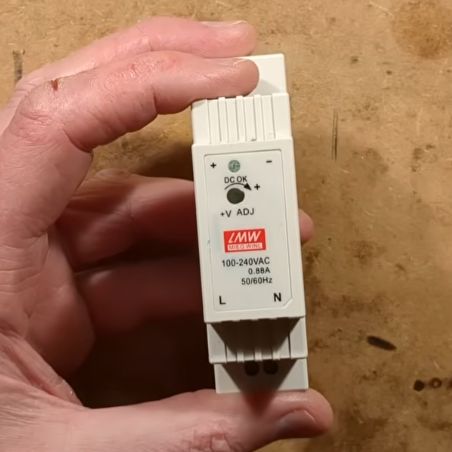
Looks just like the real deal in a dark cabinet. (Credit: Big Clive, YouTube)

These days, you can get fakes, bootlegs, and similar for just about anything. While a fake handbag isn’t such a big deal, in the case of a DIN-rail power supply, you’d better make sure that you got the real deal. Case in point, the fake ‘Mean Well’ DIN-rail PSU that [Big Clive] got his mitts on for a detailed analysis and teardown.

Even without taking a PSU apart there are often clear clues that you might be dealing with a fake, starting with the logo and the rest of the markings. Here it’s clear that the logo is designed to only appear to be the MW one at a quick glance, with the rest of the label being poorly copied English gibberish containing copious “unnecessary” double “quotes”.

So what do you get for £3-5 in this +12VDC, 1.25A rated PSU? Shockingly, the insides are actually quite decent and probably close to the genuine MW, with basic noise filtering, proper isolation, and apparently a real class-Y safety capacitor. Similarly, the chosen DK124 control IC is more than capable of the task, with a good circuit for the adjustable voltage control.

Continue reading “Inside A Fake Mean Well DIN-rail PSU”