
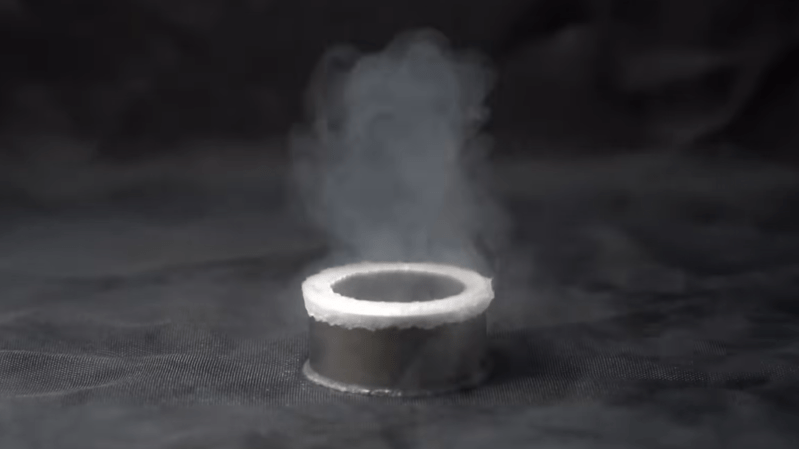
Liquid nitrogen isn’t exactly an everyday material, but it’s acquired conveniently enough to be used in extreme overclocking experiments, classroom demonstrations, chemistry and physics experiments, and a number of other niche applications. Liquid oxygen, by contrast, is dangerous enough that it’s only really used in rocket engines. Nevertheless, [Electron Impressions] made some of his own, and beyond the obvious pyrotechnic experimentation, demonstrated its unusual magnetic properties. Check out the video, below.
The oxygen in this case was produced by electrolysis through a proton-exchange membrane, which vented the hydrogen into the atmosphere and routed the oxygen into a Dewar flask mounted at the cold end of a Stirling cryo-cooler. The cooler had enough power to produce about 30 to 40 milliliters of liquid oxygen per hour, enough to build up an appreciable amount in short order. As expected, the pale blue liquid caused burning paper to disappear in a violent flame, and a piece of paper soaked in it almost exploded when ignited.
More interestingly, a piece of oxygen-soaked paper could also be picked up with a strong enough magnet. This is due to molecular oxygen’s paramagnetism, which is too weak to be significant in a gas made of quickly-moving molecules, but becomes noticeable in a liquid. When some liquid oxygen was poured onto a strong magnet, it stuck to the edges of the magnet, whereas liquid nitrogen just splashed away. Even as the liquid oxygen evaporated, it was possible to faintly see some of the cold vapours sticking close to the magnet. [Electron Impressions] tried to create a kind of coil gun by wrapping a coil around a test tube containing liquid oxygen, but it didn’t really work. Any effect was imperceptible among the disturbances caused by boiling oxygen and the physical jolt of the power supply connecting.
It’s not a process we’ve seen before, but the boiling point of liquid nitrogen is lower than the boiling point of oxygen, so if you have a convenient source of liquid nitrogen, it’s simple enough to make liquid oxygen.


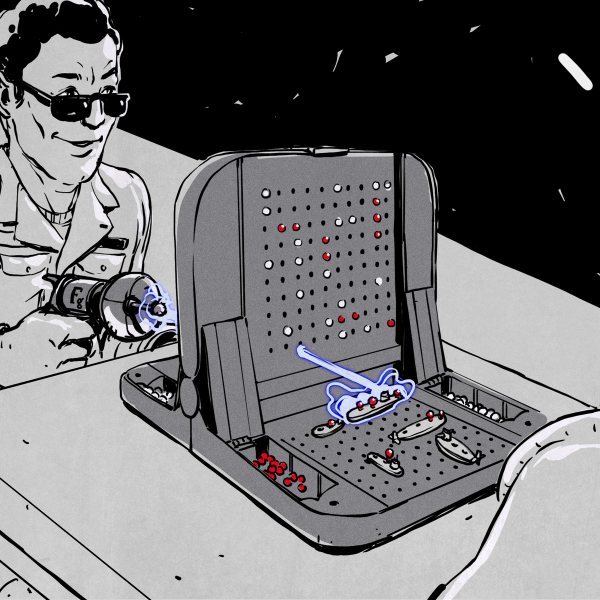

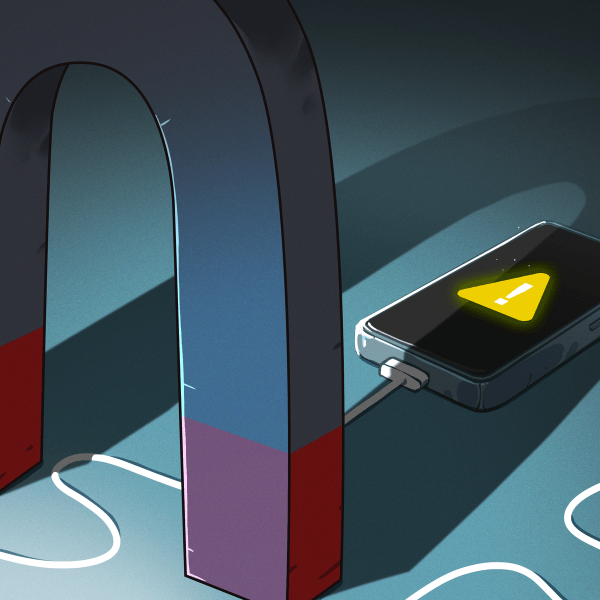







One of my favourite chemistry “experiments” was picking up liquid oxygen with a magnet and watching the bar of blue liquid boil.
Oh please be careful with liquid oxygen. Yes it’s cool but it goes bang very easily.
It doesn’t go bang so much as it helps other things to go bang much more violently.
I’ve already posted a much lower cost, much less efficient way to make LOX at home.
Dad taught it to me.
After I found my own way to explosive pyromania.
He had promised Mom, was true to his word.
Explosive pyromania is genetic.
I was blowing stuff up by middle school, unaided.
Except perhaps the idea and very first powder coming from legal fireworks.
The really dangerous thing was all the matchheads in the glass jar, in grade school, didn’t know about shrapnel.
No harm, no foul.
Dad learned how to make bootleg LOX at Heidelberg…was a late boomer.
Understandable, there having been excessive booming in the area.
I saw the burn marks from his shenanigans in the bar when I visited.
Who would have guessed a rope soaked in LOX and lit on fire would be so much fun.
Amazingly, the fascists haven’t deleted that post (last I looked).
Be careful with it.
It’s a federal charge in the USA to get caught with bootleg LOX.
Don’t get caught.
“Liquid oxygen, by contrast, is dangerous enough that it’s only really used in rocket engines.”
We use liquid o2 in hospitals instead of concentrators
My uncle used to tell a story about a thousand gallon shipment of lox that was rejected for impurities when he was in the army corp of engineers. The driver was told to dump the load, which he did. The problem was that he dumped it on an asphalt runway.