Solar power has been around for a long time now. Once upon a time, it was mostly the preserve of research projects and large-scale municipal installations. Eventually, as the technology grew ever cheaper, rooftop solar came along, and cashed-up homeowners rushed to throw panels on their homes to slash their power bills and even make money in some cases.
Those in apartments or rented accommodations had largely been left out of the solar revolution. That was, until the advent of balcony solar. Popular in Germany, but little known in the rest of the world, the concept has brought home power generation to a larger market than ever.
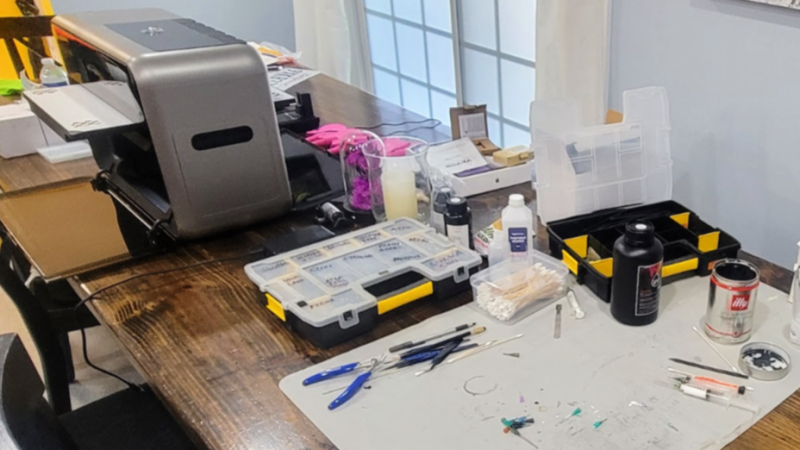
The Eufymake E1 is a recently-released prosumer UV printer that can print high-resolution color images onto pretty much anything. It also uses proprietary ink cartridges (which integrate a magnetic stirrer, nice) which are far more expensive than UV ink in bulk. So [charliex] set out to figure out how to refill the ink cartridges, including the cleaning cartridge.
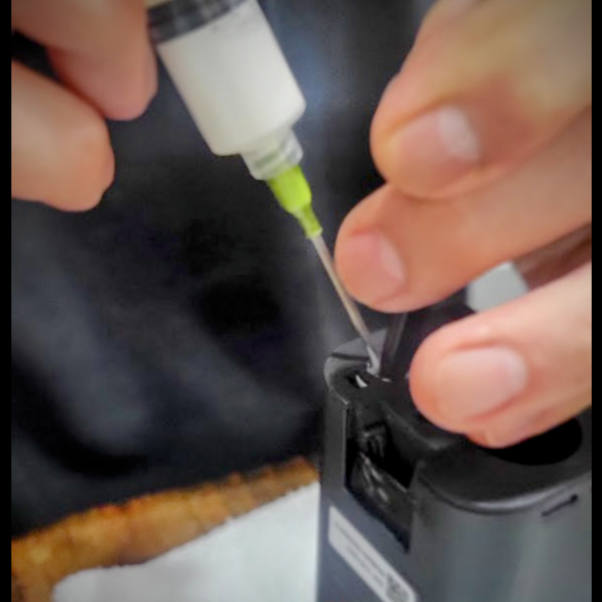
If one doesn’t mind a bit of fiddling, cartridges can be refilled without having to add any new holes.
UV printing in general is a bit of a maintenance hog, which has helped keep it from hobbyist use. UV ink doesn’t really like sitting idle in a machine, but the E1 automates cleaning and flushing of the print head as well as having swappable cartridges for each ink. This makes it a lot more user-friendly than UV printing has historically been.
The cartridge hardware can have a longer serviceable life than the ink inside, so it makes sense to try to refill them. There are more reasons to do this than just limiting costs. What if one wishes to print and the parent company is sold out of cartridges? What if they shut down? Refilling cartridges, and emptying waste from the cleaning cartridge, would become imperatives — lest an expensive prosumer UV printer turn into a paperweight. Thankfully software DRM control of the cartridges seems limited, at least so far.
Refilling cartridges can be carefully done with syringes combined with manual bypass of spring-loaded valve mechanisms. Emptying the cleaning cartridge can similarly be done by syringe, and it even has a hidden refill port under some plastic at its top.
[charliex] approaches all of this from a reverse-engineering perspective, indeed, he has a whole separate blog post about the software for the printer. So his solution is much more informed and elegant than, for example, just melting a new refill hole in the side of the things. It’s an interesting read, so check it out.
Our own Tom Nardi took a close, hands-on look at the E1 printer last year and came away pretty impressed with its capabilities. The cartridges are a big part of the user-friendliness of the system, but we hope there remains a viable option for manual refill for those of us who want to control costs or don’t wish to be locked in, and don’t mind violating a warranty or two in the process.
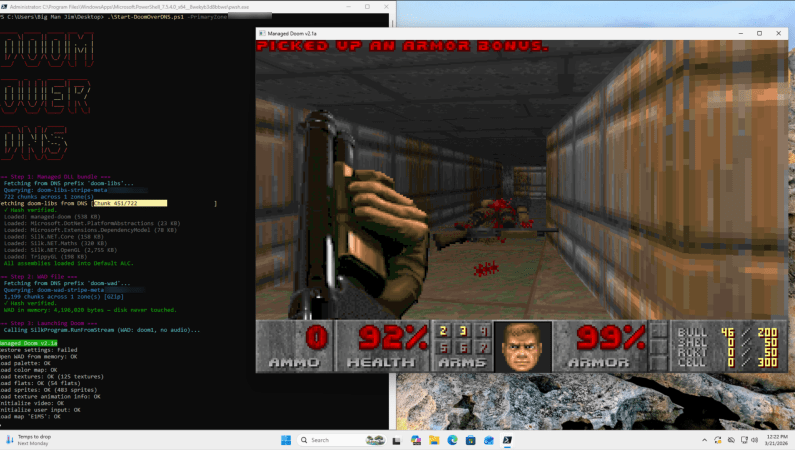
As literally everything ought to be able to play DOOM in some fashion, [Adam Rice] recently set out to make the venerable DNS finally play the game after far too many decades of being DOOM-less. You may be wondering how video games and a boring domain records database relate to each other. This is where DNS TXT records come into play, which are essentially fields for arbitrary data with no requirements or limitations on this payload, other than a 2,000 character limit.
Add to this the concept of DNS zones which can contain thousands of records and the inkling of a plan begins to form. Essentially the entire game (in C#) is fetched from TXT records, loaded into memory and run from there. This is in some ways a benign form of how DNS TXT records can be abused by people with less harmless intentions, though [Adam] admits to using the Claude chatbot to help with the code, so YMMV.
The engine and WAD file with the game’s resources are compressed to fit into 1.7 MB along with a 1.2 MB DLL bundle, requiring 1,966 TXT records in Base64 encoding on a Cloudflare Pro DNS zone. With a free Cloudflare account you’d need to split it across multiple zones. With the TXT records synced across the globe, every caching DNS server in the world now has a copy of DOOM on it, for better or worse.
You can find the project source on GitHub if you want to give this a shake yourself.