
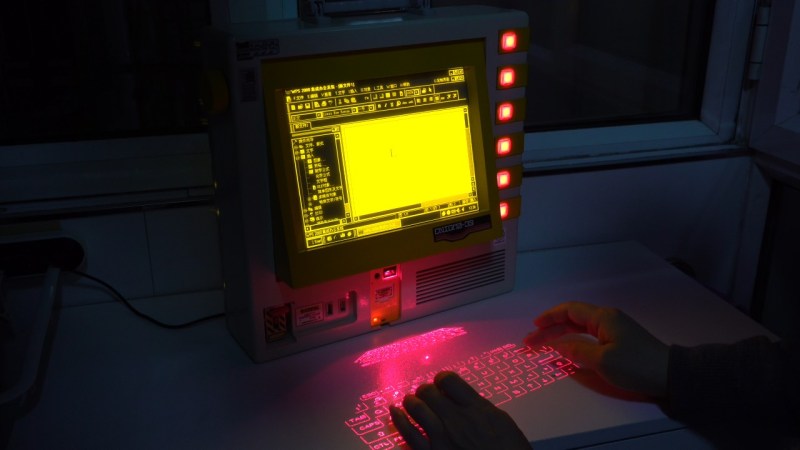
For once, we can avoid debating in the comments what constitutes a “cyberdeck”, because [LCLDIY] does not refer to his cyberpunk masterpiece as such — he calls it a laptop. Considering the form factor is more like an all-in-one with a built-in laser projection keyboard, that’s arguably an even more controversial label to use, but as stylish this build is, it’s what’s inside it that interests us most.
No, not the cash-register motherboard that serves as the brain, though that has got to be worth some hacker cred. No, it’s the graphics card [LCLDIY] designed to drive 10″ electroluminescent (EL) displays that really has us interested. EL screens have a unique and beautiful glow that many find captivating, but we don’t see them all that often for two reasons. One is price: if you can’t find them surplus, they’re not cheap. The other is driving them, which [LCLDIY]’s project helps with, because the graphics card is open source.
The card is PCI, so you’ll need an adapter to plug it into a modern PCIe slot, or you’d have to redesign the thing. Since this isn’t elegant-engineering-a-day, we know which we’d do. The card is based on the CHIPS65548/5 chip, which means you should be able to find driver support under Linux and Windows. [LCLDIY] seems to be using Windows 2000, but that might just be because it’s all been downhill since then.
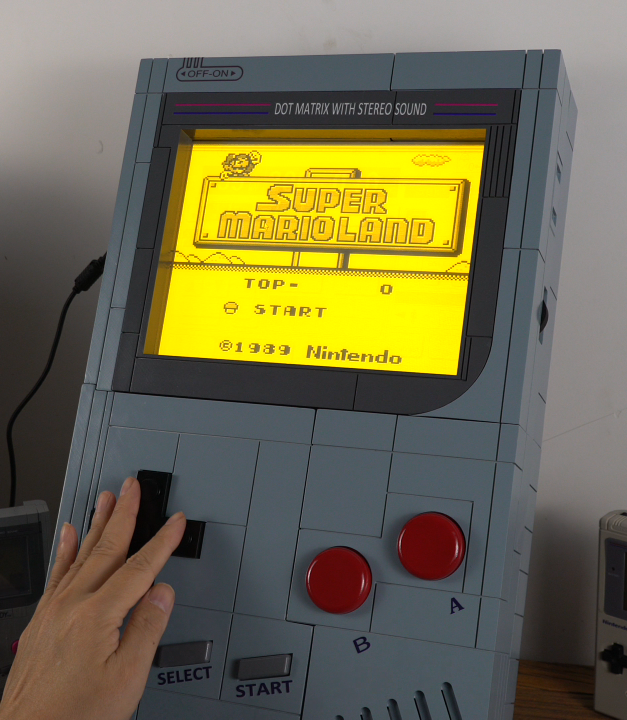
If the cyberpunk laptop wasn’t enough inspiration, [LCLDIY] also created a giant-scale Game Boy using the same 10″ screen and DIY graphics card. The soft glow of the EL display is particularly suited to the low-res nature of the retro games, as it’s not entirely unlike a CRT. You can see it in action–both builds!– in videos embedded below.
The last time somebody posted an EL display here, they had to build the driver board for it, too.












Given the form factor and keyboard situation, I’m not sure I’d call this a “cyberdeck”…
sure is heck not a laptop!!! I’m a little bothered by the attitude that “it’s just English, so the meaning of the words don’t matter”. the presentation here is very much social media culture, a sales pitch without really having anything to sell, just begging for our attention. I liked the link to https://hackaday.com/2019/05/22/playing-nes-games-on-an-industrial-el-display/ better. More nerdy tech stuff
>Open Graphics Card
I expected something original, likely done in FPGA. I got a dude who put a 30 years old commercial VGA graphics chip on a rather simple PCB and prances about it like he’s the new Huang.
kevtris did the FPGA thing in 2019 article “Playing NES Games On An Industrial EL Display”. Sometimes on Hackaday the links to old articles are better than the subject of the article. The major difference being “how I got this to work” instead of just show-and-tell.
Yeah, unfortunate that quantity has won out over quality.
gosh harsh. I found it quite entertaining if a bit silly. Good on him for putting it up.
Oh no, I don’t know English at all. The machine translation is terrible. I wanted to say “portable computer”, but it was translated as “notebook computer”. The graphics card was designed and made by myself, but it was translated as if I had bought it.
That EL screen glow really is something else — way easier on the eyes than plain LCD, especially in low light. Cool that the driver board is open source too, so more people can actually try building with these old displays instead of just admiring them from afar. Also love that he made a giant Game Boy with the same tech, that’s a nice touch. Great project overall!