
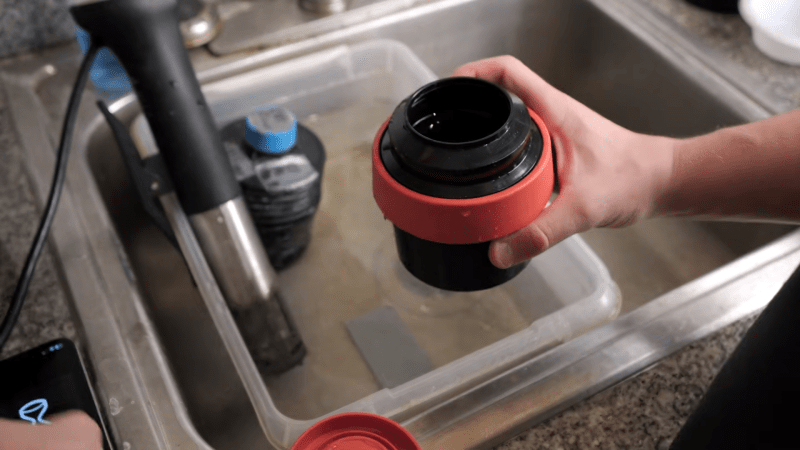
After the digital camera rose to prominence, it became a cool hobby to keep taking photos on film. It was even cooler if you did the same with an old motion picture camera. The retro film revival has kept a dedicated bunch of photo labs in business over the years, but it’s still possible to save some cash on development by doing it yourself. If that’s your game, you might try mixing up your own development chemicals.
As explained by [No Grain No Gain], it’s quite possible to mix up your own ECN-2 chemistry from scratch if you know what you’re doing. ECN-2 is the chemistry you’ll want if you’re trying to develop any of Kodak’s Vision3 films, along with CineStill films.
The problem with traditional methods of making developer is that once it’s mixed up, it doesn’t keep well, and the more you use it, the worse the quality gets. To beat this problem, this method involves producing two stock solutions which can be kept on the shelf for long periods of time. They can then be combined together with a little CD-3 developer on an as-needed basis. This makes it easy to always have fresh developer on hand for the best possible results on every roll processed. To make everything, you’ll need sodium sulfite, potassium bromide, sodium carbonate, sodium bicarbonate, and the specialist CD-3 developing agent. It’s then a simple job to mix up the dry chemicals with a bunch of distilled water to make the two necessary solutions to keep on hand. The video also explains how to deal with RemJet films if you happen to be shooting those.
[No Grain No Gain] estimates that this method can cut the cost of development to as little as 50 cents a roll. There’s plenty of labor involved, but if you want the freshest, best developer on hand for your home lab, it’s a method worth considering.
We’ve explored modern film development techniques before, too.











If you aren’t aware of Caffeinol developer, look that up for B&W.
I wouldn’t have a clue where to get traditional developer where I live, and if I found it, im certain it would be ungodly expensive, caffeinol is my go-to. Living in a coffee-producing country with an engrained coffee culture, instant coffee isn’t at every grocery or corner store, nor is it particularly cheap, but it does exist.
Fixer is still a problem and is something I import when I travel abroad. When my stock dwindles I’ll give pool/aquarium dechlorination chemistry a shot.
How have I not heard of this? Been out of the b&w game for to long I guess. Thanks for the tip, it’s an interesting idea! Have you used this yourself?
I would also encourage B&W photographers to lookup Pycrocat HD, in particular the proplyene glycol preparation. Will last ages, and it is a staining developer, so you can end up with detail in areas that would look blown out with other developers. It is toxic, but it essentially has the same safety precautions you should take with any developing agent.