
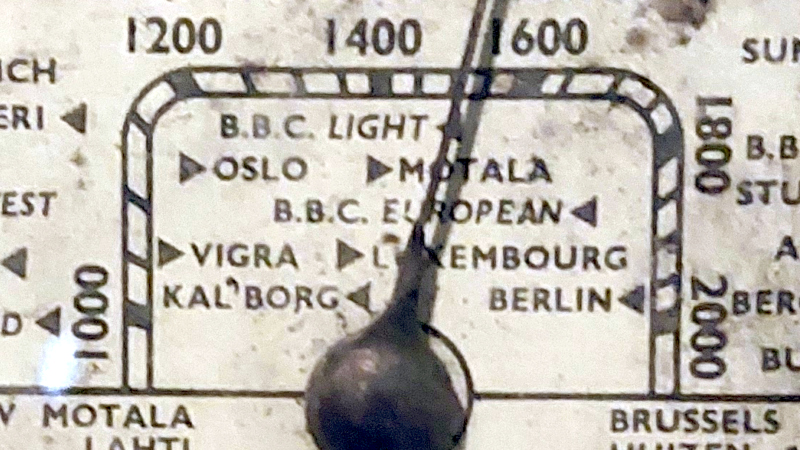
Something happened this morning which will have been unnoticed by many, but which for a certain breed of radio enthusiast marks the end of an era. The BBC stopped broadcasting Radio 4 on their 198 kHz Long Wave frequency, ending over a century of transmission in the band. For now the transmitter carries a recorded message telling listeners that the service has ended, but it’s expected that this will soon be turned off.
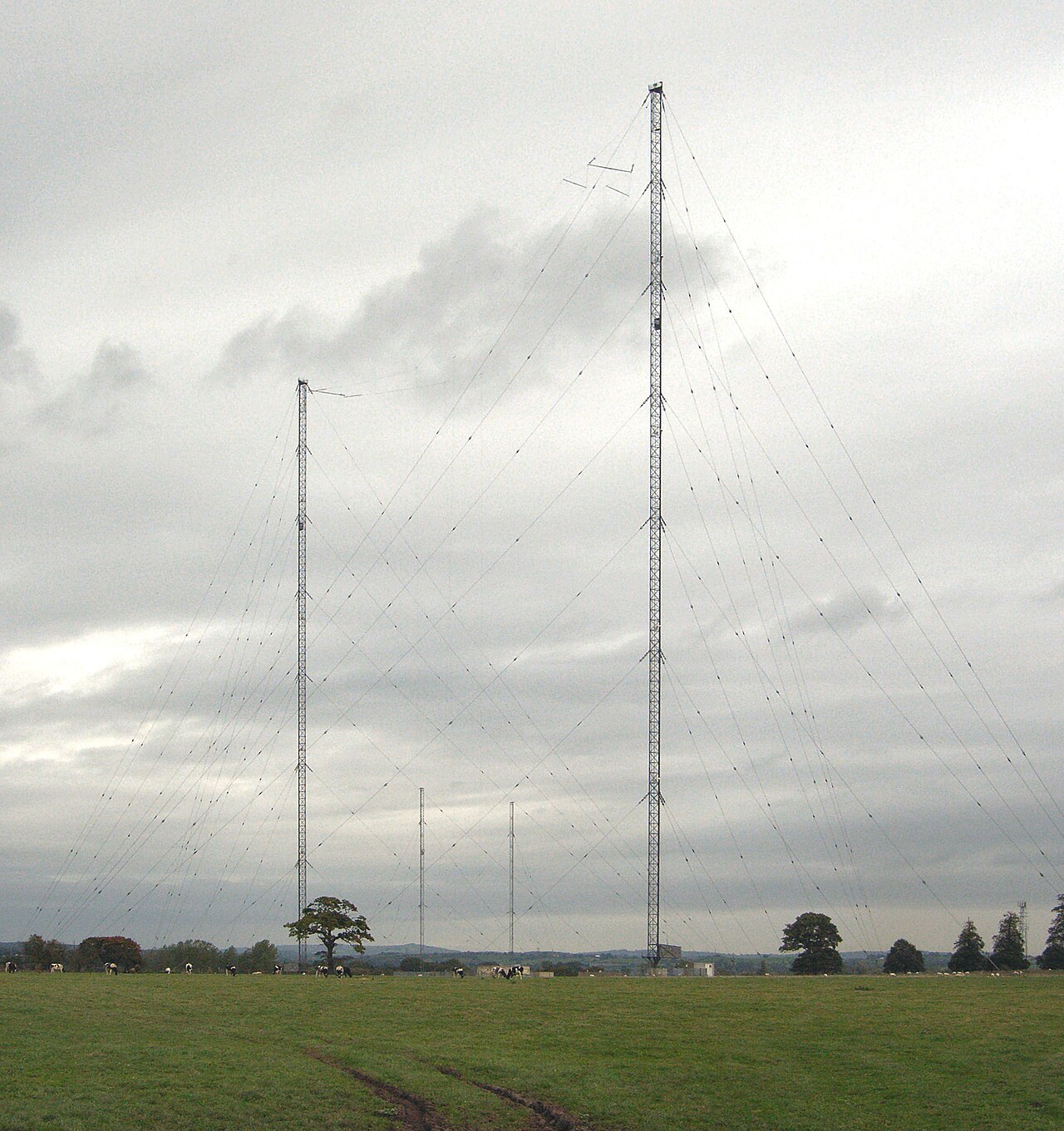
American readers may be unfamiliar with Long Wave as it’s a band not allocated in their region. Covering 153 to 279 kHz, it’s a relic from the earliest days of high-power broadcasting in the 1920s, used because of the enormous distances that could be covered with its lower frequencies. The main long wave transmitter for the BBC is at Droitwich, and its demise comes because there are no more spares for its high-power transmitter tubes. It joins many Medium Wave, or AM, as it is commonly known, stations in leaving the airwaves, as increased interference from switch mode electronics and the availability of higher quality alternatives took away their listeners. It’s fair to say that there will be few whose lives are inconvenienced by the switch-off in 2026, but it’s worth taking a moment to remember.
The first BBC Long Wave transmissions in the mid-1920s were on a 1600 metre wavelength, or 187.5 kHz. A series of international agreements saw them move to 193 kHz, and then 200 KHz or 1500 metres in 1934. They stayed on that frequency until another shift down 2 KHz to 198 kHz in 1988. They were atomic-controlled, and thus usable as a frequency standard. The programming started with station names redolent of their era, first the BBC National Service, then the Light Programme you’ll see on the dial in the header image, and finally the more modern-sounding Radio 4. A famous BBC programme tied to Long Wave is the Shipping Forecast, a weather bulletin for deep-sea fishermen which became cult listening on land and now features on FM and digital services too, and there’s even a probably-apocryphal tale that British nuclear submarine captains would once use its presence or absence to judge whether nuclear war had occurred.
In an Oxfordshire farmhouse not far short of fifty years ago, a young child who would later become a Hackaday writer heard a radio show like nothing before, which made an impression that continues to this day. The show was one of the earliest airings of the original Hitchhikers Guide To The Galaxy radio series, through a 1970s ITT radio tuned to BBC Radio 4 on (then) 200 kHz Long Wave. So long, Droitwich, and thanks for all the fish.









Much of my childhood was spent with a LW radio on in the background as my father listened to the cricket and its commentators. I could never understand how such a slow sport could be interesting on the radio. But he and probably the commentators are now gone too, the world moves on.
A more active sport would exceed the bandwidth of the transmitter.
Excited voices go up in frequency.
“ I could never understand how such a slow sport could be interesting on the radio.”
That’s the art of broadcasting.
I always explain cricket to my American friends as five days of sitting in the sun with your mates drinking beer, and every now and then something happens on the field and you cheer. I am not a hardcore cricket fan by any means, but viewed through that lens it’s a pleasant way to spend an afternoon.
The radio show referred to is called Test Match Special, and in a way it’s not about cricket. Instead it’s the purest form of the art of broadcasting, as three or four old guys chew the fat and tell jokes, occasionally breaking into very knowledgeable cricket punditry. They make a boring scene interesting to listen to, by talking about anything else but cricket. If you’ve never heard it would suggest having a listen, it’s surprisingly good radio. It’s not uncommon for people to watch the cricket on the TV and have Test Match Special on instead of the TV commentary.
A common conversation, which could last for hours when broadcasting from the Trent Bridge test match was Nottingham’s colourful buses!
It’s was also not unknown to go and watch the match live and bring a radio with you to listen to the commentary!
I don’t know if the dual TV/radio thing is still possible – it isn’t for music because digital TV adds delays so the radio sound is not in sync, but maybe less critical for commentary.
The bowler’s Holding the Batsman’s Willey.
There was a famous incident where the match was rained off and so they just ran the commentary off the match that they thought might have happened instead, which was just as good.
Depends on the commentators – I once listened to a course fishing tournament on BBC Radio Cumbira, yes, fishing! It was actually very funny, the presenter walking up and down the bank talking abut what the contestants had for their lunches and so on.
I have a vivid recollection of driving along with my father and accidentally turning into the Hitchhiker episode with Virgin poetry. We had no idea what we were listening to, but it was lucky that we had pulled into our driveway, because we both fell out of the car from laughing so much. Radio is just wonderful.
Our public station till lately had the director of the local library come on once a week and ramble on. It was like Vogon poetry for real.
‘See if I don’t…
Sad, but inevitable I guess given that they stopped making the parts many years ago. It wasn’t just deep sea fishermen who listen(ed) to the shipping forecast either, many leisure sailors relied on the long wave transmissions as well. Because of the propagation of long wave you could hear it over in France most of the time and I remember listening to the forecast, while drawing a synoptic chart of the weather to judge the best weather window to come home from Cherbourg.
This sounds like a challenge for, oh, I dunno…a bunch of people who like to hack things together/refurbish old stuff/adapt existing equipment. Where might that be found?
Radio license required.
Amateur radio license likely doesn’t qualify, as making a “broadcast” station is generally against the rules. Beacons are allowed, so I suppose one could try and slip it in that way…
Power restrictions would be a bit of a b* though
You need a radio license to manufacture vacuum tubes?
You aren’t going to resurrect these stations with a bunch of vacuum tubes. That’s an excuse, not a reason.
Canada shut down theirs, UK shut down this, there’s little need for them now.
Otherwise, take the basic components for a vacuum tube to the local glass blower, and have at it.
Original LW-transmitters were just mechanical multipolar generators rotating superfast: How fast you may ask?. Well if the generator has 1000 poles, it only has to rotate 150 times per second to achieve 150kHz.
The Alexanderson alternator at Grimeton Radio Station is still operational. They put in on the air once a year on Alexanderson Day. That will be July 5th this year. It transmits on 17.2 kHz so it runs at a much more reasonable 2115 rpm.
Actually usually twice a year as there is often a Christmas (usually) or new Year’s or sometimes some other date with a broadcast. Unfortunately it’s nigh impossible to get here in N america unless you’re near the Atlantic or Arctic Oceans
It’s a pity as it was such a simple resilient technology. I fondly remember sitting in a clapped-out old van in the middle of Norway and still being able to hear Droitwich on a primitive 4-transistor receiver. Try that on FM or DAB.
We lived in the Outer Hebrides when I was a boy.
Our background was the BBC longwave tuned to the shipping forecast. Highly relevant for a community full of fishermen in small boats in the North Atlantic.
Was talking about this just the other day.
The Goon Show, The Navy Lark, Round the Horne, Hancock’s Half Hour .. all shows from my early youth I absolutely devoured on the BBC Home Service (became Radio 4 in 1967). We had a rBush adiogram that could tune across the bands.
I was well into FM before The Hitch-hiker’s Guide started – I still have the Hacker Black Knight I used to listen on.
The old Droitwich transmitter on 200KHz was well-used by hams and electronics enthusiasts as a frequency standard for calibration.
I too first heard Hitchhiker’s on a transistor radio tuned to LW and was hooked. In the early 90s, as a soldier in Germany, I rigged a very long antenna around the grounds of the Officers Mess in order to hear Test Match Special when homesick!
The Science Museum in London has quite a few gigantic radio vacuum tubes on display, tucked away on the 2nd floor, and an impressive aerial tunning inductor from the Rugby Station (at 1920s the most powerful transmitter in the world) at 16kHz.
It’s well worth visiting, the craftsmanship is incredible.
Wonder if some of the spares they need are in that very collection of the museum!
“…because there are no more spares for its high-power transmitter tubes…” is one of the absolutely lamest excuses to cut funding and funnel the funds as bonus towards some faceless bureaucrat who wants to add a deck to his/her/it house, just doesn’t know where procure the extra dough.
Don’t spout bollocks.
“The valves, at Droitwich in Worcestershire, are so rare that engineers say there are fewer than 10 in the world, and the BBC has been forced to buy up the entire global supply. Each lasts anywhere between one and 10 years, and when one of the last two blows the service will go quiet.”
https://www.theguardian.com/media/2011/oct/09/bbc-radio4-long-wave-goodbye
You can buy a COTS 40 kW VHF FM solid state transmitter. Now, Its possible that is using a C class amplifier and a tuned circuit that isn’t suitable for classical AM modulation but there are multichannel DVB-T transmitters that could output 12 kW RMS or 25 kW PeP in UHF and they’re absolutely linear. I think with the transistors they use it’s absolutely possible to design an am transmitter working in the long wave frequencies.
If there was interest to maintain the service I think building a solid state replacement was absolutely possible, but when a political decision is done a technical excuse will pop up to justify it.
In Italy the medium wave service was shut off even id all the transmitters were modern solid state ones and the reason was because nobody listened to AM frequencies, that wasn’t true, actually. Italian public broadcaster is known to fire beloved tv hosts only to get then landing to the private broadcasters and with that most of the viewers and therefore the adverts.
You can get a brand new solid state long-wave transmitter from Nautel. Or you can buy some a second hand transmitter from some decommissioned transmitter site. For example the defunct long-wave site at Topolna in the Czech republic used a 50 kW TRAM.
so… I’m curious…. what becomes of that frequency now? is it just abandoned? nobody with the resources to have a license to broadcast on it has the actual equipment to do so, and it doesn’t sound like an easy frequency for a pirate radio station (FM is a different story!) given the massive sizes of antennas required. also, those esoteric tubes, which I would like a HaD article on at some point
Avast ye, scurvy dog, it be a Poirate frequency now! Yarrr!
In reality it will go silent, just like many other MW and LW frequencies.
My small collection of vintages AM radios now has even fewer stations to receive! Thank goodness for the flea-power AM transmitter (bought on eBay). I can still broadcast my own sounds -within a radius of about 5 metres anyway.
I have one of those too – it amuses me to listen to an internet radio station on an unmodified DAC 90 ( apart from a few cap replacements)
it was not only BBC, i remember radio Europe and Radio israel had LW and we were tunning in everyday on time. BBC going digital now but it will be difficult if you have no internet access, that is for eldery and low-income people!
It’s more than just about spares they think it was less than 1% of R4 listeners so keeping the service running made no financial sense when so many other ways to listen exist. When you publicly funded with decreasing revenue the decision was probably pretty easy. I think sometimes we have to recognise it’s time.
I cannot remember ever listening to LW for more than a few minutes. My personal connection is the masts. They can be seen for miles and if i’m out and about on my bike just seeing them tells me i’m close to home and the direction i must travel.
I’m sure they will be around for years to come but at some point they will be gone forever as well.
Yes, I haven’t listened to 198 other than flicking past it in decades. It was a part of my childhood, but tech has moved on.
I have so many portable radios that I operate a kitchen window ledge rotation system. Quite a few are old Soviet sets which aren’t equipped with FM, so I would often have one of those tuned to 198, making me part of that less-than-one-per-cent :)
A bit like the cooling towers at Ratcliffe on soar power station. Whether approaching the area by road, rail or air, it says nearly home.
Mrs. Bale will be gutted.
This is the comment I was hoping to see!
I could imagine her saying “Radio 4 service will be ending in exactly seventeen and a half minutes”.
This is one of those intersections that makes the hair on the back of my neck stand at attention. So much is chaos of late, so many massive failures, so many grossly extractive self-serving would-be heads of state and commerce building chaos with endless side orders of destruction. So much continuous and growing – if pointless – war now and in the likely future. The outcomes look grim on their best day. These are times that precede worse times, and these are the times to make sure the machines, the old ways, the old knowledge persist.
These are the times to revisit and maintain the things that have worked for decades or centuries. These are times for hackers and crackers of the old school to step up and say, “no, we will not wait, we will not destroy or discard or forget”.
Bring back the graybeards who still understand, who can maintain the old tools and the machines that require them. And teach the current generations so they, too, can step up and repair and create and defend.
Before it’s too late.
Dig someone up out of the eastern block maybe?
Anyone have a link to a photo of the TX power tube there are no replacements for?
“The CAM3 was designed for modulation stages in high power amplitude modulation transmitters. It runs in class A and was designed to be very linear. It is believed that this exhibit was used in the BBC Radio 4 long wave transmitter at Droitwich.”
https://www.r-type.org/exhib/aaa0538.htm
The BBC Has Done The Unthinkable! Farewell Radio 4 On Long Wave
May 21, 2026
https://www.youtube.com/watch?v=Cd2ltVQb2SI
I’ve seen descriptions, but not photos, of these valves. “two metre-high ceramic and metal valves” – I wonder what they look like?
I have long been highly suspicious about the “last valves in the world” story which is much-repeated, including in a Guardian article in 2011. The present transmitter was installed in the 1980s. It was certainly approaching the end of its service life and would have required extensive overhaul or replacement to keep the service going in the long term, but the valve explanation seems a very tall tale to me. I suppose it makes no difference now; the service did not close for want of (possibly mythical) valves.
The truth is that the cash-strapped BBC could not justify whatever enormous sum that Arqiva would demand for the capital spend on overhaul/replacement. Running maintenance for both the transmitter and antenna must have been a stiff expense. BBC senior management have long wanted it gone and have said so publicly. Also, my back-of-a-fag-packet calculation is that the electricity bill at the very best industrial rates is over a million quid a year.
Years ago i drove along the m5 at droitwich and my little philips radio howled
the size of the antennas had me wondering about three massive antenna towers in a line along I-87 south of Albany, NY in the hamet of Glenmont. I tried to find information on them using a source of information that used to rarely disappoint (Google) and somehow came up with nothing, even after allowing the AI to kick in with any possible hallucinations. does anyone know what they’re for?
Just searching for “i-87 albany radio tower” got me an infobox saying they’re WROW:
https://en.wikipedia.org/wiki/WROW
https://radio-locator.com/cgi-bin/finder?call=wrow&x=0&y=0&sr=Y&s=C
i take it then that LW towers are even taller then. in the wikipedia entry on LW there are no mention of transmitters in North America
It is not quite a requiem for Long Wave (LW). In Poland, the transmitter for Polish Radio’s First Program is still operating on the 225 kHz frequency; it is located in Solec Kujawski. It consists of two antennas and has a power output of 1,000 kW. It is a modern transistor-based transmitter. At present, there are no plans to shut it down. The program broadcast by this transmitter can be heard across a large part of Europe. Of course, Polish Radio also broadcasts via FM and DAB+.
They could leave it running, just at low power. 10 kW should be easy, even 50 kW. Hundreds of Medium Wave stations use that power.
I’ve been listening the loop with WebSDR, and experimenting by tweaking the frequency slightly to hear the effects it has on the sound. Very interesting…
I remember, during very favourable conditions in 1982, listening to BBC R4’s “Today” programme in Rome on 1500m LW. Rome is 1500km from Droitwich.
It’s always sad when a radio service shuts down. We lose another link to our past. In addition, CHU, Canada’s standard time and frequency stations on the HF bands have also pulled the plug. BTW: The illustration topping this web entry shows an MF standard BC radio dial, not the proper LF frequencies. Didn’t someone look before leaping?
An the airwaves because a little cleaner
Less BBC is always a good thing
After carefully thinking this through, I’ll have to make a full 180 degree turn from my earlier comment/opinion.
BBC News of late (last decade) grew noticeably lower grade ceding ground to unexpected challengers Radio Beijin being one of them. Maybe it is a good thing and no real miss overall. I’ve also witnessed how Al-Jazeera has better coverage of events that are either quietly ignored or skewed by other news sources.
Might as well return to the cold war era reading between the lines and extracting real information from the comparison.
France Inter made the same move some years ago to reduce it’s budget.
But as it’s used to broadcast time reference and frequency reference (the carrier frequency is controlled by atomic clock, so it’s used for metrology and calibration purpose) they still need to be broadcast…
So it’s had still basically the same cost for the government…
You are overdg it on censhp HaD.
haha, forgot the star sign is also used for bold text.
Oh well.
Back in the early 1970s I owned a 1965 Hillman Minx (badged here in West Pondia as a Sunbeam). The factory radio had mediumwave and longwave bands. The only thing I ever heard on longwave in eastern Pennsylvania was WGU20, which was a prototype US Gov’t emergency information station located near Washington DC.