

A few weeks ago we published the first in a new series of articles, Know Your Food. It was born out of the realisation that most people know surprisingly little about what they eat, and to apply a bit of Hackaday curiosity to received opinion on the subject. As we put it then: “To know both how common foodstuffs should be made, as well as how they are made industrially, should be an essential for everyone” We’ll continue in that vein, with a look at organic food.
If you buy your food in a supermarket it’s likely that in the vegetable aisle you’ll be presented with a choice. On one hand you will have the normal vegetable, and on the other and usually for a slightly higher price, the organic version of the same vegetable. What’s going on?
So What Is This Organic Stuff All About?
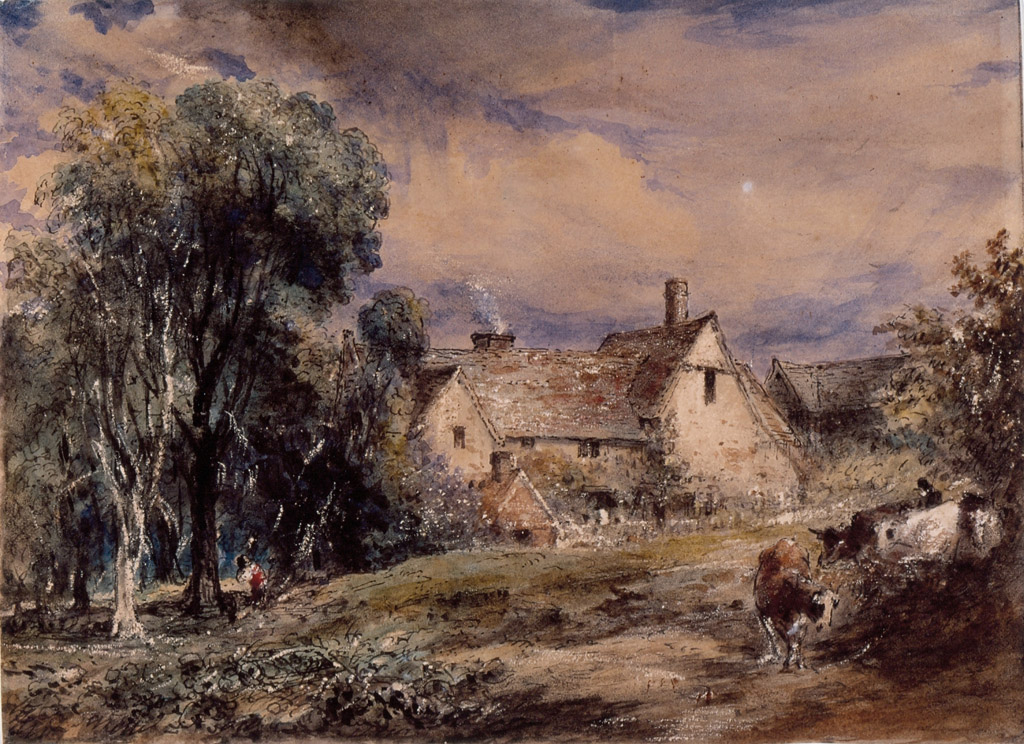
Organic production is a system of agriculture that emphasises natural fertilisers, pesticides, and farming methods over synthetic or intensive ones. It has its roots in the first half of the 20th century, and as the decades progressed it has become an important sector of agricultural industry. I grew up steeped in organic agriculture because my grandfather was an early adherent in the years following the war, so I’ve seen it from the sharpest end. There is a lot to commend organic production for and plenty of reasons to embrace it, but with that come some problematic aspects, and even dubious claims. Here I’ll try to unpick some of that.
It’s tempting to believe that all organic production is somehow a return to a 19th century rural idyl, complete with the obligatory chickens in the farmyard. Some organic producers do take a slice of this back-to-the-land approach to their craft, but the reality of organic farming is a very modern approach to managing the ecosystem. Organic farmers are not wary of progress, and neither are they reluctant to use pesticides or other chemicals. Instead they do so according to the principles of organic agriculture, so any techniques they use are designed to be beneficial to the ecosystem, and any chemicals have a natural origin.

An important thing to understand is that the line between organic and non-organic agriculture is not sharply drawn. Crop rotation for example is long established farming practice, as are techniques such as contour ploughing in areas with soil erosion. As for fertiliser, there will be very few farming operations whose work does not include manure in some form, or who do not take advantage of nitrogen fixing crops. Pesticides such as the insecticide pyrethrum – originally derived from chrysanthemum root – or Bordeaux Mixture as a fungicide – a solution containing copper ions, so called because of its origin in French vineyards who applied lime solutions from copper containers – find uses where applicable in both organic and conventional agriculture. The important distinction lies in the organic farmers not going further than this, into synthetic amonium nitrate fertiliser for example, or glyphosate herbicide, which you might know as Roundup.
That’s the organic sales pitch, and it’s a compelling one. Now, we’ll go through the not so positive aspects, both of the movement and of the business.
Organic status is not simply conferred to produce by virtue of being organically grown. Instead it’s a legally protected designation, enforced through a system of certification performed by designated organisations. Where I grew up in the UK for example, organic certification is performed by the Soil Association. This is good because it preserves trust in organic status, but it suffers the flaw that it’s a profitable business for the certifier, and an expensive one for the producer. This in turn favours larger producers who can afford certification, and leaves the smaller producer unable to afford certification and thus unable to label their produce as organic. They can describe it as “Organically grown” of course, but they lose the cachet of the organic label. Since many small producers are by necessity organic, this affects a large number of producers if not a significant sector of the market.
Is Organic Food Really Better?
Then there is the produce itself. Is it better than the non-organic stuff? Here we enter complex territory, because the answer differs depending upon the circumstances.
In terms of what advertising people like to call “goodness”, by which I mean nutrients, vitamins and minerals, and the like, in many cases it’s difficult to make a case for the organic product being superior to the non organic one. There will be exceptions such as apples, where a typical non-organic commercial dessert apple is overwatered to the point of diluting the beneficial properties it might have in search of the elusive “crunch”. But in the more ordinary case, that organic zucchini is unlikely to have more nutritional value than its non organic equivalent. It’s important to note that the organic product will lack any pesticide residues which may be present on its non organic equivalent, however it must be remembered that pesticide residue levels in food are subject to their own stringent regulation.
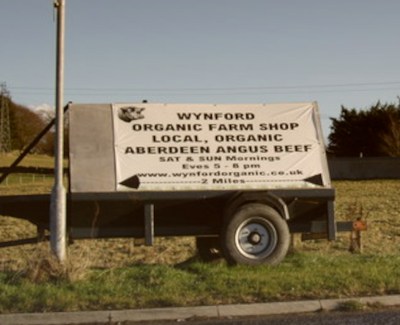
In terms of flavour, yet again it’s a mixed bag. An organic product grown in as intensive a manner as can be got away with under the rules, is not likely to taste better than the equivalent. It’s difficult even to pin down what in the husbandry governs the flavour of the finished product in a scientific sense, however as someone who grew up around organic production I’d offer the view that the longer something took to produce, the better its flavour is likely to be.
The Slow Food movement champions products made in this way, usually traditionally produced foods, heritage varieties, and foods with a particular terroir. If you’re looking for better tasting food then you may not find it with a supermarket organic label, but it’s quite likely that one of those small organic producers will have what you are looking for, simply because their methods are less intensive.
Finally, if you’re looking at the benefit to the environment, it’s likely that in most cases the organic product will impose less stress on the ecosystem and the wider environment than its non organic equivalent. If that’s your concern you should also look further than the means of production and into food miles; how far did the food in front of you travel to your plate? Here in Europe the strawberry is in season from around May to September, so does it make sense to fly them from the other side of the world in January, however nice they taste?
So now I hope you have more of an idea about organic food than you did at the start of this piece. You’ll know something about its benefits and problems, and you’ll know when it’s better than its non-organic equivalent. I hope you’ll find the food you like, and if you do, I hope it’s from a small producer, they need your business. Bon appetit!
Header: MichelM10, CC0.












Thank you for the reasonable introduction, Jenny. This is one of those topics that tends to generate rants rather than rationality.
Ramen!
worth remembering that organic production doesn’t even produce > 3% of the total food produced worldwide and as far 40 years of literature, independent, government or private funded never were able to prove GMO/etc. is worse for health than organics… if you think i’m inventing these numbers because i’m funded by Monsanto TM, this is a good start only on independent research: https://biofortified.org/genera/independent-funding/
another cool data is organic using 30% more resources (land, water, pesticide) to produce the same amount synthetic/GMO technology. sometimes as high as 60%, sometimes not as high, sometimes less! if you want to support the future go buy vertical/urban farming products and inform yourself on what science has to say about the subject… some read below
https://pmc.ncbi.nlm.nih.gov/articles/PMC3367244/
https://pmc.ncbi.nlm.nih.gov/articles/PMC7061863/
https://www.science.org/doi/10.1126/sciadv.1600850
https://pmc.ncbi.nlm.nih.gov/articles/PMC6918800/
https://pmc.ncbi.nlm.nih.gov/articles/PMC10814746/
https://www.science.org/doi/10.1126/sciadv.1602638
https://www.nature.com/articles/s44264-023-00009-7
It always surprises me, and worries me too, that so little is said about the nitrogen balance. Nitrogen in the soil used to come from a natural cycle, plants grew using nitrogen, fixed, rotted, and the nitrogen went back. Now, we throw tone of it on to the land to promote growth, a lot of which is taken up, presumably to leach out of the soil into water courses ….
Crop rotation.
Nitrogen and phosphorus are the two major runoffs from farming. Organic farming generally deals with the issue of nitrogen since naturally occurring nitrate fertilizers are harder to come by, but the problem still persists in terms of phosphate fertilizers which can be used as long as they’re mined instead of synthetic.
I don’t know if there’s some sort of limits or quotas on how much phosphates you can put down, but it’s still a major contributor to nutrient runoff into waterways.
Note that organic farming also permits the use of mineral fertilizers, i.e. stuff mined from the ground. Rock Phosphate, limestone, gypsum, Potassium Chloride, etc. just as long as it’s not synthetic. Technically this would also allow naturally occurring deposits of nitrogen bearing materials, such as guano.
Organic farming gives people the idea of sustainability and circular economies, but that’s not necessarily the case. In some cases it can simply be a form of ludditism by banning man-made chemicals and then digging up the same stuff from the ground without replacement.
Not to mention that just because something is “natural” doesn’t mean it’s not highly toxic.
Unfortunately “organic” is entirely an exercise in marketing and not any sort of rigorous evidence-based process.
Not at all true. You only look at the corporate manifestation of organic and judge all organic farming by the worst actors. I despise this argument. It’s so obviously false and all you have to do to disprove it is plant a seed and forget about it then eat the food.
Don’t trust what you see in a standard supermarket. That stuff is just sporting the legal label (it’s mostly mixed with nonorganic). Eat real organic. Go meet farmers at the farmers market. Talk to them. They don’t usually lie.
Yes, it’s important to know that organic in no way is ‘no spray’ or ‘no pesticides’. It just means that those pesticides are ‘naturally derived’ (still industrially manufactured), just not wholly lab synthesized compounds. Many times this means the organic pesticide isn’t as narrowly targeted as the conventional ones, or the organic one may require more frequent application to the crop which means much more diesel fuel is used over time. Just look up at how much sulfur is put on organic crops.
In the Peoples Republik of Kalifornia, we have the CDFA for the ‘organic’ stuff. They seem to be sincere and earnest in their intent, but they are also staffed by people that are not the sharpest knifes in the drawer.
My wife has about 2 acres of (non-commercial, but licensed) greenhouses on the upslope of our property. Down the hill is a small horse ranch and several residences that have small ‘hobby’ farms, one of which is registered as an organic producer per the CDFA.
Someone reported chemical runoff. We do not use fertilizer, nor do we use pesticides. They investigated us several times for over a year while the horse ranch and the two residences/farms dumped a boatload of chemicals and manure into the runoff.
The ‘organic’ label and certification is a good idea. But it has become too politicol and linked to industrial interests to be considered meaningful or beneficial.
The organic label isn’t a good idea. The whole concept is based on fear and ignorance. What is good is defining sustainable practices, energy efficiency, and wildlife-friendly practices and educating consumers about these things.
[quote]”Finally, if you’re looking at the benefit to the environment, it’s likely that in most cases the organic product will impose less stress on the ecosystem and the wider environment than its non organic equivalent.”[/quote]
I’m gonna need some citations on that. This is unlikely to be true for a whole host of reasons. The first is that targeted pesticides are almost certainly less “stressful” to the environment than broad spectrum “organic” options. Where pesticides can’t be relied on, there is often a lot more machinery involved, for instance tractors that are repeatedly physically stabbing weeds or lasering them because herbicides aren’t allowed or of sufficient strength to do the job. That’s a lot more gas and noise pollution. Then there’s the fact that anti-GMO often goes hand-in-hand with “organic” and this means picking less productive strains, which means more land has to be cultivated for the same yield in product. Organic items are often subject to heavier losses due to bugs and weeds, so that’s also going to result in more energy for less yield.
I don’t really care if people want to drink the snake-oil that is “organic”, but they should not delude themselves that it is better for them or the environment at large, at least in most cases. It’s a marketing strategy primarily.
They don’t taste nice in my experience, they don’t taste of anything much, I guess because they are picked unripe so they don’t rot in transit, and then artificially rapid-ripened, or at least reddened, at the destination.
At least part of the problem is the sort of strawberry they grow. Great big, bright red, shiny, flavorless. The ones we had when I was a kid were smaller, duller, darker, and yummy
The tiny little wild strawberries that grow in my backyard taste better than the giant things from the grocery store.
Most commercially farmed strawberry varieties can only hit 6-10% Brix.
We grow Mara des Bois which frequently hits 12-15% Brix, Mignonette which top out around 16.7%, and Wild Scarlet which typically rate 22% to 25%.
Wild Scarlet plants only produce 10-20 teeny berries weighing 0.1-0.25lbs of fruit per plant per season.
Mignonette produce small berries but you get up to 50 per plant over the course of the season totalling 0.25-0.5lbs of fruit.
The Mara Des Bois produce up to 60 medium sized berries and average between 0.9 to 2.6 pounds per plant per season
All of these varieties are rather soft berries that do not travel well but are sweet with very good, complex flavor profiles. Ours are either eaten fresh, freeze dried, jammed, or made into wine. Fresh shelf life isnt a priority for us.
The most common commercial strawberry variety sold in grocery stores is the Albion which typically rates 8.5-10% brix and yields 20-30 large berries totaling 1-1.5lbs per plant. They produce a firm berry that travels well but has a rather mild bland flavor and arent very sweet. It makes sense commercially but like most commercial fruit and veg can be rather disappointing to eat.
I don’t know what kind of strawberries grow in my yard. They just showed up one day in the flower bed with the pansies, so I watered them along with the flowers. They seem to have liked it, so they spread. The berries are tiny but very tasty. They don’t make enough to do anything with them but eat one once in a while when I’m out in the yard.
Your HAD profile says Germany,
So woodland 10.9-13.5% brix is your most likely wild variety.
When I looked up “brix” it seemed to just be “per cent sugar”. I have definitely tasted grapes that were far too sugary. Is brix still a good proxy for flavor in strawberries?
Commercial strawberries are a hybrid; the size came from one parent “species”, and the better taste from another. (Unless you’re near the Pacific, the wild ones are probably more like the small tasty type.) The genes can mix, but there is a tendency for size and flavor to be negatively correlated, and traditional plant breeding has left flavor as a fairly low priority — consumers can see size and color and bruises, but can’t easily check flavor until after they’ve bought.
There are two criticisms of organic farming out there that I think make valid points.
One, it has a somewhat higher land use per unit of crops due to the limits on fertilizer sources.
Two, approving pesticides solely on the basis of whether they are natural or not doesn’t say much about their overall toxicity or even environmental impact.
Natural herbicides and pesticides are less harmful and a lot more expensive, which is why we make synthetic ones that are more persistent in the environment, and have a faster, broader, knockdown capability. In a nutshell it does come down to the chemistry, add “unnatural” atoms to molecules and biological systems have a harder time degrading them, therefore they are more effective.
Everything you said is wrong. “Natural” doesn’t have any correlation with harm – some of the most toxic substances known are non synthetic. And there’s a huge amount of engineering and modelling that goes into synthetic pesticides to make them do their job faster, require less to be applied, breakdown faster and ensure that they don’t accumulate to harmful levels in waterways. There are extremely nasty products that aren’t used in wider industry because of their risk profile, but are considered “organic” and used routinely by farms chasing that marketing gimmick.
(I did a couple of years directly working on the custom chemistry software toolkits used by pesticide researchers at one of the biggest agrichem companies, and they spent tens of millions of dollars a year just on the licenses for the tools used to make safer products.)
They are also partially approved based on what is “traditional.”
That copper solution as a fungicide is an example. It is bad for the environment. It is bad for the people who apply it. It is “organic” because it is a traditional fungicide. It has been used since the late 1800s. That it is traditional and “organic” doesn’t make it good for you.
From Wikipedia:
https://en.wikipedia.org/wiki/Bordeaux_mixture#Risks
Not to mention organic animal farming, where antibiotics are banned but homeopathy is approved as a valid treatment.
I suppose it gives more ammunition to people who oppose eating meat, for them to argue that there’s no ethical way to produce it because you are only allowed ineffective means of dealing with disease.
Where in the world is homeopathy is approved as a valid treatment for farm animals? Lala land? I mean come on.
citation needed
It’s not like it can be banned, since it doesn’t actually do anything for better or worse. If you’re not allowed antibiotics to treat your farm animals, you might as well wave a magic wand and hope for the best.
The USDA and EU regulations on organic food are only concerned with whether the food is produced without synthetic pesticides, herbicides, or GMOs. The ethics of using faith healing on production animals is besides the point.
Example:
https://eur-lex.europa.eu/LexUriServ/LexUriServ.do?uri=OJ:L:2008:250:0001:0084:EN:PDF#page=13
Now, the catch-22 is that if you do use antibiotics, you can’t then sell the meat or milk of the animal as “organic”. That puts a strong pressure on people to not treat their animals properly and pretend that the homeopathic remedies actually work.
Also note the term “phytotherapeutic”, which is a fancy word for herbal remedies. While some plants do have genuine medical properties, which is where we get things like aspirin and antibiotics in the first place, a lot of the field suffers from the problem of folk remedies: diseases tend to heal by themselves and the “natural” remedies people apply are either ineffective or harmful and had nothing to do with the case.
So, the main criticism is that the rules on organic farming give unwarranted credibility to pseudoscientific quack remedies and the farmers and researchers on the subject get locked into this debate instead of demanding actual proof.
Because king chuck believe in quackery the NHS had approved both homeopathy and chiropracty.
There was talk about kicking the homeopaths out, but England.
Organic practice does not guarantee sustainability either, it just controls the types of inputs to the farm system. Minimising inputs, balancing them against outputs, growing heirloom varieties selected for flavour and nutrition, not storage and transport, and selling locally, is a very different game to the supermarket organic produce people see. Also, stay away from copper, do your own research and you can thank me later.
i used to live in a small village near zutphen in the netherlands. when i was young, you could tell the seasons by the songs of the types of bird flying around, protecting their nests and raising their children. now the birds are gone due to the monoculture caused by genetically changed grass sold by the same company as the pesticides used to “protect” the grass. no flowers or other plans, no insects, no birds. it is a green desert now. nothing lives there except the grass. cows are indoors. fruit tailers have to import bees now to pollinate the flowers to get the fruit in the first place. we get more mosquitos as there are less birds to prey on them. there are now more birds in the city than on the land.
we could not drink our own well water because of the pesticides in it. and people around us got cancer a lot.
for me organic food has less to do with the taste, but more for the sustainability of the whole process and our environment. its not for me, its for my children and grandchildren that i choose to eat organic grown food.
Considering the large number of “organic” food and non-food items now available in stores, I have to give the organic label a tongue-in-cheek label as well. A couple years ago I read an article, the gist of which was: scammer purchases organic farm. Scammer proceeds to purchase and resell at a substantial profit large amounts of produce from any old source (far more than the farm could produce), which he labeled as organic.
He eventually got caught but as is too often the case in government oversight, the checks and balances overseeing organic production lag well behind the scammers looking for a buck. As alluded to by Jenny, if you want true organic produce, it’s best to use a local, trusted source, and not big-box stores.
Upon first encountering the term Organic Food years ago I imagined it must be in contrast to Inorganic Food, which is what I have in my salt shaker.
Salt does not contain calories, macronutrients (like fats, proteins, or carbohydrates) which are the defining characteristics of food. Its a mineral used as a condiment and preservative.
I live in the UK and have lived on an ultra-processed free diet for over two years now.
My meat is organic, so are my vegetables and fruit. I collect them from organic farms nearby a 418 mile round trip because one is north of me and other to the west.
I refuse to use delivery services and the local places are worse than the supermarkets.
I need fresh ingredients not decaying and wilting produce that the supermarkets have no idea of how to care for them.
If I served my food locally, it would create a takeaway and Uber Eats wasteland.
I can recreate everything they do but with ingredients everyone would recognise coming out of a traditional English kitchen.
I mastered Veganism and Vegetarianism in the early 1980’s.
Omnivore no problems.
I was trained in some of the best kitchens.
I am not a professional chef, I do it as a hobby and offer wellness packages to those that cannot cook.
It costs about the same as all that ultra-processed crap but mine won’t cause bloating or reflux.
If you enjoy eating to the rhythm of the rectangular light in most corners of the living room, carry on getting fatter.
I’m enjoying this series.