
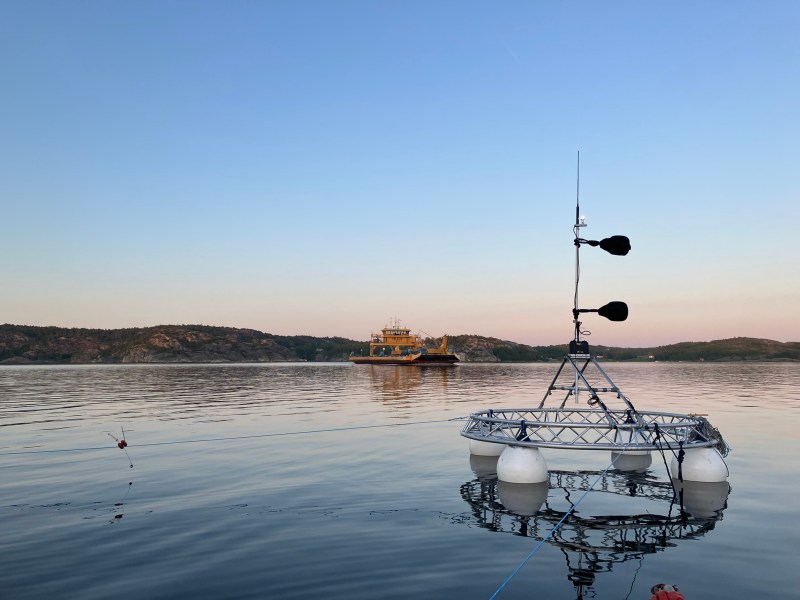
In order to not hit something, you generally need to know where that thing is. On land, the meager human eyesight tends to be sufficient. On the water, however, the prospects are more dangerous and complicated. So, technology is required to ensure safe ocean voyages in the form of the AIS transponder system. The off the shelf solutions tend to work quite well, but [peterantypas] was displeased with the commercial offerings, and built what appears to be the first open source AIS transponder called MAIANA.
Automatic Identification System (AIS) is a GPS tracking system designed for maritime applications. Broadly speaking, it broadcasts GPS and other data at intervals over VHF radio. AIS is what allows the precise tracking of vessels by authorities, and online hobbyists. AIS is also often received by other vessels to augment radar improving boat to boat collision safety.
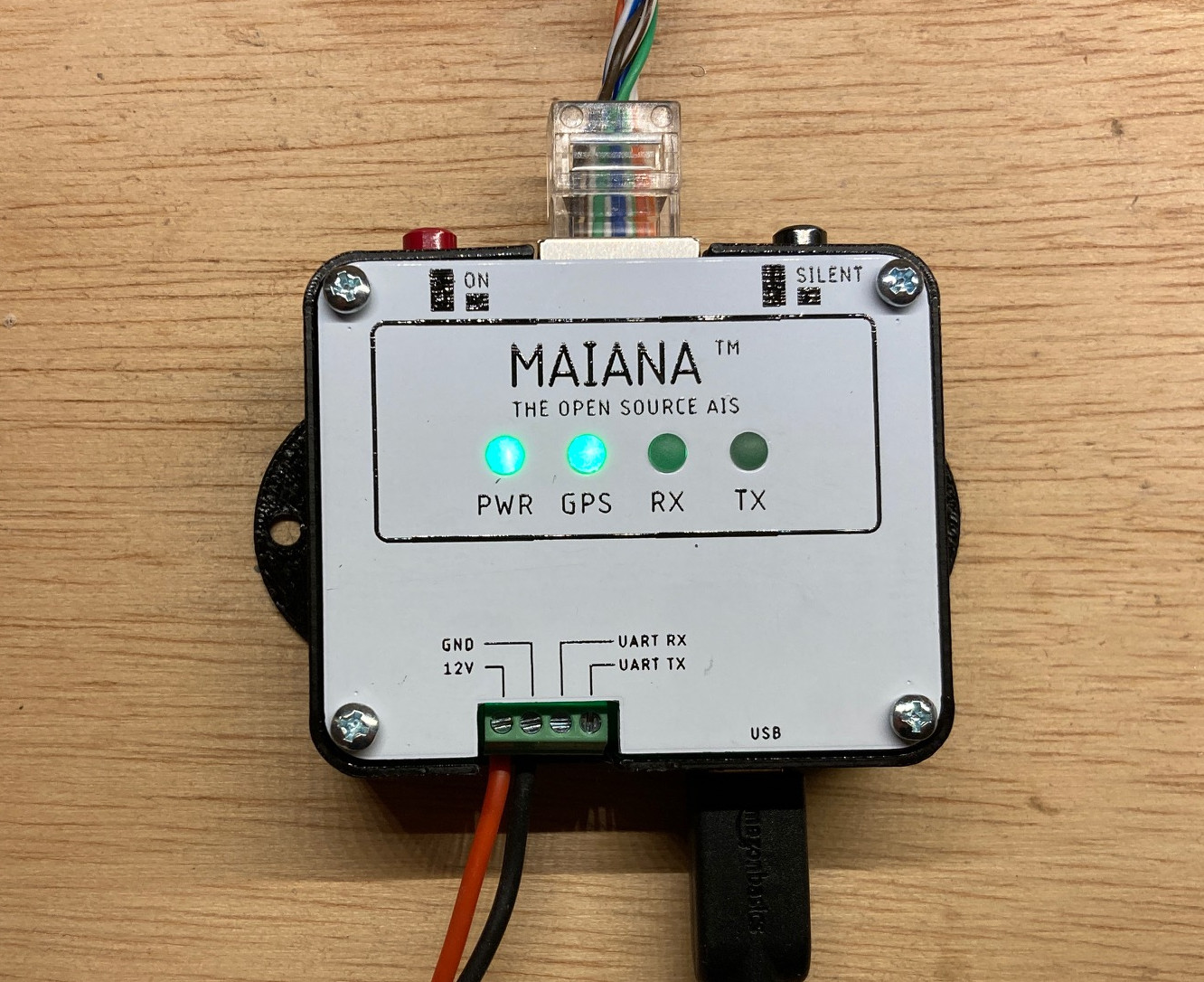 Most commercial AIS transponders used by sailors are rather bulky, expensive, come with a large power budget. The MAIANA project avoids these pitfalls by being entirely self-contained. The RF portion is largely made up of a STM32L4 micro controller, a SI Labs Si4460 ISM RF chip, and a Quectel L76L-M33 with a Johansson ceramic chip antenna for GPS. With such simple hardware, the PCB is easily small enough to fit inside the antenna assembly.
This design eliminates the need for long runs of multiple shielded RF cables to a bulky transponder unit inside. Instead, a simple Ethernet cable is used to transfer data to and from the mast. Inside the boat, a USB decoder is used to pass the AIS data on to a PC. This whole setup is remarkably simple and reliable, with hundreds of units having been produced since the project’s start.
While this is the first full blown AIS transponder we have covered, we have seen other projects utilizing the protocol. We have also seen quite a number of projects with the aircraft equivalent, ADS-B.
Thanks [Bernerd] for the tip!












I don’t know, seems like a very human mistake to me. AI would recognize it as an actual word that is NOT mania. I’m sure getting tired of kneejerk AI hate though. Maybe I should accuse YOU of being AI since you found the mistake.
That’s not a very human mistake, because the first time you read it you go “eh, how is that spelled?” and double check the first image of the item you’re writing about.
Cool project that I won’t be touching with a 10 foot pole. No SOLAS carriage compliance, no type approval, no equipment certification, sending VHF using non compliant can be a violation of laws and if the vessel is insured, good luck with insurance if anything happens.
It’s a great exercise but personally, I would stay away from it if your vessel requires AIS.
Who says they’re not going to get proper paperwork once they move past the early prototyping stage? Usualy you need to develop and manufacture the device first before you try to get it certified…
Would insurance really care if I have a funny plastic RF box being powered by a power bank?
Insurance cares about any excuse to keep your money when you have an otherwise valid claim.
Considering AIS is part of navigation systems and warning systems, absolutely. If you modify your car and replace your steering wheel with play doh and get into an accident, your insurance won’t pay you a penny. AIS transponders are a requirement for most vessels and are absolutely mentioned in insurance documents. Just ask lloyds.
There are many accidents every single day. The amount of vessels that sink each day is quite severe. I receive an internal newsletter at work and it only has a part of the vessels that sink and even that is 10-20 reports each day. The vast majority are Chinese and Indian fishing boats, resulting in a lot of lost souls. AIS transponders don’t just work as a warning for other vessels to prevent accidents, they also function to provide location based systems for life jackets and other MOB (man over board) devices (not all use AIS, the ones we use do use AIS and RLS). If you got a tiny vessel and are only on rivers or just use this to mess around with, sure, this is a cool project. And I do think it’s a cool project, don’t get me wrong. But I’ve installed many AIS systems and I’m not touching this.
So by your logic we should remove headlights and turn signals on all cars because there are some people who ignore them….
Got it
I knew a guy who lost his licence and career due to removing the brand and model badges from his car and applying a protective vinyl wrap to the bonnet, then getting rear ended at traffic lights.
Crash was clearly not his fault, but his insurance claimed the coverage was invalid due to failing to declare mods. So he was assumed at fault in the accident (happens automatically due to lack of insurance) and was prosecuted for driving without insurance, which cost him his job due to mandatory reporting requirements.
I’m sorry….. but WHAT????????????????
Context?
What country?
That sounds almost German, perhaps Swiss.
Rules crazy people.
lol no.
—> CFR 47 Part 80 – Maritime services.
Can’t possibly see how this is even remotely compliant.
And – the dude is selling kits !
I think the FCC will be paying a visit shortly.
I have a commercial AIS transponder, and it is totally uncompliant with the clear channel algorithms it’s supposed to have. Frankly, you’re more likely to get struck by lightning than to have the FCC do anything on such a minor issue.
Only the ‘selling kits’ part might get Uncle Charlie off his unfireable government worker ass.
Yeah, certainly this is not for commercial vehicles requiring AIS transponders. However, there is a huge segment of boaters that go offshore simply rely on only receive mode AIS systems. It f****** sucks. The options out there are extremely limited or horrendously overpriced? It’s definitely a complex, and typically these Maritime standards aim to be a global… Yet ironically AIS standard itself was designed around 50 mi line of sight or so.
The problem is when one of these transponders gets stuck on transmit and jams out other AIS transponders. Jamming like that could contribute to a commerical ship hitting another. The liability is huge, easily into the hundreds of millions of dollars.
While a single failure rarely leads incident. It takes multiple failures. Heavy fog combined with a broken radar system and a jammed AIS could lead to a collision.
Great article and great project :-)
Some copycat from uruguay ?!?
Is AI poisoning now a thing in Hackaday LLM?
But they aren’t really transponders, are they?
They are transceivers: They are capable of transmitting AIS data, functionaing as a beacon. And thay also independently receive similar data from other nearby transmitters.
But they don’t (AFAIK) automatically retransmit or reply upon receipt of a request from another beacon — the fundamental function or definition of a transponder.
Blame the International Marine Organization for the misnomer. They have other strange ideas too. Like demanding that AIS data is private and not to be shared on the web.
Initially it listens to which time slots are in currently in use and then chooses a random unused time slot and attempts to transmit its information and which free time slot it plans to use for its next transmission.
Also the closer it is to another AIS transponder the more often it will transmit information.
Both these reactions in transmissions to previously received information would suggest to me that technically they are indeed transponders.
Also, to add a little more detail, there are different types of AIS. There’s class A that uses this self-organizing tdma which actually calculates a time slot to transmit into. And then class b which is what normal people use on their boats, all that’s doing is waiting for a clear channel and then transmitting.
It’s all hard trick to manage on the edge cases! But for the most part, Open water works great, near a busy port, not so great!.
Also at least in the past, one transponder could command another to change channel.
The rationale was to have ships in a particular area operate on a different channel for ???? reasons.
I think I heard that this functionality was removed from the standard in a later revision because it lacked viable and sensible use cases, PLUS was horrendously easy for an attacker to abuse since there was no validation of the source of a command.
I think this is a great project not only to alleviate this gigantic Gap recreational boating, which is the lack of AIS transmitting boats. Seriously, very few boats have transponders unless they are seasoned offshore sailors or had so much money to throw out that that their installer had to buy everything in the catalog from Garmin, Raymarine and icom, All at once…
I think an underappreciated aspect of this project is being able to understand, and perhaps one day propose improvements to recreational AIS.
Like it’s absolutely stupid that we have channel markers, privately maintain markers, floating markers that shift around with every big storm, completely untracked. The technology exists today to throw a couple hundred dollars and have a real working AIS transmitting navigation aid!
thanks – the earlier comments about whether a homemade module would be acceptable for insurance requirements on cargo ships had disspirited me but imo you nailed exactly where this is significant. it just expands the pool of people who might use AIS. obviously the people with millions of dollars at stake will still use more expensive solutions.
A more reasonable solution is to use a web based solution with mobile data or Starlink to upload positions. Even APRS. AIS should just not me messed with by amateurs as it is so easily jammed(by malfunctions) and is critical for marine safety.
The places you really need these kinds of systems generally have good cellular coverage. With direct to cell satellite systems coming online, that can provide service in more remote areas.
Cellular systems are just much better at handling interference/jamming.
A little info about the AIS inventors income from his his work.
Ask chat gpt about it. I could not paste the answer to the question:
Have Håkan Lans received any money for his invention of AIS
A TDMA/GMSK, AIS‑inspired next‑gen APRS RF layer, with a gateway that speaks APRS‑IS natively would be the cat’s meow to replaced ancient AX.25 ALOHA. An AIS‑inspired ham‑band protocol feeding APRS‑IS is not only possible—it’s architecturally elegant. A field‑by‑field mapping translation can convert AIS telemetry/environment fields into APRS‑IS packet string. AIS doesn’t include digipeating, however, repeating AIS‑inspired ham‑band packets would be much better than APRS digipeating because TDMA provides a deterministic, collision‑free repeat scheduling.
Problem would be wider acceptance and use case… seeing it snowball into mass adoption. Good luck!