
Hollywood has a lot to answer for when it comes to “silencers” on firearms. On screen, a suppressed pistol makes a pinging thud, and the bad guy in the next room flops to the floor. Real life is rather less cinematic. A suppressor takes the edge off the report, but it’s by no means quiet or silent. Hence why the term “silencer” is more of a colloquialism, and why “suppressor” is more appropriate.
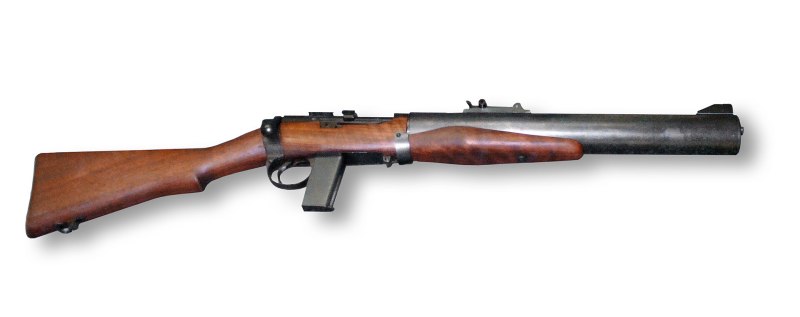
Every so often, though, someone gets remarkably close to the movie version. The best-known example is probably the De Lisle carbine. A British commando weapon from the Second World War, it was cobbled together from bits and pieces and ended up being a stellar performer in the world of clandestine operations.
Softly
William Godfray De Lisle was an engineer who worked at the Air Ministry during the period in which the United Kingdom found itself embroiled in the tumult that was World War II. He happened to be a capable weaponsmith, and during the war, he put together a rather unique carbine in .22 calibre as a personal project. Based on a short-magazine Lee-Enfield Mk III, it had the unique feature of having a sizable suppressor integrated into the very design of the weapon itself. The homebrew project was field tested on rabbits and small game at De Lisle’s property, with the spoils of the hunt proving most welcome at a time when heavy rationing was in place.
Soon enough, De Lisle was invited to demonstrate the weapon for examination by Major Sir Malcolm Campbell of Combined Operations HQ, and De Lisle’s design would prove remarkable with its performance in testing. The 1940s were rather a different time to today, without so many concerns around health, safety, or flinging bullets in the vicinity of the public. Thus, a simple trial was designed. The rifle was fired from the top of the Adelphi Building directly into the Thames River, and it was noted that passers by did not appear to hear it firing or respond to the shots at all. It was a ringing endorsement that the De Lisle design did what it was supposed to do.
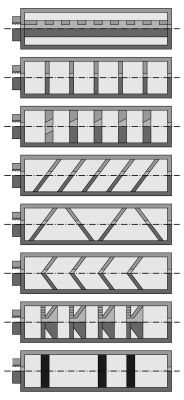
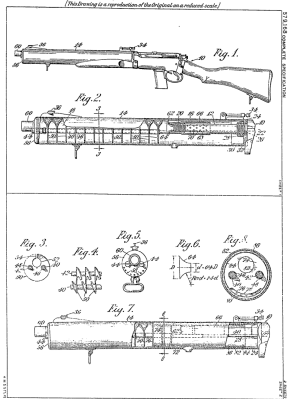
The gun’s success was heavily down to the integrated suppressor. It was inspired by the basic Maxim design, made popular by Hiram Percy Maxim, son of the creator of the famed Maxim machine gun that was so popular in the previous World War. At two inches in diameter, it used two expansion chambers, with a spiral system of baffles inside to absorb and diffuse the energy of the shot, reducing the sound output at the source. By virtue of its large size, it was capable of accepting a high volume of gases when fired, aiding its performance. The suppressor was highly effective at both reducing noise and cutting muzzle flash, both of prime interest to commandos involved in covert operations.
As it stood, however, De Lisle’s carbine wasn’t quite ideal for wartime use in its prototype form. The .22 cartridge was plenty for hunting small game, but rather titchy for the job of taking down German sentries. It was thus requested that a 9 mm version be produced, against De Lisle’s advice.
The following prototype was unsuccessful both ballistically and in terms of the noise it made—in part due to the supersonic nature of the 9 mm ammunition. De Lisle instead pushed ahead with a redesign chambered for .45 ACP, which had the benefit of increased stopping power and subsonic muzzle velocity for a quieter report when fired.
It proved ideal for the job, and soon enough, the new ultra-quiet carbine was in the hands of commandos conducting missions in occupied France. While a handful of handmade pre-production units were already taking part in the war, official range test were further proving the value of the new gun. Where a contemporary Sten gun was hitting 125 dB, and a silenced version sounding off at 89.5 dB, the De Lisle was besting that with a 85.5 dB report even despite firing a much larger round. It was considered effective out to a range of approximately 200 meters.
The De Lisle carbine was soon enough given a manufacturing contract for 500 units, though it would never be produced in such numbers. The final count was just 130 examples, with the majority being delivered directly to Combined Operations HQ. Beyond the suppressor, the gun was still effectively assembled from bits and pieces even in its production form. The heart of the weapon was the short-magazine Lee-Enfield Mk III, donating its bolt-action mechanics, but it had been hacked to accept a modified Thompson submachine gun barrel suitable for the .45 ACP cartridge. The six-groove barrel was also ported to help control the venting of gases into the suppressor assembly, which stretched from the back of the barrel to several inches in front of the muzzle. The receiver accepted modified magazines from the M1911 pistol.
The weapon would eventually see combat with commando units around the world. During World War II, the gun saw service with British commandos disrupting German operations on the continent, and would eventually turn up in the Burma campaign for use against Japanese forces, too. The weapon remained in service with British forces through the Korean war and Malayan Emergency, too. There are vague reports that examples of the weapon may later have popped up in the Vietnam War as well, in the hands of US Special Forces, though as with all clandestine operations, details are thin at best.
Overall, the De Lisle carbine proved the value of focusing a design around a single specific purpose. It was intended to be an ultra-quiet weapon that was designed around the suppressor, to great success. Contrast this with other designs which fitted suppressors after the fact to existing guns, which delivered less impressive results. The gun stood out from its rivals because it was designed differently from the outset, and it proved valuable for this very reason.
Featured image: “De Lisle carbine” by [Atirador]











The 2nd WW ‘Welrod’ silenced gun was actually silent. A Swiss company still manufactures it as ‘vermin gun’ and there was a video of it on the company’s website until a certain young man with an Italian name shot an insurance company executive with a Swiss clone in the US. The only thing can be heard is the bolt firing pin moving, nothing else.
Didn’t he just use a glock with a 3D printed lower and supressor? I remember thinking it was a weldrod too due to the manual action, but I think it just wouldn’t cycle because the supressor added too much mass to the barrel (no nielsen device).
Yep. Printed suppressor and glock frame, no booster. The welrod isn’t really that quiet either.
Did you get to shoot a Welrod? Was is it freshly rebuilt before you shot it?
Welrod’s basically need to be rebuilt after a few shots. There are rubber baffles in the “barrel” that get shot through. The first shot of a freshly rebuilt Welrod is really pretty quiet. But that first shot also blew a hole through the rubber baffles, the hole while close slightly, but each shot after removes more rubber, reduces the noise suppression qualities.
The Swiss one very likely solved this issue.
I stand corrected!
There were all kinds of interesting extremely-silenced captive piston subsonic contraptions during the cold war on all sides, and many of them were quiet enough that the main source of noise was the metallic clack of the breech, so often they had a mode that turned off semi-auto to get rid of that noise too. They were glorified pellet guns when it came to power, and even worse than that for range, but truly you’d be able to cover the noise with a well-timed cough.
I remember reading from old hunting magazines about underloading cartridges for sub-sonic “rat guns”, and casting the bullets out of brittle alloys that would fragment next to the rodent and kill them even on a near-miss.
They mentioned a risk: if the powder charge was packed too loosely, it wouldn’t ignite or burn properly and it could generate CO gas, and the pressure would increase until it detonated and that could blow up the action in your face.
Like P. T. Kekkonen and „cat sneeze”?
Can’t say I recognize the name.
I miss old P.T. Learned a lot from the old bugger. His website is still up.
Back when I was reading about this, there hadn’t been a solid conclusion to what caused those explosions though my sources were old when I read them. Mostly the authors talked about squib loads in 30-06 cartridges, though that might have just been the cartridges that they US Army was most concerned with when they did the work (Some of that stuff was that old, yes)
The other theory is that the primer would initiate a dust explosion within the half filled cartridge which would cause all the powder to ignite at once instead of the “slower” burn it was designed for, and that pressure spike would blow out a cartridge and possibly damage the action.
To avoid this the older reloading manuals and books suggest layering in first a squib powder charge and then topping it with either GREX filler that was developed for fire-forming cartridges for a wildcat chamber, or traditionalists used dry Cream if Wheat. This is to keep the powder charge gently tamped down and in contact with the primer prior to seating the bullet or ball.
It keeps the powder from sloshing around the half empty cartridge and risk causing a risk of misfire or an-overpressure explosion.
If I recall correctly, as a kid my dad let me use the “Colibri” .22LR rounds. It was just a copper bullet (lead free) on top of a cartridge with no actual powder in it at all. All propulsion came from the primer alone. Would kind of bounce off your skin 80% of the time, every once in a while it would go in you… Don’t ask how I know. Just made a cork-gun popping noise. Wouldn’t reliably cycle any action, so whatever you put them in became de facto bolt-action. Pretty fun for a bored kid shooting bean cans in a much less populous country.
Yes, like firing the gun point-blank at a birch tree. The bullet would bounce back and you end up shooting yourself. Been there, done that.
My favorite is the Russian integrally suppressed ammunition: https://en.wikipedia.org/wiki/PSS_silent_pistol
It’s spiritual successor, the Brügger & Thomet (B&T) VP9 (Veterinary Pistol 9mm), is a manually cycling pistol used by vets to dispatch large livestock. Mixed reviews on the early runs of the model but it apparently is 129–140 dB with subsonic ammo. Uses rubber wipes for baffles though so you’re going to get degradation over time with it.
Luigi Mangione used gun consisting of commercial, Glock-style slide and 3D-printed frame.
I would love an Xboxahoy episode on this weapon
The always-lovely Ian McCollum has a couple videos about it:
https://www.youtube.com/watch?v=YlGX7_0tZhI
Turning this short into a regular video. You can hear just how quiet it gets… not bad.
https://www.youtube.com/watch?v=_tXbYk_sDuQ
Not exactly stock, this one is sporterized and Frankensteined with a Mauser. Well done though. Kinda interesting.
Reproductions were made and command big money.
Aw man don’t tell me that…
“William Godfray De Lisle was an engineer who worked at the Air Ministry during the period in which the United Kingdom found itself embroiled in the tumult that was World War II”
I appreciate the article but it could have been 30% shorter.
And I enjoyed the historical context.
The movie version isn’t entirely inaccurate. The thwip is applied to every gun with a silencer which is not at all what happens. But if you listen to a 9mm with subsonic ammo and a suppressor, it does indeed have just a thwip and a little metallic clang.
As always seems to be the case the truth is something in the middle with only the mechanical cycle and displaced air whoosh of the subsonic bullet audible being legitimately possible, but almost never for the pictured weapon+silencer combo. While at the other end many ‘silencers’ are really nothing more than taking the edge off enough that firing the gun isn’t going to destroy your own hearing quickly without good ear protection. Which is still very valuable of course but categorically doesn’t make the gunfire read as anything other than gunfire audibly.
Actually the term “Silencer” is a trademark held by Maximum. That is why we call them suppressors today.
Also it isn’t that the report of a supersonic bullet is louder and harder to suppress, its that the bullet is breaking the sound barrier and its sonic boom can’t be suppressed.
I suspect that soon the terminology will shift to “muffler” to make it seem more like a standard feature as on a car, more akin to a safety and courtesy measure instead of stealth. Makes for much better PR regardless of whether it matches reality.
Ian McCollum firing a repro version: https://www.youtube.com/watch?v=Iv6C5GjUPt8
He notes that the sound of the bullet impact(on metal plates) is louder than the report and that some instances were fitted with rubber bumpers as the loudest noise was generally the sound of the bolt hitting the barrel when it was cycled. Fun stuff!
I wonder if silencer technology could be used to smooth operations in industry…new steel for that BTW
https://techxplore.com/news/2026-10-bone-tendon-3d-mimic-body.html
Much of a difference between mufflers and silencers?
I built one of these a few years ago. Really quiet, even without the baffles, which I never got around to making. So much fun to shoot.
I did plan on making a welrod type gun. But would need to have a stock to fit in with UK gun laws
Firearms technology content on Hackaday? A surprise, but a welcome one