

As Director of the Software Engineering Division at the MIT Instrumentation Laboratory, Margaret Hamilton was responsible for the software for the Apollo program. The code she was responsible for ran the lunar lander, and brought multiple missions successfully to the surface of Luna and back to orbital rendezvous. We regret to inform you that she passed on September 30th of 2026, aged 90 years.
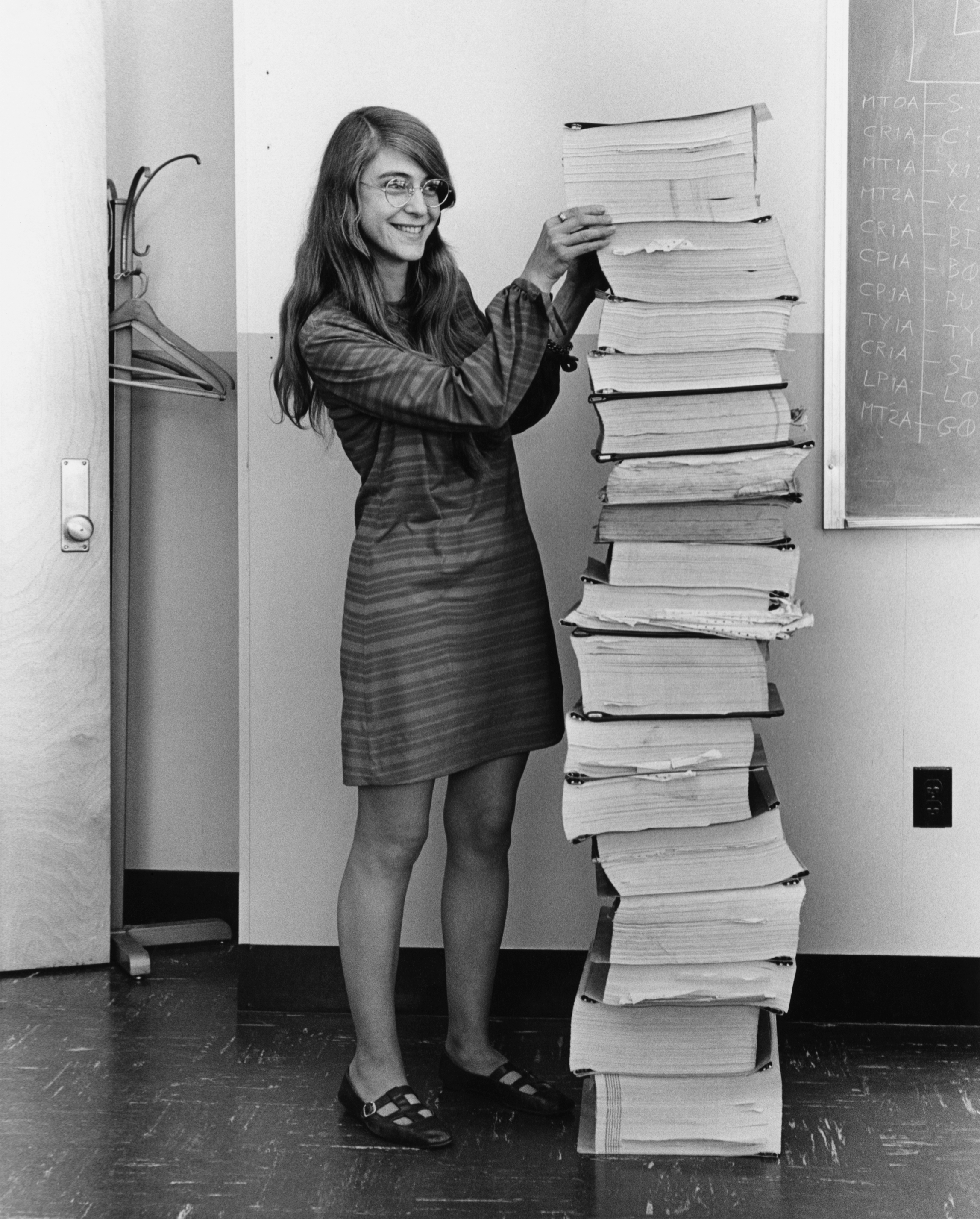
If you call yourself a software engineer, you have her to thank. Hamilton didn’t just help define the field through her efforts, she literally coined the term while at NASA in an effort to get “mere” programming taken more seriously. Suffice to say, that ambition was realized, and few see programmer as a low-status career these days.
After decades of obscurity, known only to those willing to dive deep into the Apollo program to discover her work there, Hamilton found deserved fame late in life. Her likeness eventually found its way to classroom posters and even an official LEGO figure. She also got the Presidential Medal of Freedom, but we don’t see how that could possibly compare to being immortalized in LEGO.
Some have called her a feminist icon, blazing a trail for girls and women. While that’s true enough, it’s also thinking perhaps too small. Like the missions she did so much to make successful, Margaret Hamilton blazed a trail for all of humanity.
We wish Margaret’s family the best as she blazes a trail we all must someday follow into that one last undiscovered country. Our own biographical tribute is several years old now, but it bares rereading in light of this news.












Thanks, Margaret. You were a real inspiration to all us little nerds back in the day.
When I studied dynamical systems, our professor told us that Lorenz discovered chaotic systems because his climate models would produce different values when inputing the initial conditions from printouts, as opposed to when reaching those conditions during simulation.
I leant a decade later that the programmer that made those models run in the computer was Margaret Hamilton!
She has an interesting story, beyond the apollo program.
Oh wow, that’s a cool backstory!
Nowadays it’s hard to imagine that ‘programmer’ could be considered a lowly job title. Especially on something as mission-critical as bringing people safely to the freakin’ moon and back. We all know the necessary bureaucracy that surrounds that kind of work these days. Bravo Margaret for giving it the dignity it deserved.
Probably soon will be as lowly as elevator operator, before it was automated away.
Is it Margaret and not Margret?
Either way I hope she’ll rest in peace and I thank her for her achievements and what she bring to the early space history.
And software engineering of course!
True, and in the context of something lives depended upon, a lot of the engineering mindset was needed. No vide-coding that.
Although her story with NASA starts with a screwup!
She was with a group that put a table of landmarks into an unmanned moon mission guidance computer, and they put the table in reverse. (The mission worked out regardless.)
https://web.archive.org/web/20160131233720/http://authors.library.caltech.edu/5456/1/hrst.mit.edu/hrs/apollo/public/conference1/hamilton-intro.htm
Her big pushes at NASA were all about code reliability and “software engineering” and all that. I can’t help but wonder if this focus was a direct result of the initial screwup?
PS: All the Apollo 11 AGC source code up on Github. https://github.com/chrislgarry/Apollo-11/tree/master
You fixed the “Margret” typo but missed “it bares rereading”