A Clock Made Out Of Electromechanical Relays

Electromechanical circuits using relays are mostly a lost art these days, but sometimes you get people like [Aart] who can’t resist to turn a stack of clackity-clack relays into a functional design, like in this case a clock (article in Dutch, Google Translate).

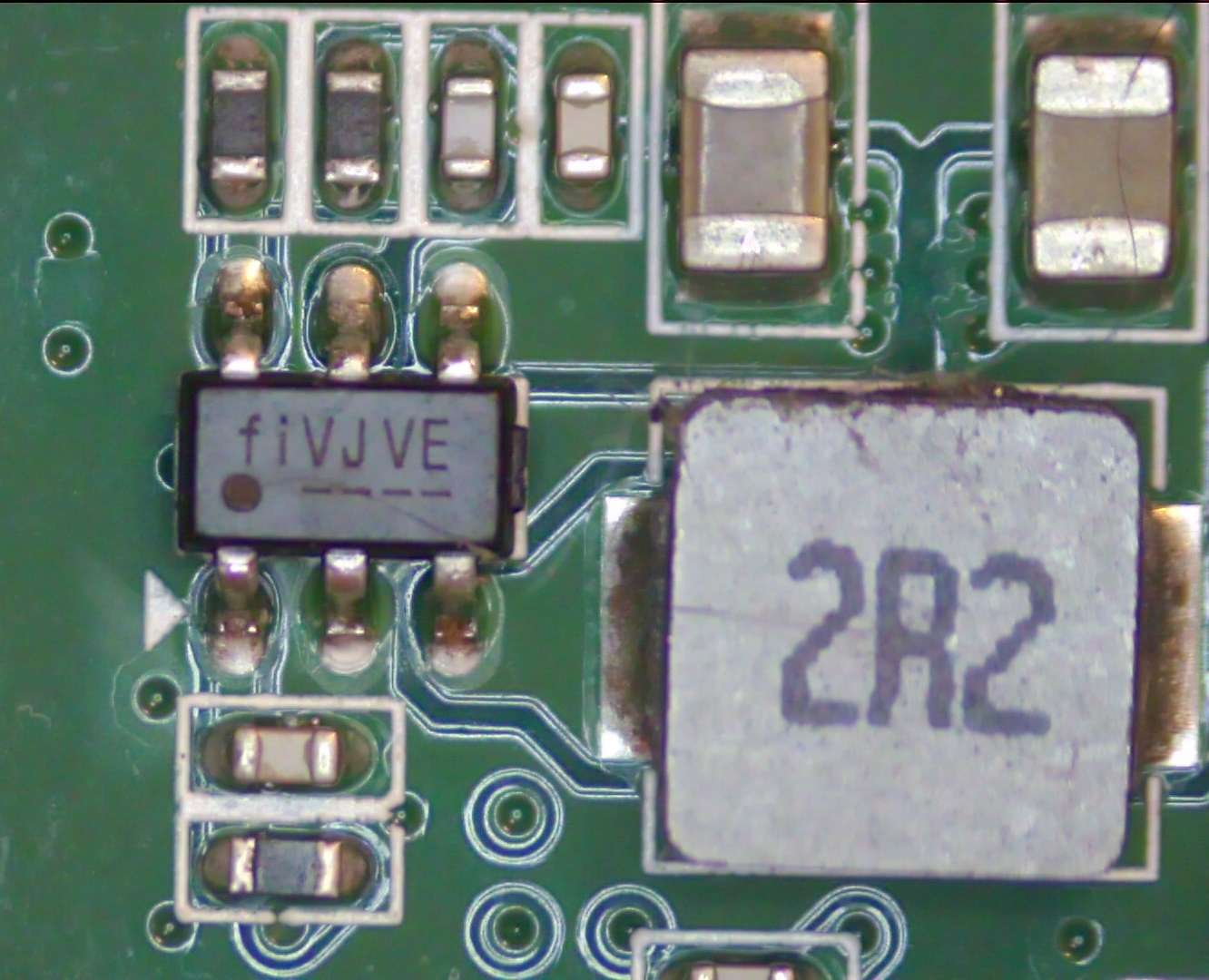
It was made using components that [Aart] had come in possession of over the years, with each salvaged part requiring the usual removal of old solder, before being mounted on prototype boards. The resulting design uses the 1 Hz time signal from a Hörz DCF77 master clock which he set up to drive a clock network in his house, as he describes in a forum post at Circuits Online (also in Dutch).

The digital pulses from this time signal are used by the relay network to create the minutes and hours count, which are read out via a resistor ladder made using 0.1% resistors that drive two analog meters, one for the minutes and the other for the hours.

Sadly, [Aart] did not draw up a schematic yet, and there are a few issues he would like to resolve regarding the meter indicators that will be put in front of the analog dials. These currently have weird transitions between sections on the hour side, and the 59 – 00 transition on the minute dial happens in the middle of the scale. But as [Aart] says, this gives the meter its own character, which is an assessment that is hard to argue with.

Thanks to [Lucas] for the tip.

Piezo Transducers Could Turn Displays Into Speakers

Will piezoelectric-based speakers replace traditional speakers over the coming years in space-constrained devices? We have definitely seen the use of piezo transducers in e.g. high-end televisions that use the display’s surface not just for the visual content, but also as a highly dynamic speaker. If you extrapolate this principle to something like smartphones, tablets and laptops the advantages are clear: piezoelectric transducers are smaller, more power efficient and do not need any holes in the enclosure. These and other advantages are what [Vineet Ganju] argues in IEEE Spectrum will push the market to adopt this new technology.

When piezoelectric transducers vibrate the display itself to create sound waves, the sound seems to come directly from the image on the screen, a much more realistic effect. (Credit: James Provost)
Piezoelectric transducers vibrate the display itself to create sound waves. (Credit: James Provost)

[Vineet] is the Vice President and General Manager of the audio business unit of Synaptics — which is one of the companies pushing for these piezoelectric transducers to be used for speaker purposes — so there is definitely some bias involved. Even so, it’s undeniable that the speakers in portable devices as well as the average flat panel TV aren’t exactly amazing, with the limited space meaning that audio quality suffers, with lows being generally absent and the resulting audio sounding ‘tinny’. Generally this is where people get external speakers for their TV, and lug portable speakers along with their laptop and other mobile devices.

For TVs, Sony has pushed for its Acoustic Surface Audio technology that uses two or three piezoelectric transducers on their OLED panels, while Samsung sticks to traditional speakers, but places lots of them around the screen with its Object Tracking Sound technology.

Sony’s technology cannot be used with LCD panels, due to the backlight being in the way, so the interesting question here is whether the piezoelectric speaker revolution proposed by [Vineet] will be limited to devices that use OLED or similar backlight-less displays?

Understanding Deep Learning: Free MIT Press EBook For Instructors And Students

The recently published book Understanding Deep Learning by [Simon J. D. Prince] is notable not only for focusing primarily on the concepts behind Deep Learning — which should make it highly accessible to most — but also in that it can be either purchased as a hardcover from MIT Press or downloaded for free from the Understanding Deep Learning website. If you intend to use it for coursework, a separate instructor answer booklet and other resources can be purchased, but student resources like Python notebooks are also freely available. In the book’s preface, the author invites readers to send feedback whenever they find an issue.

Continue reading “Understanding Deep Learning: Free MIT Press EBook For Instructors And Students”

3D Printing Functional Human Brain Tissue For Research Purposes

Graphical summary of the newly developed 3D bioprinting process. (Credit: Yan et al., 2024)

The brain is probably the least explored organ, much of which is due to the difficulty of studying it in situ rather than in slices under a microscope. Even growing small organoids out of neurons provide few clues, as this is not how brain tissue is normally organized. A possible breakthrough may have been found here by a group of researchers whose article in Cell Stem Cell details how they created functional human neural tissues using a commercial 3D bioprinter.

As detailed by [Yuanwei Yan] and colleagues in their research article, the issue with previous approaches was that although these would print layers of neurons, they would fail to integrate as in the brain. In the brain’s tissues, we see a wide variety of neurons and supportive cells, all of which integrate in a specific way to form functioning neuron-to-neuron and neuron-to-glial connections with expected neural activity. The accomplishment of this research team is 3D bioprinting of neural tissues with the necessary functional connections.

Continue reading “3D Printing Functional Human Brain Tissue For Research Purposes”

EasyThreed K9: The Value In A €72 AliExpress FDM 3D Printer

The hot end of the EasyThreed K9 is actually pretty nifty. (Credit: [Thomas Sanladerer])
Recently, [Thomas Sanladerer] bought an EasyThreed K9 off AliExpress for a mere €72, netting him an FDM printer with a 10 x 10 x 10 cm build volume. The build plate is unheated, with optional upgrade, and there is no display to interact with the device: just a big multi-function ‘play’ button and five smaller buttons that direct the print head to preset locations above the build plate to allow for build plate leveling using the knobs on each corner. There’s also a ‘home’ button on the back for homing the print head, which pretty much completes the user interface. As the printer comes in a rather small box, the first step is to assemble the parts into something resembling a 3D printer.

What follows is both a mixture of wonder and horror, as the plastic build quality is everything but convincing, while at the same time, the self-contained nature of each of the three axes of the cantilevered design makes for very easy assembly. The print head has a nifty flip-up cover for easy access to the hot end, which makes the best of the anemic 24-watt power supply for the entire printer. A cooling fan with an air duct even provides part cooling, making this print head a contender for the ‘cheap but not terrible’ category. You can check out his full video review below.

Continue reading “EasyThreed K9: The Value In A €72 AliExpress FDM 3D Printer”

Benchmarking Latency Across Common Wireless Links For MCUs

Although factors like bandwidth, power usage, and the number of (kilo)meters reach are important considerations with wireless communication for microcontrollers, latency should be another important factor to pay attention to. This is especially true for projects like controllers where round-trip latency and instant response to an input are essential, but where do you find the latency number in datasheets? This is where [Michael Orenstein] and [Scott] over at Electric UI found a lack of data, especially when taking software stacks into account. In other words, it was time to do some serious benchmarking.

The question to be answered here was specifically how fast a one-way wireless user interaction can be across three levels of payload sizes (12, 128, and 1024 bytes). The effective latency is measured from when the input is provided on the transmitter, and the receiver has processed it and triggered the relevant output pin. The internal latency was also measured by having a range of framework implementations respond to an external interrupt and drive a GPIO pin high. Even this test on an STM32F429 MCU already showed that, for example, the STM32 low-level (LL) framework is much faster than the stm32duino one.

Continue reading “Benchmarking Latency Across Common Wireless Links For MCUs”

Running UNIX On A Nintendo Entertainment System

Who wouldn’t want to run a UNIX-like operating system on their NES or Famicom? Although there’s arguably no practical reason for doing so, [decrazyo] has cobbled together a working port of Little Unix (LUnix), which was originally written for the Commodore 64 and 128 by [Daniel Dallmann]. The impetus for this project was initially curiosity, but when [decrazyo] saw that someone had already written a UNIX-like OS for the 6502 processor, it seemed apparent that the NES was too similar to the C64 to not port it.

Much of this is relatively straightforward, as the 6502 MPU in the C64 is nearly identical to the Ricoh 2A03 in the NES, with the latter missing the binary-coded decimal support, which is not a crucial feature. The only significant roadblock was the lack of RAM in the NES. The console has a mere 2 KB of RAM and 2 KB of VRAM, which made it look anemic even next to the C64. Here, a Japan-only accessory came to the rescue: the Famicom Disk System (FDS), which is a proprietary floppy disk-based system that slots into the bottom of the Famicom and was used for games as well as storing saves back in the day.

By using a Famicom with FDS, it was possible to gain an additional 32 kB provided by the FDS, making the userspace utilities available in the shell. The fruits of this labor work well enough that he could also pop it up on an EverDrive cartridge that supports FDS ROMs and boot it up on an unmodified NES. Whether this is cooler than the NES-OS, which we covered previously, is up for debate.

Incidentally, [Maciej Witkowiak] seems to have resumed development on LUnix, with a new release in 2023, so maybe UNIX-on-6502 may see a revival after a few decades of little happening.

Continue reading “Running UNIX On A Nintendo Entertainment System”