Wine Cask Sensor Suite

As part of his Master’s dissertation [Salvador Faria] built a sensor suite for wine monitoring. He needed to develop a method of tracking data inside the wine cask during the vinification process. What he came up with eclipses the wine cellar temperature monitors we’ve seen before.

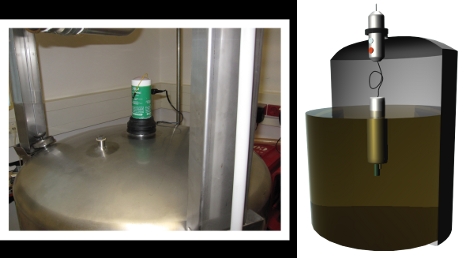
He picked up pH, temperature, carbon dioxide, alcohol, and relative humidity sensors from familiar vendors like Seeed, Parallax, and SparkFun. His original idea was to develop a floating probe that housed the entire package but he had quite a bit of trouble getting everything inside and maintaining buoyancy. The solution was a two-part probe; the stationary portion seen mounted on top of the cask houses the microcontroller, RF 433 MHz transmitter, and the gas sensors. Tethered to that is a floating probe that measures pH and temperature. Data is sent over radio frequency to an HTTP POST server every minute.
Making Nixie Tubes At Home

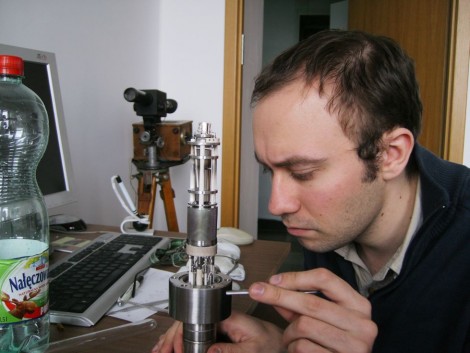
[Aleksander Zawada] makes vacuum tubes in his home. One of the most challenging builds he has taken on is to produce a working Nixie tube. He describes the process in a PDF (Internet Archive, updated 2024), covering his success and failure. It seems the hardest part is to get the tube filled with the proper gas, at the proper pressure, and firmly seal it. In the end he managed to make a tube with three digits (0, 1, and 2) that worked for about 700 hours before burning out.

[Aleksander] joins [Jeri Ellsworth] on the short list of hackers who can pull off extreme industrial manufacturing at home. Kudos.

[Thanks Duncan]

Making Glow Sticks At Home

[youtube=http://www.youtube.com/watch?v=tItOOpyJP5k]

Even if you have no interest in making these yourself, you might enjoy this educational instructable about making your own glow sticks. Comprised of a very short list of chemicals, all available online, the process is fairly simple. If you’re feeling like you want to take on a little more complicated chemistry project, you can also make the TCPO component your self, possibly saving some money as the individual components are cheaper than the final product. As they note, it is just cheaper and easier to buy a glow stick, unless you are making mass quantities.

Decapping Integrated Circuits With Sap

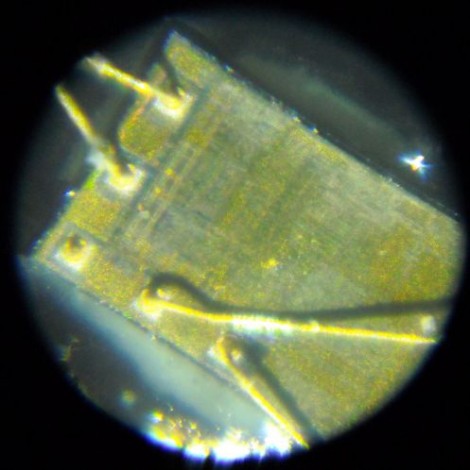
[James] is interested in reverse engineering some integrated circuits. One of the biggest hurdles in this process has always been just getting to the guts of the chip. He used acetone to dissolve the plastic case but had trouble getting through the epoxy blob. Commonly, the epoxy is soaked in nitric acid for a few minutes but [James] didn’t have access to that chemical. Instead he popped into the local music store and picked up some rosin (used to make violin bows sticky enough to grab the strings of the instrument). After boiling down the rock-hard rosin and the chip for 20 minutes, he got a clean and relatively undamaged semiconductor that he can easily peer into.

Making Magnetite Nanocrystals

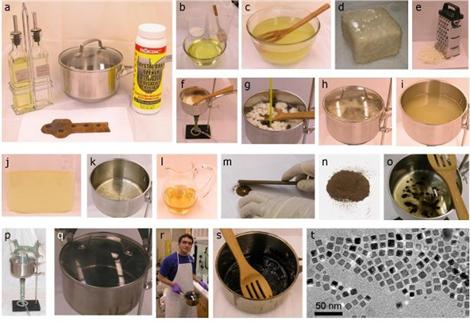
Unlike many chemistry projects we post here, making magnetite nanocrystals doesn’t require anything that can’t be found in a local grocery store. All that is required is oil, vinegar, crystal drain opener, and rust. We don’t recognize the specific brand of drain cleaner that they are using, but we’re sure that you could find one with the same ingredients. Magnetite nanocrystals  are used to remove arsenic from water. If you are in the USA or most of Europe, that’s not a big concern, but it can’t hurt can it?

[via Make]