Black Hat 2008: French Hacking Failure


French reporters at Black Hat crossed the line when they sniffed fellow reporters’ login info on the designated “safe” wired network. Proud of their handiwork, they were nabbed when they tried to get their spoils posted on the wall of sheep, which is used to publicly post attendees credintials. It turns out that monitoring communications without informing one of the parties involved is a felony, so although it is legal to sniff convention goers’ login info with their knowledge, hacking reporters covering the event is a no-no. An FBI agent we ran into commented that in his experience, they’d probably just turn it over to the local US attorney’s office to see if they wanted to proceed with an investigation.

We’re in the Defcon press room today and there’s still a buzz about these “sleazy” French reporters. We’re tunneling through our cell connection like any sane person at a security conference.

USB Wall Charger


[rbhays] did this sweet little hack back in 2006. He took a Motorola cellphone wall charger and modified it into a USB wall charger. He needed to charge his iPod, but misplaced the original charger. A replacement would have cost him $30. So he did what any respectable hacker would do, he cut up something else to make it work for him.

He had one sitting around that was equipped with a mini USB end. He checked it out and it was the perfect voltage. Some commenters below the project noted that their motorola charger had a higher voltage rating than his. Those would still work, but would require some extra steps to bring the voltage down.

After some careful soldering, and a bit of super glue, he’s left with a perfectly good wall charger. He can charge most things that only use the juice from the wall. Some things refuse to charge though, such as Zunes. There was another project by [Cvesey] that claims to charge Zunes as well. While wall chargers may be available fairly cheaply now, many of us have some of these cellphone chargers just sitting around. Now we have a use for them.

Black Hat 2008: Dan Kaminsky Releases DNS Information


[Dan Kaminsky]’s much anticipated talk on his DNS findings finally happened at Black Hat 2008 in Las Vegas today. [Dan] has already uploaded the complete slides from his talk as well as posted a short summary to his site. New information in the slides since our previous coverage includes “Forgot My Password” attacks and new attacks on internal network vulnerabilities as a side of effect of DNS cache poisoning. [Dan]’s talk today was over capacity; our shot of the conference room overflow is shown above.

Magnetic Stripe Card Spoofer

After building a USB magnetic stripe reader, [David Cranor] has found a way to fool a magnetic stripe reader using a hand-wound electromagnet and an iPod. The data on a card is read and stored on a computer, then encoded as a WAV file using a C++ program. The iPod plays the WAV file with the data through a single-stage opamp amplifier connected to the headphone jack. The amplifier is used to drive the electromagnet. Video embedded after the jump.

By no means is this a new idea. There have been a lot of mangetic stripe projects and software. This project in particular references the 1992 Phrack article “A Day in the Life of a Flux reversal” by [Count Zero].

Don’t get your hopes up just yet on strolling through high security installations using this little device. It can only replay the data from a card that has been recorded. If you don’t have a known working card, it won’t get you very far.

Continue reading “Magnetic Stripe Card Spoofer”

Build A Simple Bat Detector


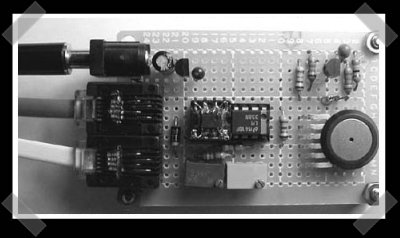
[Tony Messina] had been fascinated with bat’s echolocation since he was a kid. After he retired, he decided to act on this fascination and built a simple bat detector.

The simple bat detector uses frequency division to lower the bat’s chirping to a frequency we can hear. For example, if a bat is calling at 91kHz the system will divide it by 16 and put out 5.7kHz. The system is digital, so all amplitude is lost. You’ll just hear clicks like a Geiger counter. Being digital has its advantages though. Unlike similar analog devices that have to be tuned to a small frequency range, the simple bat detector can detect a much wider window.

Continue reading “Build A Simple Bat Detector”

CNC Wood Router


[GlacialWanderer] has published the first pictures from his CNC machine build. It’s a three axis gantry style machine that he intends to route and engrave wood with. He’s posted a detailed cost breakdown: $1800. He estimates spending 30 hours researching on sites like CNCzone. The build time for the mechanical side was around 50 hours. The electrical system hasn’t been hoooked up yet, so look for that in a future post. It looks like an incredible machine already, so we can’t wait to see what’s next.

New From SparkFun


SparkFun is rolling out interesting things to play with every week. They’ve added a NanoMuscle actuator that uses a shape memory alloy to lift nearly 70 times its own weight. Their LilyPad collection has expanded to include small momentary switches and a thermistor type temperature sensor. Lastly, they’ve got an FM receiver module. It just needs an antenna and uses I2C or SPI for control.