Microscope Reactive Digital Aquarium


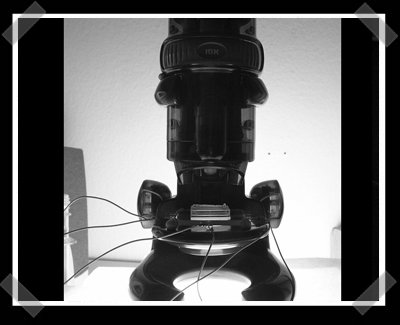
[Amos] sent in the Living Interface. I call it a microscope reactive aquarium. A small light sensitive animal is inside a mini-aquarium on the scope plate. The wires are attached to lights at the edges to attract the animal. The position of the critter is reported via a digital aquarium. (looks like an empty aquarium combined with a projector. Aside from looking friggin cool, it has applications for measuring water toxicity by measuring the reaction time of the animal.

A while back, a friend of a friend supposedly used a USB microscopes to measure yeast activity in his beer brewing. If anyone runs across it, let me know.

RFIDIOt – RFID IO Tools


[Eliot] and I hit [Major Malfunction]’s talk about RFID hacking. He’s put together a set of python scripts to read – and write RFID tags. He demo’d cloning a few tags – along with someone’s implanted RFID that’s used to lock and unlock a laptop. (It looked like the reader in the kit from ThinkGeek.) He’s kind enough to offer a selection of hardware on his site. (The usb RFID reader is pretty cheap.) His work has made plenty of headlines, including slashdot, but you can get the actual details, code and hardware on his site.

New Bling For Shmoocon!


[Eliot] and I are in D.C. at Shmoocon for the weekend. We’re armed with the latest Hack-A-Day sticker. Find us here and we’ll hook you up. Right now we’re checking out [H1kari]’s talk on using FPGA’s for high speed encryption key cracking. By using dedicated FPGA hardware, they’re smoking dual core Intel’s left and right for the calculations. He also talked about an interesting application called VileFault – it takes in a certain fruit vendors encrypted FS and spits out a decrypted image – once you’ve cracked the pass phrase. (Guess what makes finding that key way faster.) Now he’s getting into brute forcing bluetooth pins…

[Update so I don’t run off the page…]

The con’s first round of talks was pretty interesting. I definitely enjoyed the keynote by [Aviel Rubin]. He discussed his teams efforts to crack the Exxon Mobil Speedpass, which happens to be the same technology that’s used to RF disable several newer cars. They used some FPGA in a similar manner as [H1kari] – to speedily decrypt the encryption keys. The defeat of the Speedpass is pretty old news, but it was heartening to hear how Johns Hopkins University stood behind his team and was happy to saddle up their lawyers in dealing with the release of their paper.

The boys over at team hack-a-day – our unofficial Folding@home team (#44851) asked me to remind people that the PS3 folding client has been released – give those spare cpu cycles a home! The team has their own forums that hold quite a few gems. Not the least of with is a handy DXF of the Hack-a-day (and team Hack-A-Day) logo.

Make Your Own Fusion Reactor


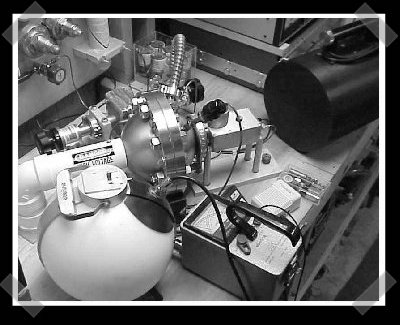
It’s staring to feel like a theme week. [Eric] reminded me of this 17 year old who built his own fusion reactor. Being me, I had to look around for more. I found the open source fusor research consortium. I found plans, research, and this fusor built by Richard Hull. It’s his fourth version – definitely worth checking out. Essentially, all the atmospheric air is removed via vacuum. Then you add a bit of deuterium gas, some high voltage and if you got it right, bask in the glow of your own personal fusion reaction. (Just watch out for X-ray leaks.)

PIC Cluster Computing


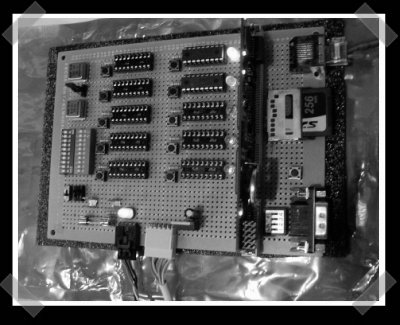
[silic0re] sent in this uh, totally different take on micro-controller applications. The hardware is impressive. It’s built to carry up to 10 dsPICF3012 controllers (30 mips each), and has ethernet, SD, Serial and i2c thanks to an imsys SNAP module (similar to gumstix). This is, as far as I know, the first PIC controller cluster built. The software is still a work in progress- for now it’s just pretty, but he deserves points for originality. His site’s a bit slow, so try the coral cache.

(I woke up this morning thinking that I’d end up eating my words on my ‘first time’ statement.)