Mergers And Acquisitions: Dialog Buys Atmel

Dialog Semiconductor has announced their acquisition of Atmel for $4.6 Billion.

In recent years, semiconductor companies have been flush with cash, and this inevitably means consolidation. NXP and Freescale merged in March. In June, Intel bought Altera for $16.7 Billion just a week after Avago bought Broadcom in the largest semiconductor deal ever – $37 Billion.

The deal between Dialog and Atmel is not very big; the combined revenue of both companies should be $2.7 Billion, not even in the top-20 semiconductor companies by revenue. However, Atmel is an extremely big player in the Internet of Things and the nebulous ‘maker’ market. Dialog’s portfolio is complementary to Atmel’s, focusing on mobile platforms such as smartphones, e-readers, and tablets. The future is in the Internet of Things, and Dialog wants to get in on the ground floor.

Dialog’s current portfolio is focused mainly on mobile devices, with Bluetooth wearables-on-a-chip, CODEC chips for smartphones, and power management ICs for every type of portable electronics. Atmel’s portfolio is well-established in automotive, smart energy metering, and the maker movement. While the Arduino may be Atmel’s most visible contribution to the industry, the Arduino itself is just a fraction of Atmel’s sales in this space. Atmel parts can already be found Internet of Things products like the LightBlue Bean (an 8-bit AVR), and the Tessel 2 Internet of Things board (a 32-bit Atmel ARM).

Curiously, neither Dialog nor Atmel have many sensor or MEMS products, and the future of wearables, portable electronics, and the Internet of Things will depend on these sensors. STMicroelectronic produces both the microcontrollers and sensors that are packed into phones. TI is nearly a full-stack hardware company, able to produce everything that will go into a wearable or Internet of Things device, all the way from the power regulator to the microcontroller. Although this may be seen as a shortcoming for Dialog and Atmel, both companies combined are still many times smaller than the likes of Avago/Broadcom or NXP/Freescale there’s plenty of room for more acquisitions to round out their future needs.

As for what changes will come to Dialog and Atmel’s portfolio, don’t expect much. Unlike the NXP and Freescale merger where both companies have a lot products that do pretty much the same thing, the portfolios of Dialog and Atmel build on each other’s strengths. You’ll have your 8-bit AVRs for a few more decades, and with Dialog’s focus on connectivity, we can expect even more tools for building the Internet of Things.

Open Source Hardware Certification Announced

Last weekend was the Open Hardware Summit in Philadelphia, and the attendees were nearly entirely people who build Open Source Hardware. The definition of Open Source Hardware has been around for a while, but without a certification process, the Open Hardware movement has lacked the social proof required of such a movement; there is no official process to go through that will certify hardware as open hardware, and there technically isn’t a logo you can slap on a silkscreen layer that says your project is open hardware.

Now, the time has come for an Open Hardware Certification. At OHSummit this weekend, the Open Source Hardware Association (OSHWA) announced the creation of a certification process for Open Source Hardware.

Continue reading “Open Source Hardware Certification Announced”

Robot Team Wins $100,000 In June; Visits US Senate In September

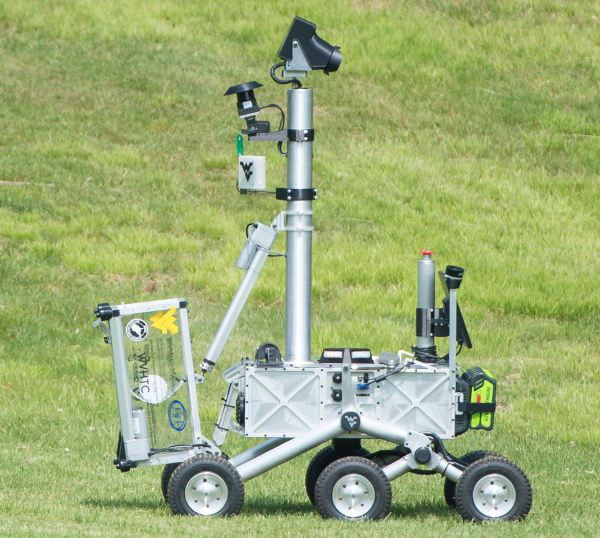
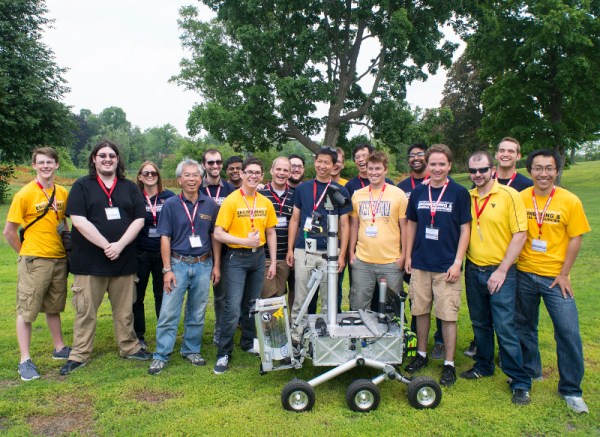
Could you build a robot to search for and collect samples on Mars? Team Cataglyphis from West Virginia University did. They won $100,000 last June from a prize pool of $1.5 million and are being honored in the US Senate on September 21st. The team, along with many others, have competed each June since 2012 during the NASA Sample Return Robot Challenge held at Worcester Polytechnic Institute in Worcester, Massachusetts.

The SRR, as it’s called by the teams, is a two phase competition. In Phase 1 the robot must leave the starting platform, collect a pre-cached sample, and return the sample to the starting platform. Phase 2 is more difficult because the robot must not only collect the pre-cached sample but search a park for 9 additional samples. The park is a typical urban park about 1.5 football fields large with grass, trees, and park benches as obstacles.

The Mountaineers team robot is seen after picking up the pre-cached sample during its attempt at the level two challenge during the 2015 Sample Return Robot Challenge, Thursday, June 11, 2015 at the Worcester Polytechnic Institute (WPI) in Worcester, Mass. Sixteen teams are competing for a $1.5 million NASA prize purse. Teams will be required to demonstrate autonomous robots that can locate and collect samples from a wide and varied terrain, operating without human control. The objective of this NASA-WPI Centennial Challenge is to encourage innovations in autonomous navigation and robotics technologies. Innovations stemming from the challenge may improve NASA's capability to explore a variety of destinations in space, as well as enhance the nation's robotic technology for use in industries and applications on Earth. Photo Credit: (NASA/Joel Kowsky)
The Mountaineers team robot is seen after picking up the pre-cached sample [Photo Credit: NASA/Joel Kowsky[
Since the robots are supposed to be on celestial bodies lacking magnetic fields like Mars or the Moon, they cannot use a magnetometer (compass) or GPS satellites to determine their pose, i.e. orientation and location. Add to that handicap grueling time limits of 30 minutes for Phase 1 and 120 minutes for Phase 2 and you’ve got a huge challenge on your hands.

The Mountaineers, as they were known in the robot pits, are the only team to collect two samples during the competition. Another team from Los Angeles, Team Survey, was the first to complete Phase 1 in 2013, but only managed, in 2015, to collect the pre-cached sample during Phase 2.

All the teams who have competed are waiting to see if there will be a competition in 2016 and I am among them. After the break you’ll find a couple of videos of the 2015 competition. One is about the Mountaineers but the other us from NASA 360. If you look quickly during the opening sequence of the NASA 360 video you’ll see two small black robots. One is on its side spinning its wheels; the other jammed under a rock. Those are my rovers from the 2013 SRR. I’m chasing the dream of a winning extra-planetary rover and you should too!

Continue reading “Robot Team Wins $100,000 In June; Visits US Senate In September”

Live From Open Hardware Summit 2015

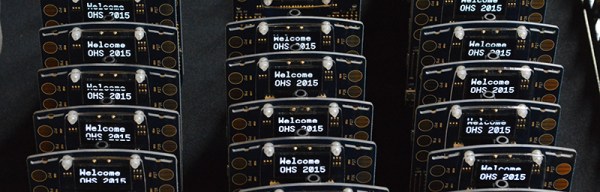
Right now Hackaday and Tindie are in Philadelphia at the Open Hardware Summit 2015. These are the conferences I love; there aren’t many attendees – only a few hundred – but absolute everyone here is awesome. In the crowd is [Mitch Altman], [Johnny] of RAMPS fame, the guys from Parallax (busy programming badges), [Harris Kenny] from Lulzbot, [Joshua Pearce] from Michigan Tech, and pretty much everyone else that’s responsible for all open source hardware.

The talks? They’re great. You’re going to see a lot of reaffirming that tinkering and hacking on electronics and mechanics is a valuable and worthy pursuit, but there’s something for everyone, ranging from open source lab equipment to building true open hardware chips. Here’s a link to the livestream of the conference.

Continue reading “Live From Open Hardware Summit 2015”

Hardware Virtualization In Microcontrollers

Look at any sufficiently advanced CNC machine or robot, and you’ll notice something peculiar. On one hand, you have a computer running a true operating system for higher-level processing, be it vision or speech recognition, or just connecting to the Internet. On the other hand, you have another computer responsible only for semi-real-time tasks, like moving motors, servos, and reading sensors and switches. You won’t be doing the heavy-lifting tasks with a microcontroller, and the Raspberry Pi is proof enough that real-time functions aren’t meant for a chip running Linux. There are many builds that would be best served with two processors, but that may be changing soon.

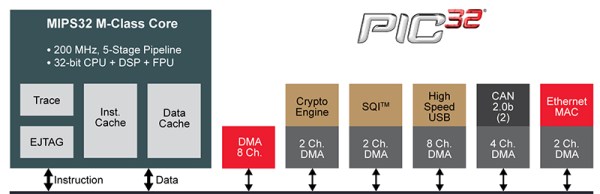
Microchip recently announced an addition to the PIC32 family of microcontrollers that will support hardware virtualization. This addition comes thanks to the MIPS M5150 Warrior-M processor, the first microcontroller to support hardware visualization.

Continue reading “Hardware Virtualization In Microcontrollers”

9th Grader Arrested, Searched For Building A Clock

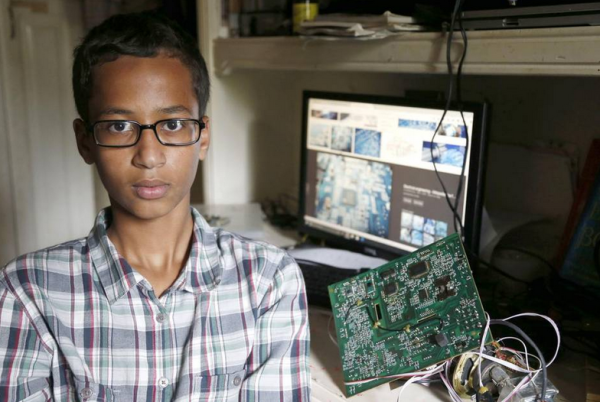
A 14-year-old in Dallas, Texas has been arrested for bringing a clock to his school. [Ahmed Mohamed] could be any one of us. He’s a tinkerer, pulling apart scrap appliances and building projects from the parts. He was a member of the his middle school robotics team. The clock was built from a standard four digit seven segment display and a circuit board. [Ahmed] built the circuit inside a Vaultz hard pencil case like this one. He then did what every other experimenter, inventor, hacker, or maker before him has done: He showed off his creation.

Unfortunately for [Ahmed] one of his teachers immediately leapt to the conclusion that this electronic project was a “hoax bomb” of some sort. The police were called, [Ahmed] was pulled out of class and arrested. He was then brought to a detention center where he and his possessions were searched. [Ahmed] is now serving a three-day suspension from school. His clock is considered evidence to be used in a possible criminal case against him.

If this situation doesn’t get your blood boiling, then we don’t know what does. Not only is there a glaring racial issue here, but also an issue of allowing kids to bring their projects to school. We hope you’ll join us in expressing outrage at this whole debacle, as well as supporting [Ahmed] in any way you can. Let’s join together as a community to make sure a few small-minded individuals don’t break the spirit of this budding hardware hacker.

For anyone out there who would like to support [Ahmed]’s education even when his school won’t, [Anil Dash] is will be in contact with the family later today. We’re offering a gift card for the hackaday store and we would assume other contributions would also be welcome. -Ed.

Continue reading “9th Grader Arrested, Searched For Building A Clock”

Xerox PARC Exploding Chip

This Post Will Self Destruct In 10 Seconds

Ah yes, the classic Mission Impossible ultimate message security — after verification and playing the message, poof — it’s gone. You could design explosives into your electronics to have the same effect… or you can use Xerox PARC’s new chip, which features a self-destruct mode.

Wait, what? Yup — some engineer at Xerox decided to develop a chip that can literally self-destruct. It was developed for DARPA’s vanishing programmable resources project, and well, it sounds pretty promising for the future of high-security applications. Continue reading “This Post Will Self Destruct In 10 Seconds”