
So, You Want To Fix An Old Camera

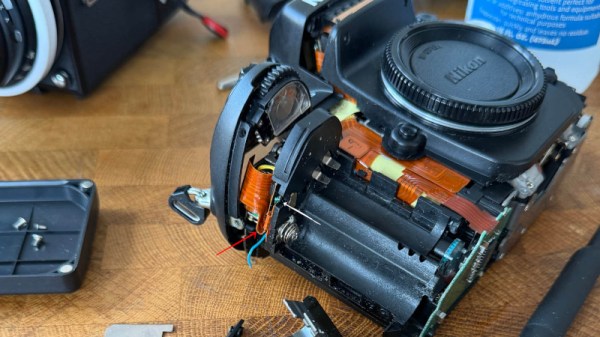
Old cameras are a fantastic way to experiment with photography, and outside a few brands, they can be an inexpensive way too. It’s easy to find older cameras in a broken condition for  a lot less money, but if you’re tempted to fix one then [enthdegree] has some advice for you.

It’s ostensibly a set of notes on the disassembly and repair of a Nikon F100 35mm film SLR, but along the way it’s full of useful tips and tricks for camera disassembly. he materials you’ll need, advice on not losing screws is one, and warnings against disassembling too much is another. It’s all the stuff he wished he’d known before starting, and now you can know it too.

Fixing up old cameras in this way is rewarding, and something we’ve certainly been known to do ourselves. But it’s worth bearing in mind that it’s not for the faint-hearted, and with decades of old film cameras sitting unused, often a working example might make more sense.

Repairing A Nikon D3

headless

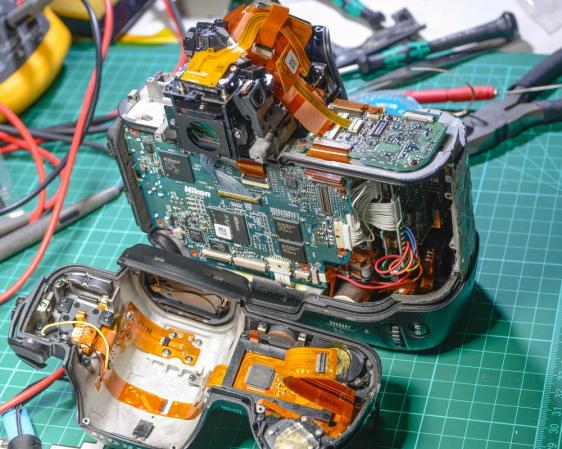
There are few products out there as electronically and mechanically complex as a modern DSLR. Between the sensor, shutter, various LCD screens, and Flexible Printed Circuit boards (FPC) running everywhere, it’s enough to make even the most organized DIY repair person quake in fear. [TiN] over at the EEVblog forums wasn’t scared off though, as he bought a broken Nikon D3 on eBay in hopes of repairing it.

The D3 was Nikon’s top of the line professional camera in 2008. With a 12 Megapixel Full frame sensor and a host of other features, used models still command a good portion of the original $5000 USD price. [TiN’s] camera was described as having been dropped, and was dead on arrival, exactly as it had been described on eBay. The battery door was destroyed, so [TiN] connected an external supply. The camera was still dead, so it was time to dig in. Thanks to the internet, [TiN] was able to find a service manual for the camera. He decided to check the power supply board next. A TO225 package transistor with an obvious hole blown in the front was a good starting point.

[TiN] replaced the transistor and the camera sprang to life. The main LCD showed the live sensor view, and it would take pictures. All was not perfect though, as the two auxiliary LCDs were still dead, and the D3’s mirror would get stuck every other shot, leading to an error display.

Click past the break for the rest of [TiN’s] story.

Continue reading “Repairing A Nikon D3”








