When you think of wartime cryptography, you probably think of World War II and Enigma, although there were other famous codes used during that war. But in fact, there have been codes used through wars and in peacetime for much longer. Even the Romans used codes. Of course, World War I, or The Great War, as it would have been known, had its share of codes and, as you might expect, most of these have been broken long ago. Most of them. But apparently an AI model, GPT-6 Astra, recently cracked one that was previously undeciphered.
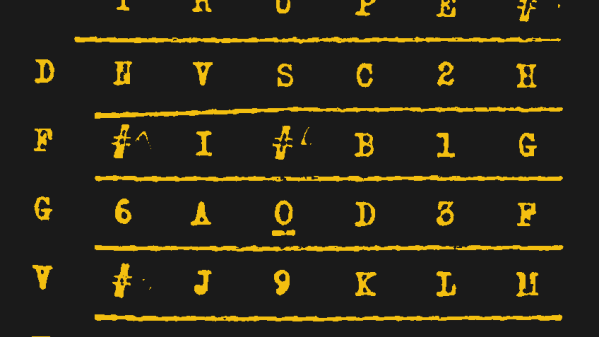
If you aren’t up on century-old cryptography, the ADFGVX cipher appeared in 1918. It began as ADFGX, but after a few months grew an extra letter — and a larger grid. The letters were chosen because their Morse-code patterns were relatively easy to distinguish: A, D, F, G, V, and X.
The original ADFGX version used a 5×5 grid containing the alphabet, usually merging I and J. The later ADFGVX version expanded this to 6×6, making room for all the letters and the digits as well.
Continue reading “World War I Coded Message Appears Cracked, Finally”