World War I Coded Message Appears Cracked, Finally

When you think of wartime cryptography, you probably think of World War II and Enigma, although there were other famous codes used during that war. But in fact, there have been codes used through wars and in peacetime for much longer. Even the Romans used codes. Of course, World War I, or The Great War, as it would have been known, had its share of codes and, as you might expect, most of these have been broken long ago. Most of them. But apparently an AI model, GPT-6 Astra, recently cracked one that was previously undeciphered.

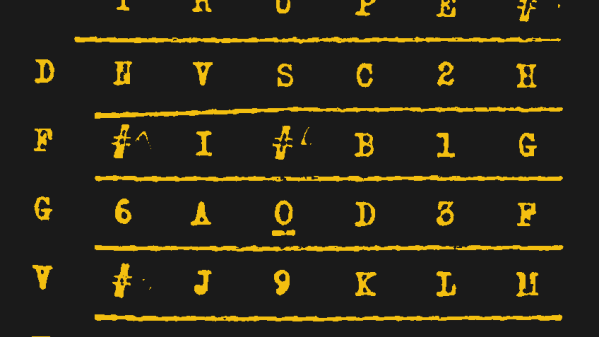
If you aren’t up on century-old cryptography, the ADFGVX cipher appeared in 1918. It began as ADFGX, but after a few months grew an extra letter — and a larger grid. The letters were chosen because their Morse-code patterns were relatively easy to distinguish: A, D, F, G, V, and X.

The original ADFGX version used a 5×5 grid containing the alphabet, usually merging I and J. The later ADFGVX version expanded this to 6×6, making room for all the letters and the digits as well.

Continue reading “World War I Coded Message Appears Cracked, Finally” →
Firing Bullets Through Propellers

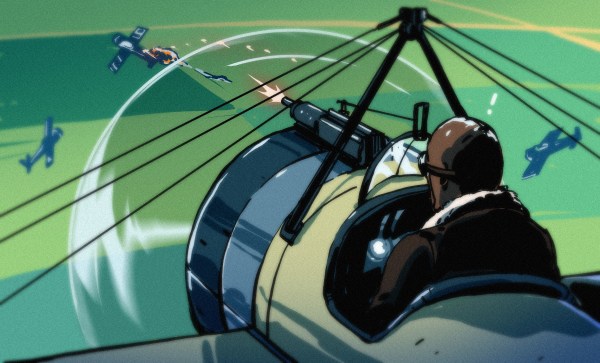
Early airborne combat was more like a drive-by shooting as pilot used handheld firearms to fire upon other aircraft. Whomever could boost firepower and accuracy would have the upper hand and so machine guns were added to planes. But it certainly wasn’t as simple as just bolting one to the chassis.

This was during World War I which spanned 1914 to 1918 and the controllable airplane had been invented a mere eleven years before. Most airplanes still used wooden frames, fabric-covered wings, and external cable bracing. The engineers became pretty inventive, even finding ways to fire bullets through the path of the wooden propeller blades while somehow not tearing them to splinters.

Continue reading “Firing Bullets Through Propellers” →

The Zimmermann Telegram

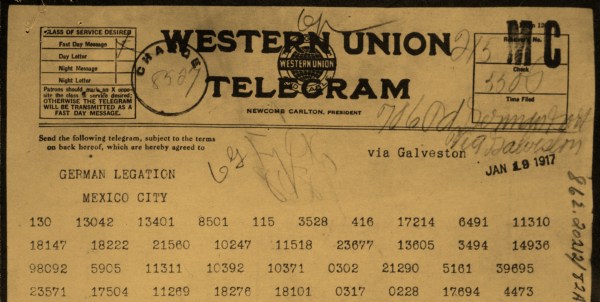
World War I began in 1914 as a fight among several European nations, while the United States pursued a policy of non-intervention. In fact, Woodrow Wilson was reelected President largely because “He kept us out of war”. But as the war unfolded in Europe, an intercepted telegram sent by the German Foreign Secretary, Arthur Zimmermann, to the Mexican government inflamed the U.S. public opinion and was one of the main reasons for the entry of the U.S. into WWI. This is the story of the encrypted telegram that changed the last century.

Continue reading “The Zimmermann Telegram” →