
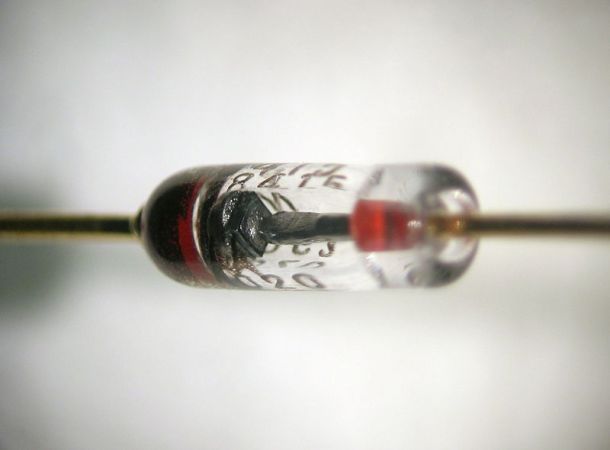
Germanium diode

From Germanium To Diamond: The Many Shapes Of Semiconductors

It seems fair to say that semiconductor technology has been one of the most influential inventions in human history. Practically overnight it turned human technology from being large, cumbersome and power-hungry into an increasingly sleeker, more power-efficient and much more capable form. It has become practically impossible at this point to imagine modern society without semiconductor technology.

That said, we didn’t always use today’s silicon-based semiconductor technology, and although silicon-based semiconductors are exceedingly versatile and adaptable, they do have their limitations. The past years we have seen for example gallium-nitride semiconductors make big inroads in power switching technology, and more exotic forms like diamond-based semiconductors keep making their tantalizing appearances.

In this article we’ll take a look at how we ended up at silicon as the default for semiconductor technology, as well as why we may want to consider moving to other materials.

Continue reading “From Germanium To Diamond: The Many Shapes Of Semiconductors” →
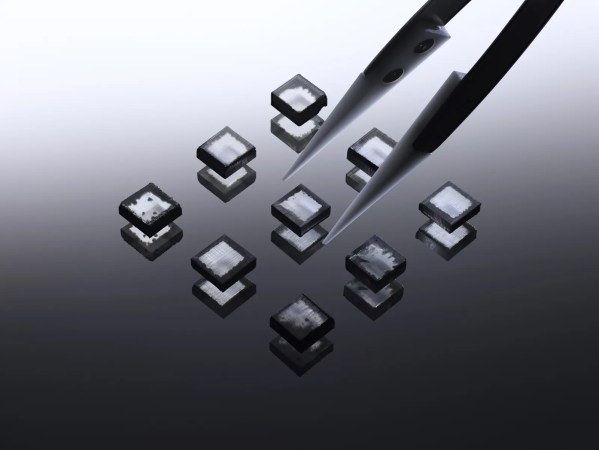
Lab-grown diamonds in 'cake' form -- before they are processed and polished.

Why Diamond Transistors Are So Hard To Make

Many things about diamonds seem eternal, including the many engineering problems related to making them work as a silicon replacement in semiconductor technology. Yet much like a diamond exposed to a stream of oxygen-rich air and a roughly 750°C heat source, time will eventually erase all of them. As detailed in a recent [Asianometry] video, over the decades the challenges with creating diamond wafers and finding the right way to dope pure diamond have been slowly solved, even if some challenges still remain today.

Diamond is basically the exact opposite as silicon when it comes to suitability as a semiconductor material, with a large bandgap (5.5 eV vs the 1.2 of silicon), and excellent thermal conductivity characteristics. This means that diamond transistors are very reliable, albeit harder to switch, and heat produced during switching is rapidly carried away instead of risking a meltdown as with silicon semiconductors.

Unlike silicon, however, diamond is much harder to turn into wafers as you cannot simply melt graphite and draw perfectly crystallized diamond out of said molten puddle. The journey of getting to the state-of-the art soon-to-be-4″ wafers grown on iridium alongside the current mosaic method is a good indication of the complete pain in the neck that just this challenge already is.

Continue reading “Why Diamond Transistors Are So Hard To Make” →









