

Ionic thrusters use high voltage to move air, creating thrust without any moving parts. [Plasma Channel] has been on a mission to make an ionic thruster effective enough to enable a low-speed, silent aircraft — it’s not there yet but we imagine it will be something akin to a powered glider. In the image above, flames are used to demonstrate how much air is getting moved by the latest prototype.
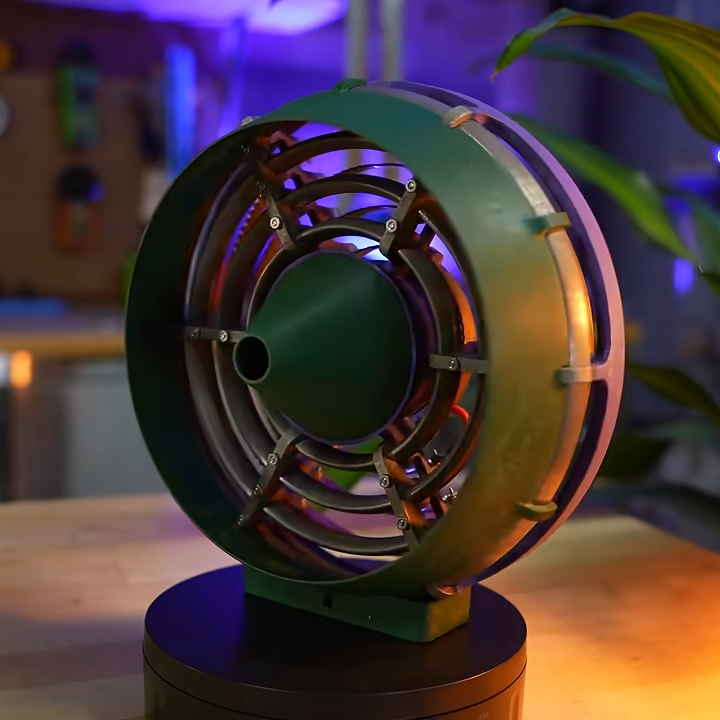
In an ionic thruster, high voltage between two electrodes ionizes air molecules, accelerating them toward the electrode with the opposite charge. Nearby non-ionized air gets taken along for the ride and together creates an airflow that generates thrust. It’s important to keep in mind that as far as engines go this is a weak propulsion method, but the thruster is solid state, silent, and really cool.
A big part of the design is 3D printing some parts in resin and electroplating them. We’ve seen 3D prints electroplated for added strength, but in this case it’s being done to create conductors in very specific (and smooth) shapes to maximize the whole effect.
The thruster performs admirably, but can it be used to power an aircraft yet? As mentioned, it’s not quite there. But if it can be made lighter and provide around 20% more thrust, then maybe!
Things have certainly improved since the last time we checked in with [Plasma Channel]. Watch a summary of the previous prototypes and a demonstration of the latest version in the video below.












Please be kind and respectful to help make the comments section excellent. (Comment Policy)