
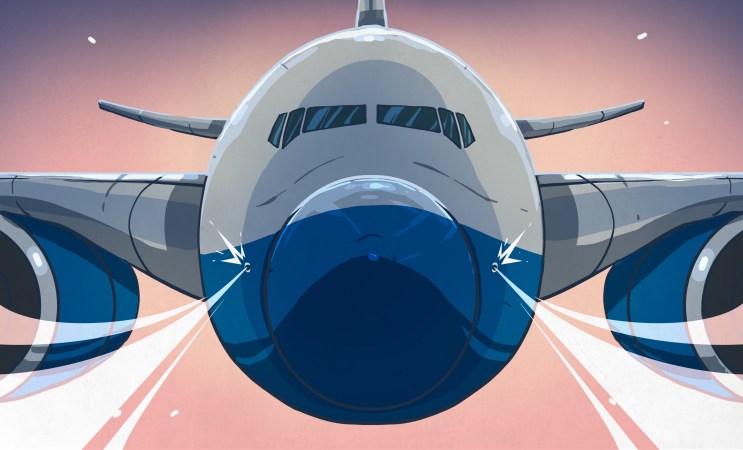
When you’re driving your car, you’re probably regularly looking at the speedometer to make sure you comply with the local speed limits. The method by which it works is simple enough: the rotation of the wheels is sent mechanically via a cable to a dial on the dash, or an electronic sensor counts the rotations of the drivetrain and an electronically-controlled needle or display shows the speed.
But what about if you were in an aircraft, and the wheels had nothing to do with how fast you were going? How would you even begin to measure speed? There are two ways: there’s a convenient solution to this problem rooted in simple fluid mechanics, and a far-more-complex modern solution. Today, we’ll explore how planes and helicopters are able to figure out how fast they’re going, by the old ways and the new.









