Spy Tech: The GPS Numbers Station

We’ve talked before about number stations — mysterious shortwave transmitters repeating numbers, presumably for clandestine purposes. But, of course, the mere fact that they are unusual makes them stand out. The best place to hide something is in plain sight. In the old days, a broadcaster might slip a fake news story in mentioning a name that has a secret meaning, for example. But according to [Steven Murdoch], the United States has an even more obvious hiding place for a numbers station: inside GPS.

Every L1 C/A navigation message is a 176-bit field known by the affectionate moniker: Subframe 4, Page 17. The GPS specification says it is for “special messages.” No one has disclosed what those messages might be.

[Murdoch] at University College London analyzed over 12 million GPS packets from 2007 to 2026, trying to understand what was in this field. You might think 176 bits isn’t much, and you are right. But the L1 C/A signal carries 50 bits per second, and each frame is 1,500 bits. As [Murdoch] points out: “every bit must earn its place.” Each subframe is 300 bits, so this mysterious signal is 12% of the subframe. It must be important to someone.

Continue reading “Spy Tech: The GPS Numbers Station”

Laser Ranging Makes GPS Satellites More Accurate

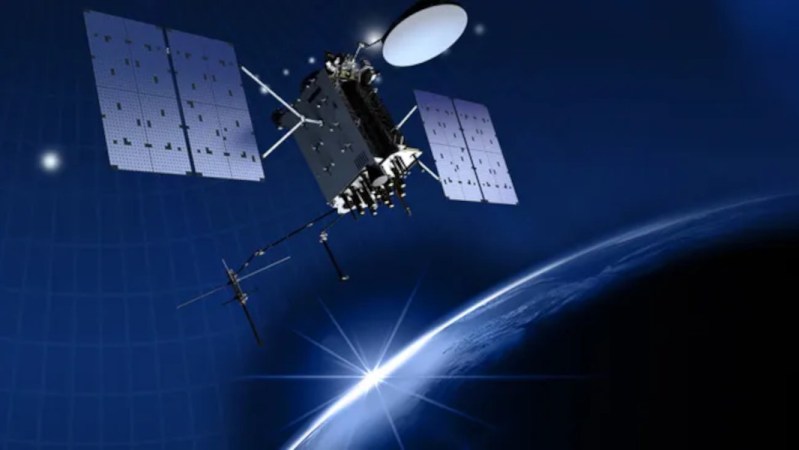
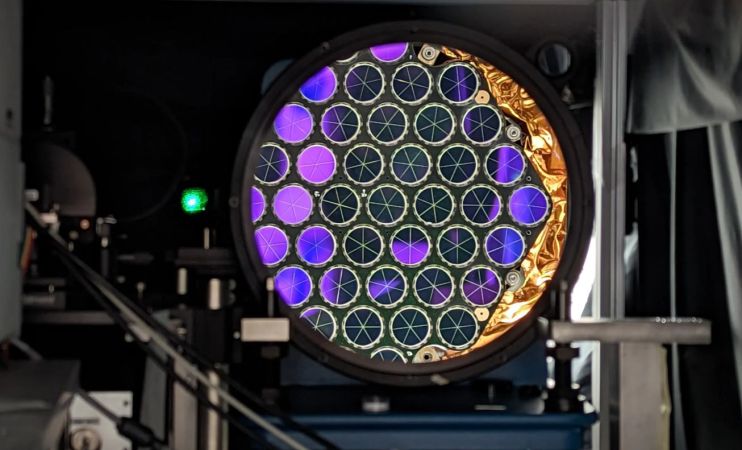
Although GNSS systems like GPS have made pin-pointing locations on Earth’s sphere-approximating surface significantly easier and more precise, it’s always possible to go a bit further. The latest innovation involves strapping laser retroreflector arrays (LRAs) to newly launched GPS satellites, enabling ground-based lasers to accurately determine the distance to these satellites.

Similar to the retroreflector array that was left on the Moon during the Apollo missions, these LRAs will be most helpful with scientific pursuits, such as geodesy. This is the science of studying Earth’s shape, gravity and rotation over time, which is information that is also incredibly useful for Earth-observing satellites.

Laser ranging is also essential for determining the geocentric orbit of a satellite, which enables precise calibration of altimeters and increasing the accuracy of long-term measurements. Now that the newly launched GPS III SV-09 satellite is operational this means more information for NASA’s geodesy project, and increased accuracy for GPS measurements as more of its still to be launched satellites are equipped with LRAs.

GNSS Signals Tracked On The Moon By LuGRE

As part of the payloads on the Firefly Blue Ghost Mission 1 (BGM1) that recently touched down on the Moon, the Lunar GNNS Receiver Experiment (LuGRE) has become the first practical demonstration of acquiring and tracking Earth orbital GNSS satellites. LuGRE consists of a weak-signal GNSS receiver, a high-gain L-band patch antenna the requisite amplification and filter circuits, designed to track a number of GPS and Galileo signals.

Designed by NASA and the Italian Space Agency (ISA), the LuGRE payload’s goal was to demonstrate GNSS-based positioning, navigation and timing at the Moon. This successful demonstration makes it plausible that future lunar missions, whether in orbit or on the surface, could use Earth’s GNSS satellites to navigate and position themselves with. On the way to the lunar surface, LuGRE confirmed being able to track GNSS at various distances from the Earth.

Both LuGRE and BGM1 are part of NASA’s Commercial Lunar Payload Services (CLPS) program, with BGM1 delivering a total of ten payloads to the Moon, each designed to study a different aspect of the lunar environment, as well as hardware and technologies relevant to future missions.

Enhiker Helps You Decide If Its A Good Day To Hike

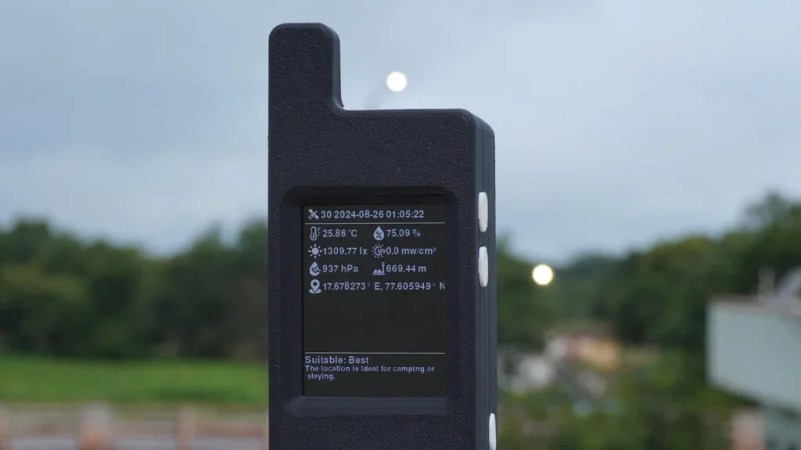
Many of us check the weather before heading out for the day — we want to know if we’re dressed (or equipped) properly to handle what Mother Nature has planned for us. This is even more important if you’re going out hiking, because you’re going to be out in a more rugged environment. To aid in this regard, [Mukesh Sankhla] built a tool called Enhiker.

The concept is simple; it’s intended to tell you everything you need to know about current and pending conditions before heading out on a hike. It’s based around Unihiker, a single-board computer which also conveniently features a 2.8-inch touch screen. It’s a quad-core ARM device that runs Debian and has WiFi and Bluetooth built in, too. The device is able to query its GPS/GNSS receiver for location information, and then uses this to get accurate weather data online from OpenWeatherMap. It makes some basic analysis, too. For example, it can tell you if it’s a good time to go out, or if there’s a storm likely rolling in, or if the conditions are hot enough to make heat stroke a concern.

It’s a nifty little gadget, and it’s neat to have all the relevant information displayed on one compact device. We’d love to see it upgraded further with cellular connectivity in addition to WiFi; this would make it more capable when out and about.

We’ve seen some other neat hiking hacks before, too, like this antenna built with a hiking pole. Meanwhile, if you’ve got your own neat hacks for when you’re out on the trail, don’t hesitate to let us know!

GNSS Reception With Clone SDR Board

We love seeing the incredible work many RF enthusiasts manage to pull off — they make it look so easy! Though RF can be tricky, it’s not quite the voodoo black art that it’s often made out to be. Many radio protocols are relatively simple and with tools like gnuradio and PocketSDR you can quickly put together a small system to receive and decode just about anything.

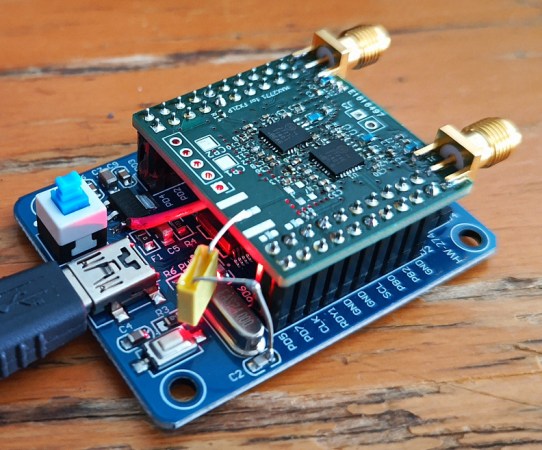
[Jean-Michel] wanted to learn more about GNSS and USB communication. Whenever you start a project like this, it’s a good idea to take a look around at existing projects for designs or code you can reuse, and in this case, the main RF front-end board is taken from the PocketSDR project. This is then paired with a Cypress FX2 development board, and he re-wrote almost all of the PocketSDR code so that it would compile using sdcc instead of the proprietary Keil compiler. Testing involved slowly porting the code while learning about using Python 3 to receive data over USB, and using other equipment to simulate antenna diversity (using multiple antennas to increase the signal-to-noise ratio): Continue reading “GNSS Reception With Clone SDR Board”

A Homebrew GPS Correction System For DIY Land Surveying

For those of you rushing to the comment section after reading the title to tell [Ben Dauphinee] that his DIY land surveying efforts are for naught because only a licensed surveyor can create a legally binding property description, relax — he already knows. But what he learned about centimeter-resolution GPS is pretty interesting, especially for owners of large rural properties like him.

[Ben]’s mapping needs are less rigorous than an official survey; he just wants to get the locations of features like streams and wood lines, and to get topographic elevations so that he has a general “lay of the land” for planning purposes. He originally engaged a surveyor for that job, but after shelling out $4,600 to locate a single property line, he decided to see what else could be done. Luckily, real-time kinematics, or RTK, holds the key. RTK uses a fixed GPS station to provide correction signals to a mobile receiver, called a rover. If the fixed station’s position is referenced to some monument of known position, the rover’s position can be placed on a map to within a couple of centimeters.

To build his own RTK system, [Ben] used some modules from SparkFun. The fixed station has an RTK breakout board and a multi-band GNSS antenna to receive positioning data, along with a Raspberry Pi to run the RTK server. An old iPhone with a prepaid SIM provides backhaul to connect to the network that provides correction data. [Ben]’s rover setup also came mainly from SparkFun, with an RTK Facet receiver mounted on a photographer’s monopod. Once everything was set up and properly calibrated, he was able to walk his property with the rover and measure locations to within 4 centimeters.

This was not an inexpensive endeavor — all told, [Ben] spent about $2,000 on the setup. That’s a lot, especially on top of what he already paid for the legal survey, but still a fraction of what it would have cost to have a surveyor do it, or to buy actual surveyor’s equipment. The post has a ton of detail that’s worth reading for anyone interested in the process of mapping and GPS augmentation.

A RPI HAT For Synchronized Measurements

A team from the Institute for Automation of Complex Power System (ACS) at RWTH Aachen University have been working for a while on the analysis of widely distributed power systems. In a drive to move away from highly specialised (and expensive) electronics platforms, they have produced some instrumentation designed to operate with the Raspberry Pi platform, and an open source software stack. They call the platform the SMU (Synchronised Measurement Unit.) The SMU consists of a HAT sitting on an RPi3, inside a 3D printed box that is intended to attach to a DIN rail. After all, this is supposed to be an industrial platform.

Hardware wise, the star of the show is the Texas Instruments ADS8588S which is a 16-bit 8-channel simultaneous sampling ADC. This is quite a nice device, with 200 kSPS throughput and a per-channel programmable front end, packaged in a hacker-friendly 64-pin QFP. What makes this project interesting however, is how they solved the problem of controlling the sampled data acquisition and synchronisation.

1-PPS and BUSY edges converted to levels, then OR’d to trigger the DMA

By programming the ADC into byte-parallel mode, then using the BCM2837 Secondary Memory Interface (SMI) block together with the DMA, samples are transferred into memory with minimal CPU overhead. An onboard U-Blox Max-M8 GNSS module provides a 1PPS (top of second pulse) signal, which is combined with the ADC busy signal in a very simple manner, enabling both sample rate control as well as synchronisation between multiple units spread out in an installation. They reckon they can get synchronisation to within 180 ns of top-of-second, which for measuring relatively slow-changing power systems, should be enough. The HAT PCB was created in KiCAD and can be found in the SMU GitHub hardware section, making it easy to modify to your needs, or at least adjust the design to match the parts you can actually get your hands on.

Continue reading “A RPI HAT For Synchronized Measurements”