ITunes LP: There’s A Hack For That

fantasia

One of the most-hyped features of iTunes version 9 is the addition of “iTunes LP,” which aims to recreate the classic record album experience with artwork and photos, lyrics, and liner notes — provided, of course, that you can pony up the purported $10,000 for production and you’re not one of those filthy indie labels.

Almost immediately upon its release, folks set about dismantling the iTunes LP format and found that it largely consists of an unprotected combination of HTML, CSS and JavaScript files. Such information is now scattered about the web, but a new site, iTunesLP.net, is jockeying to be the one-stop shop both for LP creation tutorials and for fan-made LP downloads (sans the copyrighted music tracks — bring your own). The first LP available for download there is [Walt Disney]’s 1957 release of Fantasia, faithfully reproducing the original 24-page color program in all its politically incorrect glory. Check it out…quickly, before Apple and Disney lay the smack down.

Palm Pre IPod Spoofing Confirmed

palmpre

The new Palm Pre cellphone has a “media sync” feature which lets the device sync with iTunes in a fashion identical to an iPod. Last week [Jon Lech Johansen] speculated that this was not done in cooperation with Apple and that Palm was spoofing the iPod’s USB controller. This was confirmed today when a tipster sent him a screenshot of what the device reports in both standard and media sync modes. The Palm Pre reports its Product ID as iPod and Vendor ID as Apple with a few other changes. [Jon] notes that it doesn’t change the root USB node, so Apple should be able to block this behavior with an iTunes update. With Palm already pulling tricks like this presumably through software we wonder if this will become a full-on arms race.

Android Hacks Roundup

Our friend [Jeffrey Sharkey] hacked the iTunes remote control protocol and produced his own version for Android, one of the smartphone OSes we just covered. He pored over dumped packets for a few days and wrote a client which is of course GPL’d. Besides that, he’s been busy winning the Android Developer Challenge. His app, Compare Everywhere, was one of the top 10 winners, netting him a cool $275,000. This ingenious bit of code deciphers barcodes scanned using a cell phone camera and then finds prices for that item at every nearby store that sells it.

The other winners wrote apps that do cool things such as one-click cab ordering, locate missing children, and find parties. Check out all 50 finalists and winners here.

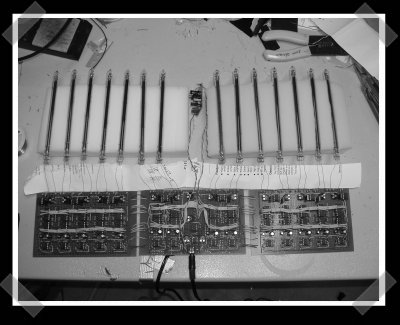
Nixie Tube VU Meter


[Daniel] sent in his Nixie tube VU meter. It uses 14 Russian IN-13 Nixie bar-graph tubes. He built a custom circuit to amplify, filter, smooth and feed a voltage divider to assign signal levels to segments and finally some high voltage transistors to drive the tubes. The circuit looks pretty big, but it’s repeated for each tube – so he worked hard to keep the cost down as much as possible. Now this just needs to live on the front of a massive tube amplifier.