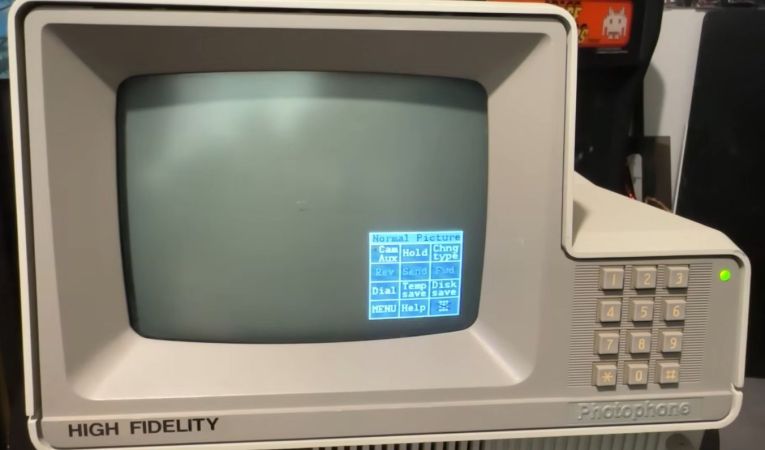
 The concept of remote video calls has been worked on since Bell’s phone company began pitching upgrading from telegrams to real-time voice calls. It wasn’t until the era of digital video and real-time video compression that commercial solutions became feasible, with the 1985 Image Data Corporation Photophone CP220 being an early example. The CP220 is also exceedingly rare due to costing around $25,000 USD when adjusted to inflation. This makes the teardown and repair on the [SpaceTime Junction] channel a rather unique experience.
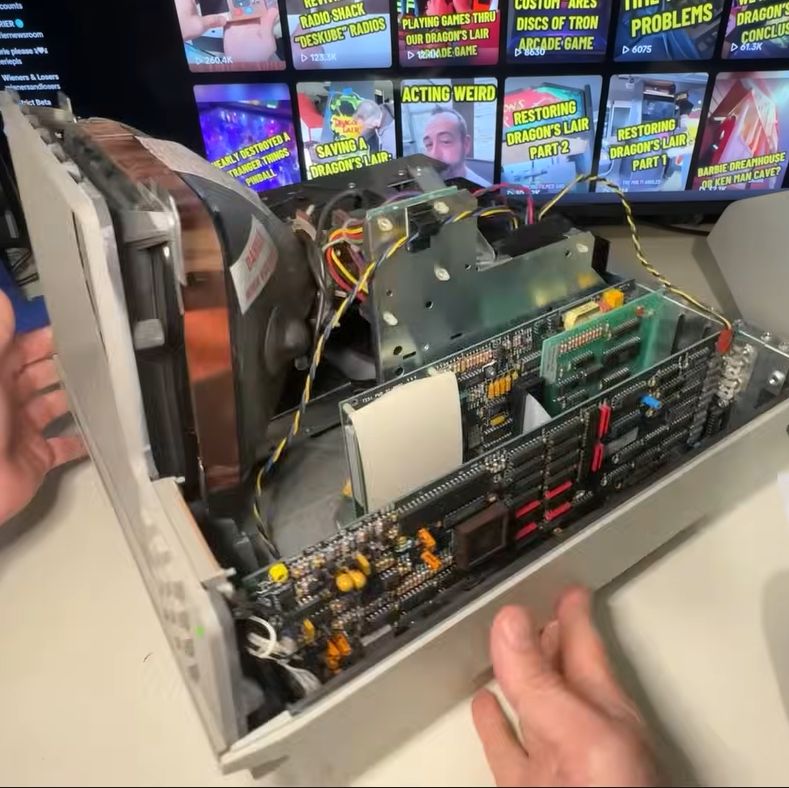
Perhaps the coolest part of the device is that the manual is integrated into the firmware, allowing you to browse through it on the monochrome CRT. Unfortunately after working fine for a while the device released the magic smoke, courtesy of the usual Rifa capacitors doing their thing. This is why a full teardown was necessary, resulting in the PSU being dug out and having said capacitors swapped.
After this deal the device powered on again, happily accepting a video input and saving screenshots to the floppy drive before it was replaced with a FDD emulator running FlashFloppy firmware. Unfortunately no video call was attempted, probably because of the missing camera and having to set up a suitable POTS landline for the built-in modem. Hopefully we’ll see that in an upcoming video to see what we common folk were missing out on back in the day.
Continue reading “Powering On A 1985 Photophone CP220 Videoconference System”