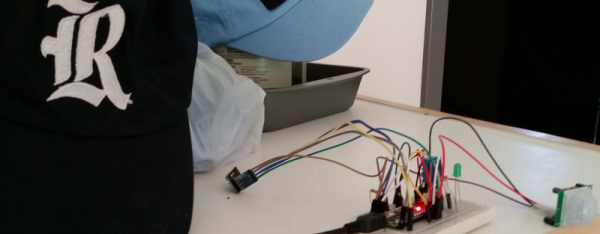
Searching For Dark Matter With A Levitating Magnet

Much of science is performed through inference, with the readings on instruments, a flash of light in heavy water, or the results of parsing through terabytes of sensor data after a particle accelerator collision either backing up a proposed scenario or weakening its foundations.

In the case of so-called dark matter, this is even more relevant, as we are talking about a proposed form of matter whose most pertinent feature is that it doesn’t interact with anything else except through gravity. This is where the wiggling of a levitating magnet may be the key to detecting it.

In this experimental setup by Rice University and Dutch researchers at the Leiden Institute, a tiny permanent magnet the size of a grain of sand is levitated above a superconductor, surrounded by highly sensitive detectors that should be able to spot even minuscule movements. So far, they have collected a month’s worth of data, with no conclusive results yet.

Even if they don’t detect any ‘knocks’ on this tiny levitating magnet, it will still help refine existing models of what dark matter’s properties might be. For the next phase of this research, they’ll add more of these sensors, which will also make it easier to distinguish background noise from any unusual readings.

We’ve previously talked about [Vera Ruben]’s contributions to the hunt for dark matter and the mysteries that prompted the idea that it might exist.
Making Graphene More Practical

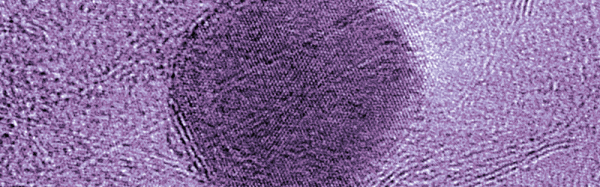
[James Tour] and others at Rice University announced an improved form of graphene that uses nanoscale rivets. The material incorporates carbon nanotubes along with carbon spheres that encase iron nanoparticles. The nanotubes provide strength and higher conductivity overall, while the spheres let the material transfer more easily.

Typically, placing graphene on something involves using chemical vapor deposition on a polymer layer before transferring to another site. The polymer tends to degrade the graphene’s properties. This new material doesn’t require this intermediate step. In addition, the spheres allow interfacing to the graphene more readily.

Continue reading “Making Graphene More Practical” →

Teslaphoresis: Tesla Coil Causes Self-Assembly In Carbon Nanotubes

teslaphoresis_strings_1

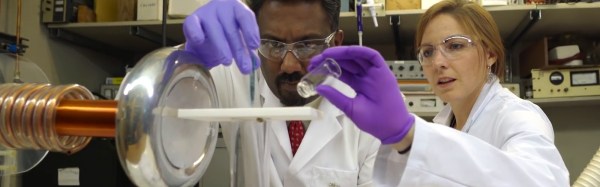
This significant discovery in nanotechnology could also be the first practical use of a Tesla coil in modern times that goes beyond fun and education. A self-funded research team at Rice University has found that unordered heaps of carbon nanotubes will self-assemble into conductive wires when exposed to the electric field of a strong Tesla coil. The related paper by lead author and graduate student [Lindsey R. Bornhoeft], introduces the phenomenon as “Teslaphoresis”. Continue reading “Teslaphoresis: Tesla Coil Causes Self-Assembly In Carbon Nanotubes” →

Ridiculously Automated Dorm Room

Take three NRF24L0+ radios, two Arduino Nanos, and a Raspberry Pi. Add a bored student and a dorm room at Rice University. What you get is the RRAD: Rice Ridiculously Automated Dorm. [Jordan Poles] built a modular system inspired by BRAD (the Berkeley Ridiculously Automated Dorm).

RRAD has three types of nodes:

  • Actuation nodes – Allows external actuators like relays or solenoids
  • Sensory nodes – Reports data from sensors (light, temperature, motion)
  • Hub nodes – Hosts control panel, records data, provides external data interfaces

Continue reading “Ridiculously Automated Dorm Room” →