
Creating Beautiful Light Shows With Soap

We feature a lot of fun projects with LEDs and lasers and all kinds of light effects going on. Most of these are very digital. However, there are a great many ways to make beautiful lighting effects without ones and zeros. The Maelstrom Lamp from [Michele Lorenzi] is a great example of that.
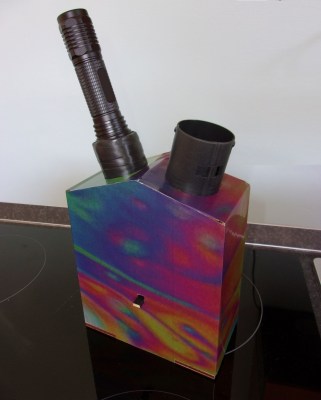
The Maelstrom Lamp is externally decorated to indicate its function. 

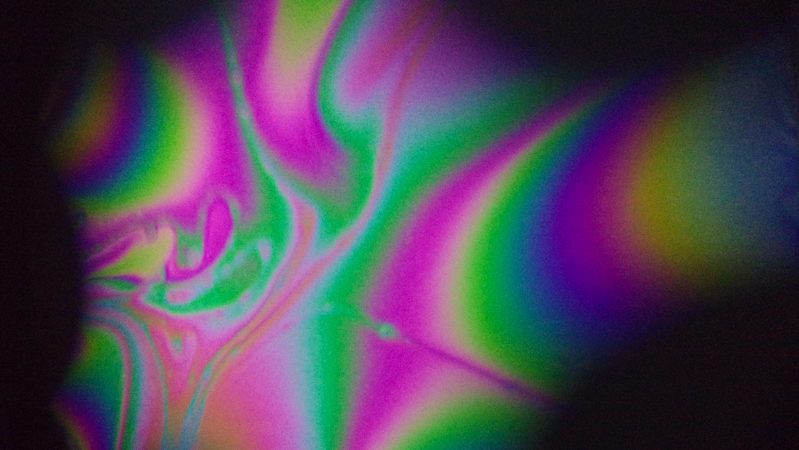
The concept is decidedly old-school. The lamp uses a delicate, thin soap film stretched across an aperture as its primary optical element. The varying thickness of the film across its surface leads to constructive and destructive interference when white light passes through it. This creates a kaleidoscope of color; the same effect you might have seen when an oil slick forms in a dirty puddle.

In this case, though, that effect is projected with the aid of a powerful 800-lumen flashlight and some supporting optics. [Michele]’s write-up does a great job of explaining the finer design details that maximize the vibrancy of the effect, from the waviness in the gasket that supports the soap film, to the optics that focus the torch beam.

If you’re looking for some suitably psychedelic lighting effects for your next house party, you really ought to build one of these. We’ve featured some other fun classic lighting effects before, like these wonderful bubble lamps. Continue reading “Creating Beautiful Light Shows With Soap”
A Soap Film Photography How-To

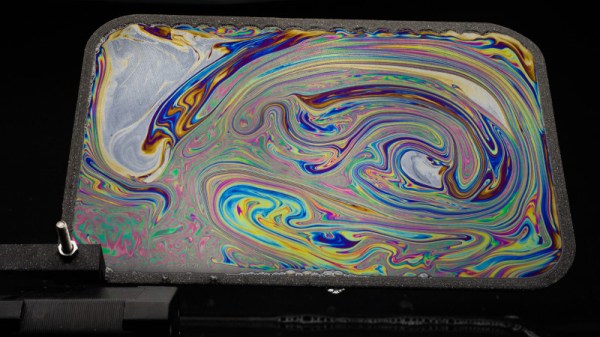
Blowing bubbles is a pastime enjoyed by young and old alike. The pleasant motion and swirling colors of the bubbles can be remarkably relaxing. With the right tools and techniques, it’s possible to take striking photos of these soap film phenomena, and that’s exactly what [Eric] and [Travis] did.

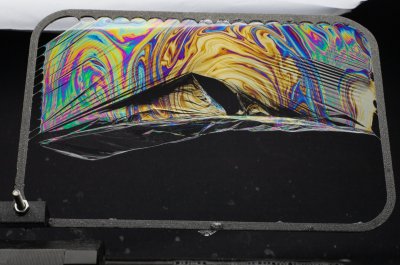
Adding sugar to the soap solution increases the resilience of the film significantly. With enough added, the film no longer pops, but instead breaks and fails in interesting ways.

After beginning with a robotic arm and a computer fan blowing bubbles, the project moved towards a simple stepper motor setup. A thin frame is lowered into a solution of soapy water, then brought back up by the stepper motor. The resulting soap film is held in front of a black background and carefully lit with a softbox light.

Lens selection is critical for this sort of work – in this case, a TS-E 50mm Macro f/2.8 lens was the order of the day. [Eric] shares other tips for taking great shots, such as adding sugar to the solution to make the soap film last longer, and using a modified speaker to help “paint” the surface of the films.

The resulting images are beautiful examples of the art, showing vibrant colors from the interference patterns created by the light. [Eric] has done a great job of clearly documenting the development process and the final results, making it possible for others to recreate the project elsewhere.

We’ve seen other soapy projects before, like this automatic bubble blowing machine. Video after the break.

Continue reading “A Soap Film Photography How-To”









