
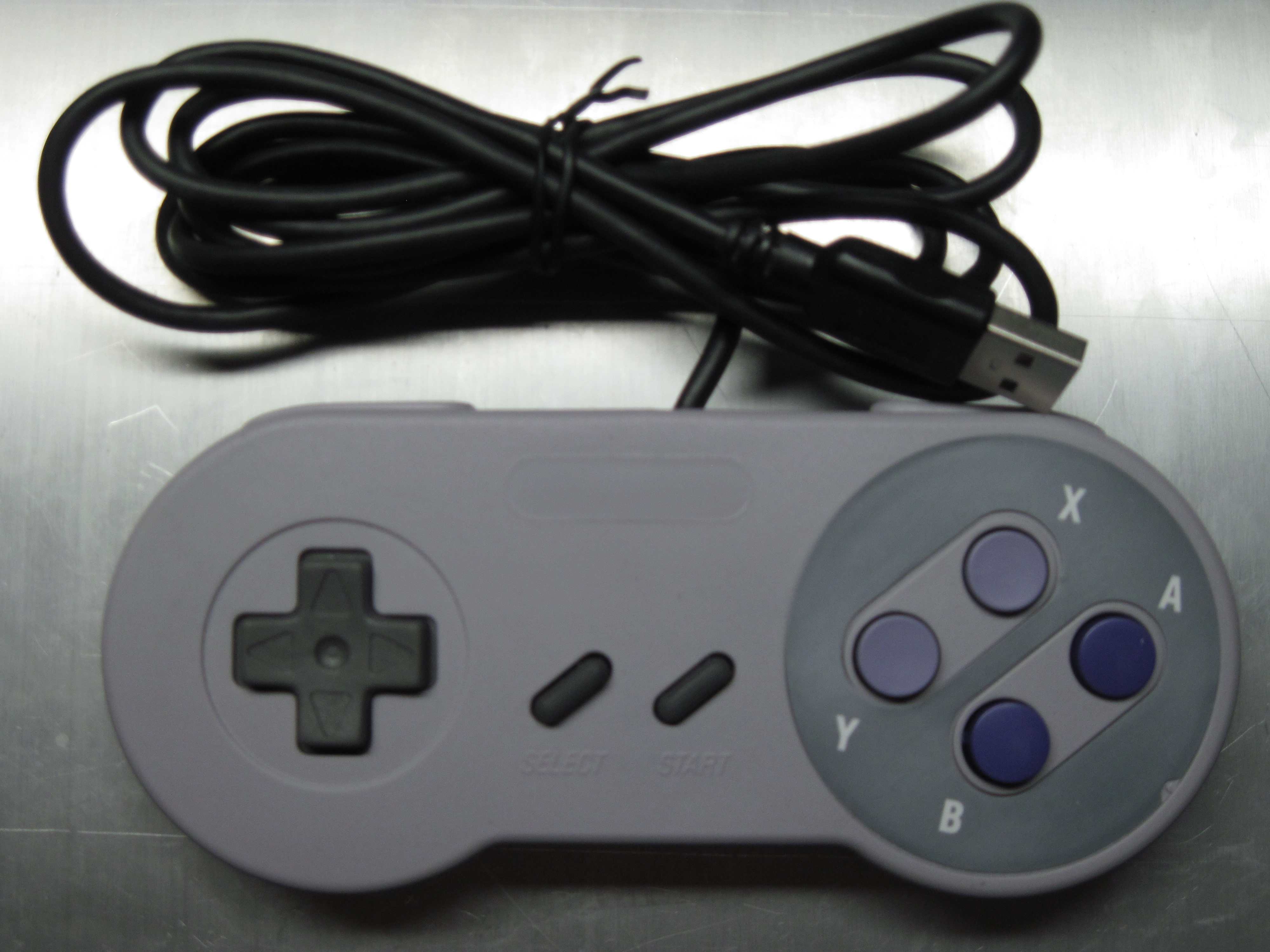
SNES Controller + USB + Accelerometer

As we posted about [Atarity]’s XBMC hiding in an SNES controller, we were finishing work on a tutorial for [Adafruit]. The tutorial combines a Teensy USB development board with a 3D accelerometer inside of an SNES controller. The Teensy is programmed to poll the SNES controller buttons and read the accelerometer values. The buttons are set to keystrokes and mouse buttons, and the accelerometer values are processed into mouse movement. Programmed to play Portal, we created a video showing how to use the device. You can see it after the break.

It was not quite as easy or quick as the typical PC gamer left hand: WASD, right hand: mouse stance. However, we can think of a number of other games that could be improved with the use of a device that, with a bit of hacking, could time keystrokes as the user needed. With a bit more hacking, the device could be made to brute-force passwords. What else would you do with this?
Continue reading “SNES Controller + USB + Accelerometer”

Program Your Own Mayhem-causing USB Dongle

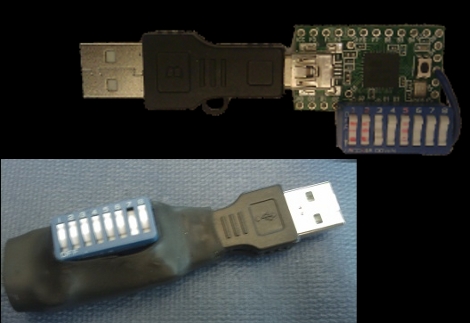
[Adrian Crenshaw] is up to no good with this programmable USB device. [Adrian’s] creation identifies itself as a USB keyboard and can be programmed to do whatever you want. That’s because it’s based around the Teensy board which sports an ATmega32 that will cost you only $18. He’s added a set of DIP switches for easy in-field changes to the firmware. There’s also a light sensor that can be used to activate a command once an unknowing victim has shut off the lights in the office and left for the day. Check out his talk after the break to see his proposed uses for such a device.

Continue reading “Program Your Own Mayhem-causing USB Dongle”

Rhythmic Combo-lock

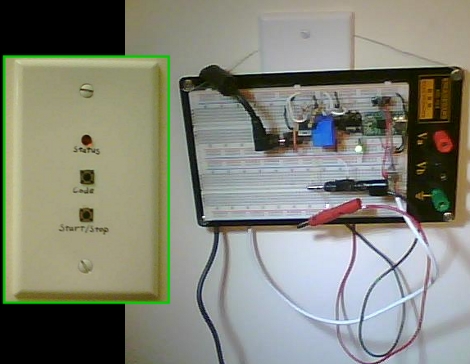
[MusashiAharon’s] dorm room door was practically begging to be hacked. There was already an electronic strike plate in place as well as junction boxes on the inside and out that were connected by conduit. Jumping on the bandwagon after seeing some other door lock hacks here, he built one that uses a rhythmic combination.

The control panel on the outside is a blank faceplate with two buttons and a status LED. Theses are wired to a jack and connected with a cable traveling through the conduit to a breadboard on the inside of the door. Seeing a large breadboard hanging on an outlet cover is a bit comical but it does the job. From there, a Teensy microcontroller waits for the code and if correct, actuates the strike plate via a relay.

The rhythmic nature of this lock reminds us of the knock-based system. One button signals the start and end of the code, the other is used to input the rhythmic sequence. This does seem a little more discreet and we’d imagine it’s quite hard to eavesdrop on the correct combination.









