From Zip To Nought: The Rise And Fall Of Iomega

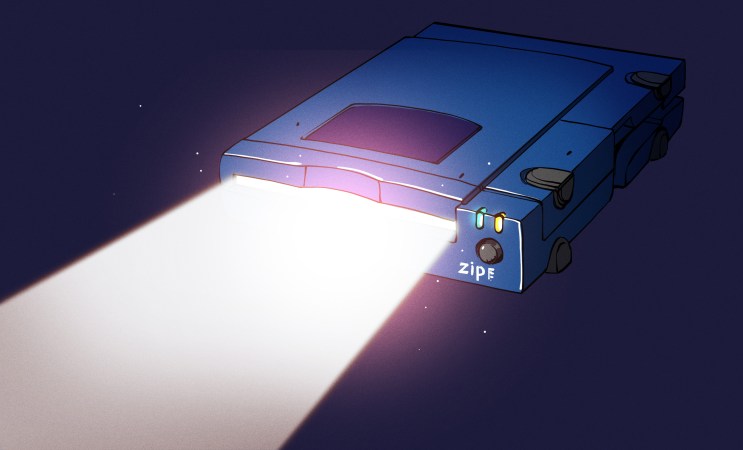
If you were anywhere near a computer in the mid-to-late 1990s, you almost certainly encountered a Zip drive. That distinctive purple peripheral, with its satisfying clunk as you slotted in a cartridge, was as much a fixture of the era as beige tower cases and CRT monitors. Iomega, the company behind it, went from an obscure Utah outfit to a multi-billion-dollar darling of Wall Street in the span of about two years. And then, almost as quickly, it all fell apart.

The story of Iomega is one of genuine engineering innovation and the fickle nature of consumer technology. As with so many other juggernauts of its era, Iomega was eventually brought down by a new technology that simply wasn’t practical to counter.

The House That Bernoulli Built

Iomega was founded in Utah, in 1980, by Jerome Paul Johnson, David Bailey, and David Norton. The company soon developed a novel approach to removable magnetic storage based on the Bernoulli effect. The Bernoulli Box arrived in 1982, which was a drive relying on PET film disks spun at 1500 RPM inside a rigid, removable cartridge. The airflow generated by the spinning disk pulled the media down toward the read/write head thanks to the eponymous Bernoulli effect. While spinning, the disk would float a mere micron above the head surface on a cushion of air. If the power cut out or the drive otherwise failed, the disk simply floated away from the head rather than crashing into it—a boon over contemporary hard drives for which head crashes were a real risk. The Bernoulli Box made them essentially impossible. Continue reading “From Zip To Nought: The Rise And Fall Of Iomega”
Zip-Drive Emulator Puts Big Disks Back On LPT

Iomega’s Zip drives filled an interesting niche back in the 1990s. A magnetic disk that was physically floppy-sized, but much larger in capacity– starting at 100 MB, and reaching 750 MB by the end–they never quite had universal appeal, but never really went away until flash memory chased them out of the marketplace in the early 2000s. While not everyone is going to miss them, some of us still think it’s a better form factor than having a USB stick awkwardly protruding from a computer, or microSD cards that are barely large enough to see with the naked eye. [Minh Danh] is one of those who still has affection for Zip drives, and when his parallel port Zip 100 drive started to give up the ghost last year, he decided to do something bold: reverse engineer it, and produce an emulator. First software, and then in hardware.

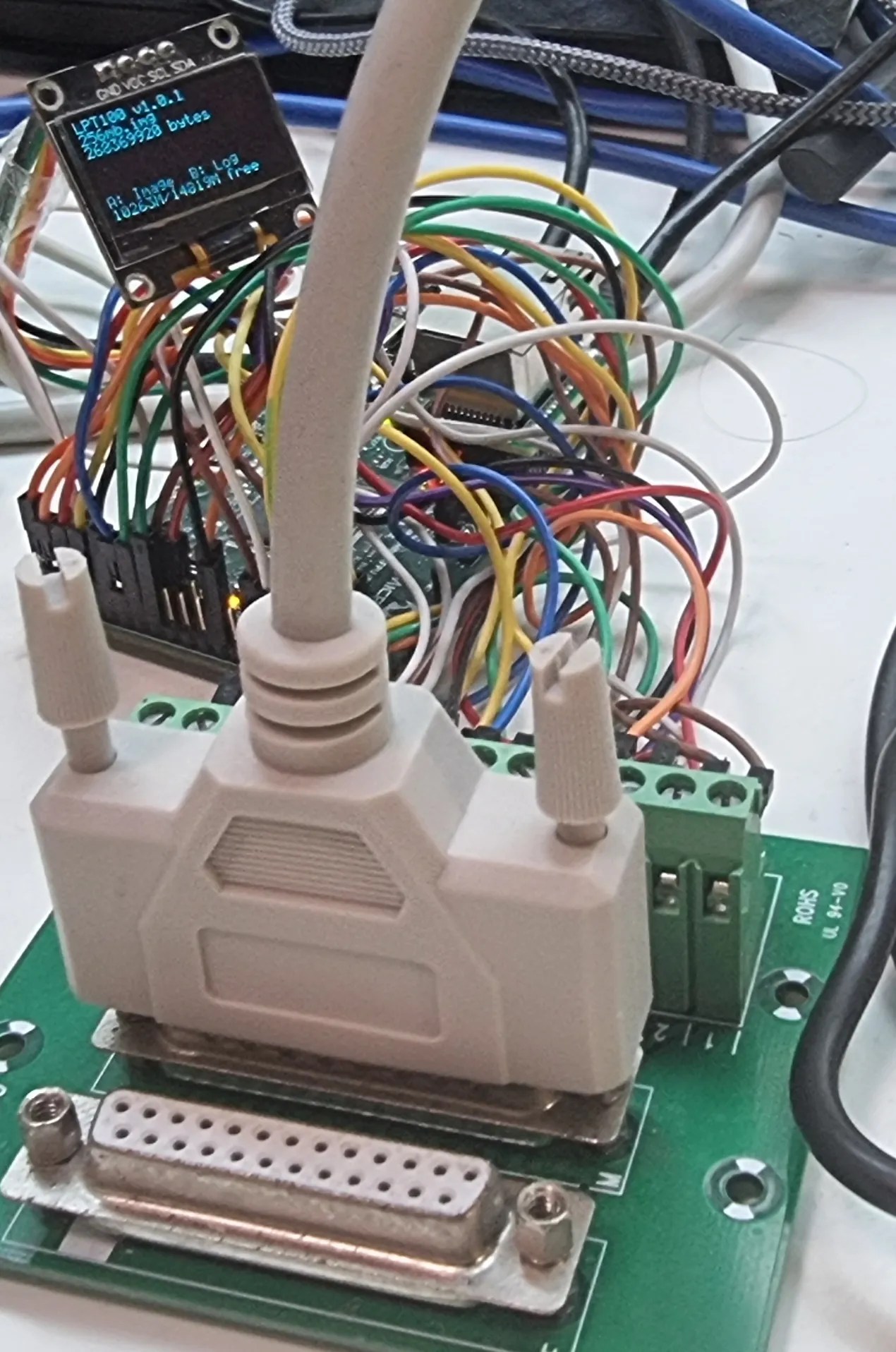
It’s not the prettiest-ever prototype, but lots of great things start with a mess of wires.

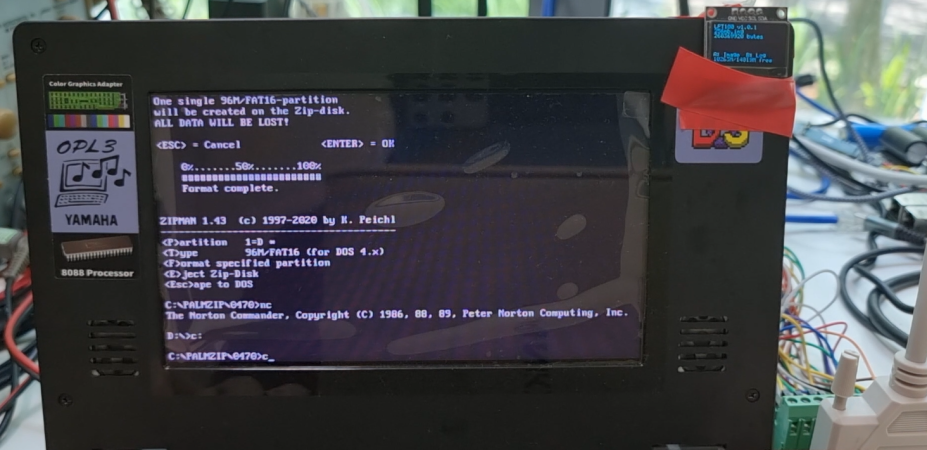
The first was to create a virtual zip drive that could run on a virtual machine and be accessed with DOS or Windows up to XP. The next task was to move that functionality onto a microcontroller to create something like a GoTek floppy emulator for LPT Zip drives that he’s calling the LPT100. Yes, Zip drives were built for ATAPI, SCSI, FireWire and USB, too, but [Minh]’s was on the parallel port and that’s what he wanted to replace, so the LPT interface is what set out to recreate.

It works, too, though took more guts than was expected– the 8-bit PIC18F4680 he started with just wasn’t up to the task. He moved up to a 32-bit PIC, the PIC32MZ2048EFH144 to be specific, which proved adaquate when testing with his Book 8088, a new DOS PC from 2023. Iomega’s official driver won’t run on an 8088, but the PALMZIP utility does and was able to transfer files, though only at the slow nibble rate due to limitations with the Book8088’s LPT hardware. Watch it in action below.

Alas, moving up to the Pocket386, it seemed the PIC just could not keep up. [Minh] says he’s thinking of moving to the faster Teensy 4.1, which sounds like a good idea. Considering the Teensy can be configured to serve as a drop-in replacement for a 68000, bit-banging the bus at 7.8 MHz, we’d think it should handle anything a parallel port can throw at it.

Thanks to [Minh Danh] for the tip!

Continue reading “Zip-Drive Emulator Puts Big Disks Back On LPT”