
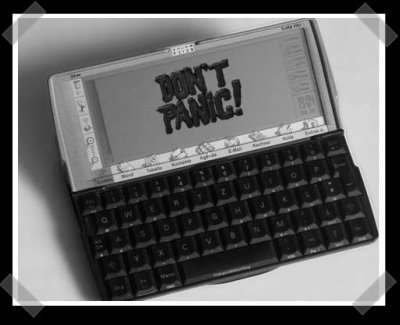
[PKM] decided to breathe new life into a Psion 5mx handheld. He slapped linux on it, added a wikipedia dump to a CD card, and voila: pocket wikipedia. It’s the closest thing to an actual hitchhikers Guide to the Galaxy I’ve ever seen. So long and thanks for all the fish!
Month: May 2008
Charter Screwing With DNS

Charter Communications seems to be pulling some sort of crap with their DNS servers. While working on a new project our friend Billy Hoffman, discovered that Charter was reporting absolutely every domain as resolving. They do offer a solution by providing an opt-out cookie, which isn’t useful at all if you’re not using a web browser… and I’m guessing most of Charter’s subscribers aren’t looking for a bastardized version of the net. We’ve seen recently that messing with DNS like this can actually open up new security holes.
XBMC For Your Mac

XBMC (formerly Xbox Media Center) has always been a popular choice for retiring an original Xbox. Maybe people install it for lack of something better to do or maybe it’s the pride in having better media support than the 360. The XBMC team has found another device that has a pretty weak television experience, the Mac. Lifehacker took the latest XBMC for OSX beta build for a run now that it supports remote controls. It seems like a much more functional than Apple’s built in Front Row. There are a few things that don’t quite work yet, which you can find in the FAQ. We’re definitely going to try this on our old Mac mini… once we upgrade it to Leopard, which is an unfortunate caveat that might prevent people from running XBMC on legacy hardware. There is no Apple TV support planned because of limited horsepower and the hacking hurdles that might be required. If you’re interested in repurposing your old Xbox with XBMC, check out Lifehacker’s install guide.
Smart Car Sensing With RF
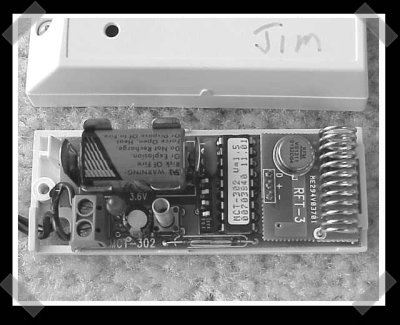
In order to tell his home automation system that he’s home, [Jim] mounted a RF transmitter in each of his cars. When the car is on, the transmitter is powered up. The house picks up the transmitter signal when the car arrives or departs. With that information, he was able to set up some stateful rules that can be activated when people arrive or depart. Some people prefer to use APRS and read vehicle location from the transmitted GPS coordinates, but this is a bit cheaper and doesn’t transmit your position to the entire world all the time. The useful range is about 100 feet, so this can work even if you have to park in the street.
Human Sync Optical Tachometer
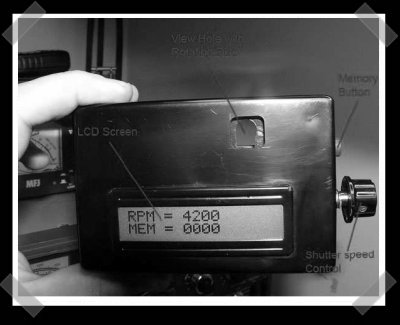
[Jared] sent in this optical tachometer by [Mike Freeman]. The write-up and code requires a free registration, but if you’ve got a use for it, it’s probably worth the hassle. The zip archive includes a nice writeup in PDF format, and the code needed for the pic controller. The tach was built specifically for model helicopters. The user looks through the viewfinder and adjusts the pot on the side until the spinning helicopter blade visually stops turning.
The Future Of The Internet And How To Stop It
Yes, even we were getting tired of that Indiana Jones marathon on TV. So, we ventured online to find something entirely too geeky for a Sunday afternoon. The Future of the Internet and How to Stop It is a presentation Harvard Law School professor Jonathan Zittrain gave at Princeton near the end of March.
He begins by covering early 20th century “sterile” technology like tabulation machines that were rented by the census bureau. The machines didn’t encourage any sort of innovation. Next he talks about “generative” technology like the internet and modern OSes where anyone can build whatever they want. The final step is the more recent move to what he calls “tethered” technology. These are the systems with upgradeable firmware where devices can ship with unfinished features and remove features after the consumer has already purchased the device. He uses the iPhone as an example of this walled garden that could hurt innovation. Watch the video for his thoughts on this new world and how he thinks it could be fixed.
Maker Faire 2008: Schwag
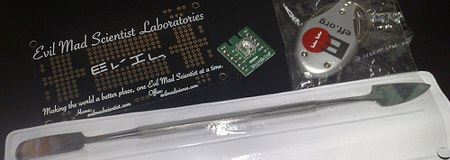
As our final Maker Faire post, we thought we’d talk about some of the curious items that were handed us during the event.
While checking out Evil Mad Scientist Laboratories‘ latest generation CandyFab were given their AVR business card breakout board.
[Garrett] gave us a handful of ShiftBrites to play with in a future project.
We donated to the EFF, as we’re wont to do, and received a super bright blue flashlight for spotting the yellow tracking dots on color laser printouts. If you’re not familiar with this topic, you should check out bunnie’s blue light scanner.
Our final stop was at ifixit to pick up a free set of spatulas (spudgers?) for popping open iPods. All around a decent haul.









