How Advanced Autopilots Make Airplanes Safer When Humans Go AWOL

It’s a cliché in movies that whenever an airplane’s pilots are incapacitated, some distraught crew member queries the self-loading freight if any of them know how to fly a plane. For small airplanes we picture a hapless passenger taking over the controls so that a heroic traffic controller can talk them through the landing procedure and save the day.

Back in reality, there have been zero cases of large airliners being controlled by passengers in this fashion, while it has happened a few times in small craft, but with variable results. And in each of these cases, another person in the two- to six-seater aircraft was present to take over from the pilot, which may not always be the case.

To provide a more reliable backup, a range of automated systems have been proposed and implemented. Recently, the Garmin Emergency Autoland system got  its first real use: the Beechcraft B200 Super King Air landed safely with two conscious pilots on board, but they let the Autoland do it’s thing due to the “complexity” of the situation.

Continue reading “How Advanced Autopilots Make Airplanes Safer When Humans Go AWOL”

Super Mario 64, Now With Microtransactions

Besides being a fun way to pass time, video gaming is a surprisingly affordable hobby per unit time. A console or budget PC might only cost a few hundred dollars, and modern games like Hollowknight: Silksong can provide 40-60 hours of experience for only around $20 USD. This value proposition wasn’t really there in the 80s, where arcade cabinets like Gauntlet might have cost an inflation-adjusted $8 per hour in quarters. This paradigm shift is great for gamers, but hasn’t been great for arcade owners. [PrintAndPanic] wanted to bring some of that old coin munching vibe into console gaming, and so added a credit system to Super Mario 64.

The project is a fork of a decompilation of Super Mario 64, which converts the original machine code into a human-friendly format so bugs can be fixed and other modern features added. With the code available, essentially anyone can add features into the game that weren’t there already. In this case, [PrintAndPanic] is using a Raspberry Pi connected to a coin slot, so when coins are put into the game like an old arcade machine, the Raspberry Pi can tell the modified version of Super Mario 64 to add credits. These credits allow the player to run and jump, and when the credits run out Mario becomes extremely limited and barely able to outrun even the slowest Bombombs and Goombas.

With some debugging out of the way and the custom game working, [PrintAndPanic] built a custom enclosure for the game and the coin slot to turn it into a more self-contained arcade-style machine. The modified code for this project is available on the project’s GitHub page for those who want to play a tedious version of a favorite video game that costs more money than it should.

There are plenty of other modifications for this classic as well, most of which involve improving the game instead of adding a modern microtransaction-based system.

Continue reading Super Mario 64, Now With Microtransactions”

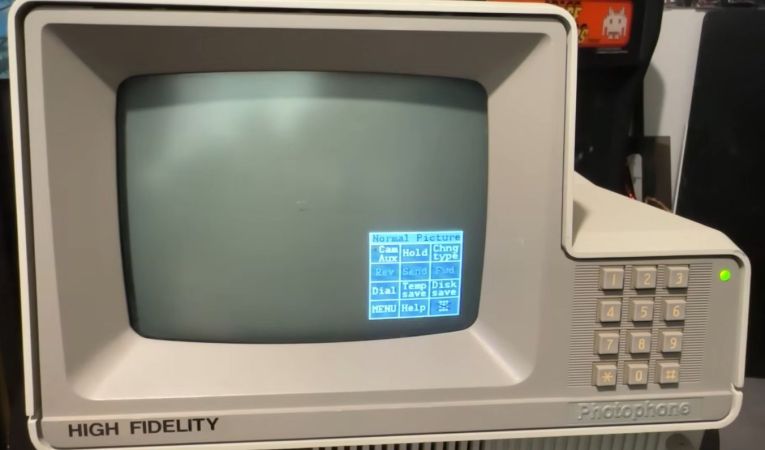
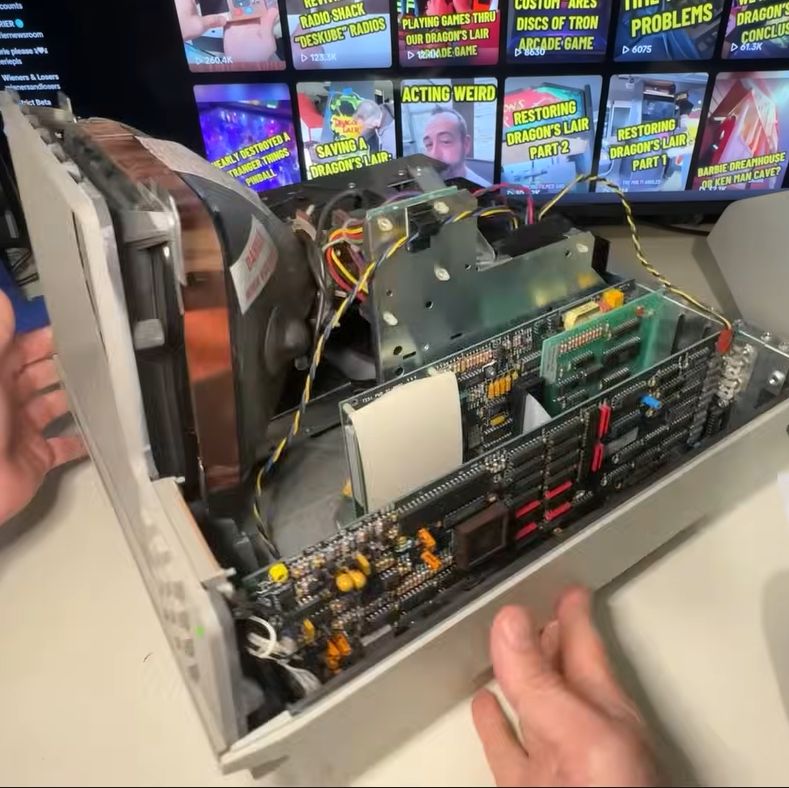
Powering On A 1985 Photophone CP220 Videoconference System

The concept of remote video calls has been worked on since Bell’s phone company began pitching upgrading from telegrams to real-time voice calls. It wasn’t until the era of digital video and real-time video compression that commercial solutions became feasible, with the 1985 Image Data Corporation Photophone CP220 being an early example. The CP220 is also exceedingly rare due to costing around $25,000 USD when adjusted to inflation. This makes the teardown and repair on the [SpaceTime Junction] channel a rather unique experience.

Perhaps the coolest part of the device is that the manual is integrated into the firmware, allowing you to browse through it on the monochrome CRT. Unfortunately after working fine for a while the device released the magic smoke, courtesy of the usual Rifa capacitors doing their thing. This is why a full teardown was necessary, resulting in the PSU being dug out and having said capacitors swapped.

After this deal the device powered on again, happily accepting a video input and saving screenshots to the floppy drive before it was replaced with a FDD emulator running FlashFloppy firmware. Unfortunately no video call was attempted, probably because of the missing camera and having to set up a suitable POTS landline for the built-in modem. Hopefully we’ll see that in an upcoming video to see what we common folk were missing out on back in the day.

Continue reading “Powering On A 1985 Photophone CP220 Videoconference System”