
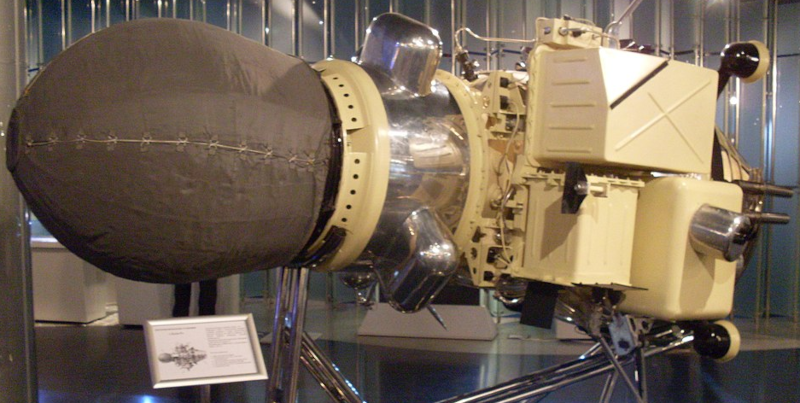
Luna 9 was the first spacecraft to soft-land on the moon. In 1966, the main spacecraft ejected a 99-kg lander module that used a landing bag to survive impact. The problem is, given the technology limitations of 1966, no one is exactly sure where it is now. But it looks like that’s about to change.
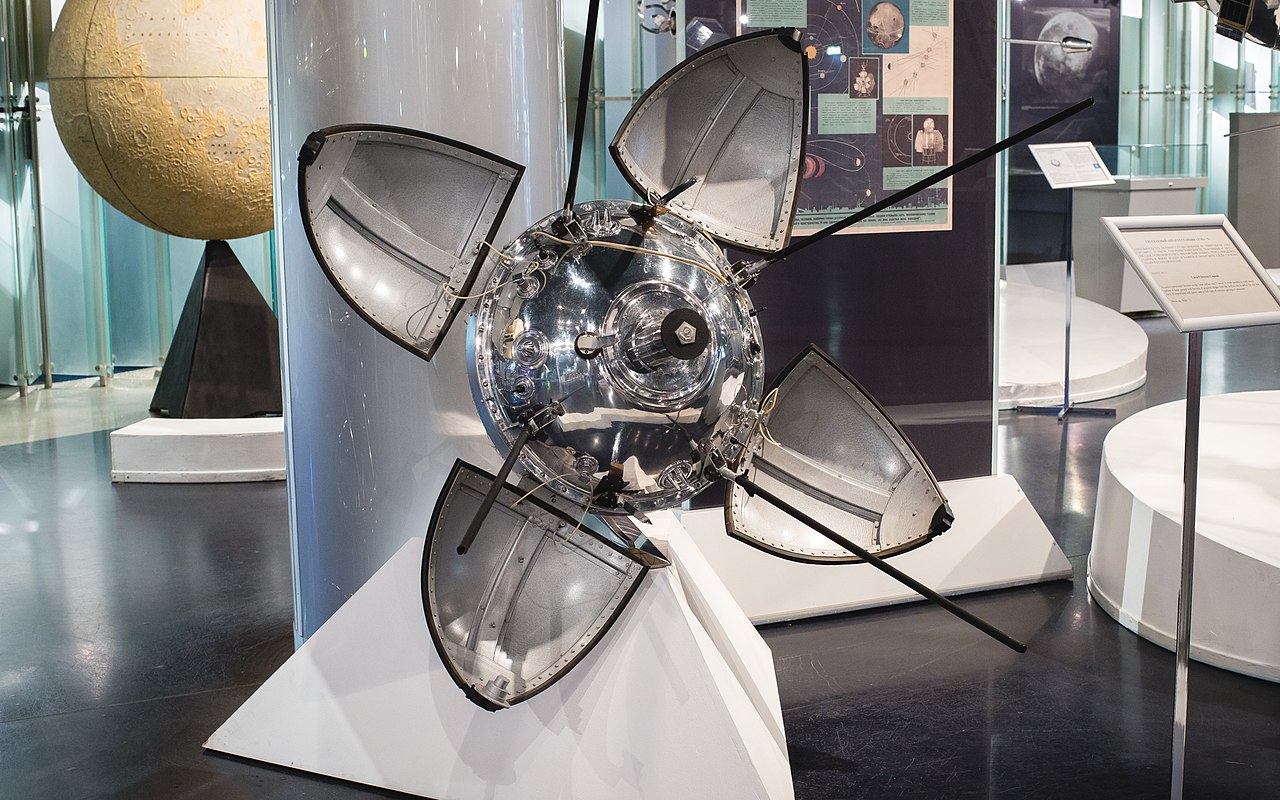
We know that the lander bounced a few times and came to rest somewhere in Oceanus Procellarum, in the area of the Reiner and Marius craters. The craft deployed four stabilizing petals and sent back dramatic panoramas of the lunar surface. The Soviets were not keen to share, but Western radio astronomers noticed the pictures were in the standard Radiofax format, so the world got a glimpse of the moon, and journalists speculated that the use of a standard might have been a deliberate choice of the designers to end run against the government’s unwillingness to share data.
Several scientists have been looking for the remains of the historic mission, but with limited success. But there are a few promising theories, and the Indian Chandrayaan-2 orbiter may soon confirm which theory is correct. Interestingly, Pravda published exact landing coordinates, but given the state of the art in 1966, those coordinates are unlikely to be completely correct. The Lunar Reconnaissance Orbiter couldn’t find it at that location. The leading candidates are within 5 to 25 km of the presumed site.
The Luna series had a number of firsts, including — probably — the distinction of being the first spacecraft stolen by a foreign government. Don’t worry, though. They returned it. Since the Russians didn’t talk much about plans or failures, you can wonder what they wanted to build but didn’t. There were plenty of unbuilt dreams on the American side.
Featured Art – 1:1 model of the Luna 9, Public Domain.












Who cares about unbuilt dreams in space…
I’m still waiting for my hoverboard down here on earth!!! Around 40 years and counting…
Well, we’ve got our flying cars now, and they took a hundred years to get here.
So maybe wait another 60 or so for your hoverboard.
Flying cars with silly propellers, not at all like it was imagined in “The Jetsons” (1960s cartoon).
Disneyland Flying Saucers (1961).
https://i.pinimg.com/originals/76/de/1f/76de1f128d3423cbdafecce2f2af8c35.jpg
Other amusement parks have had self-propelled air cushion vehicles.
Surely we’ve learned enough from hovercraft that giving everyone hoverboards would be a recipe for disaster?
They wouldn’t even invent the skateboard today, so many cool things have basically gone unknown and uninvented with our safety culture
We need one such lander to land in the offices of the High Banksters to see what it is that they are doing that causes average Sam’s goods to go up in price no matter what.
The newspaper name “pravda” (stands for “truth”) is quite a pun on the nature of things it was spewing forth during USSR, so those could be deliberately off to make it look like “it is not us, but YOU who cannot find it.”
I am pretty sure armchair explorers of the NASA’s map of the moon found these and others already by now, just they don’t bother with things that are too obvious to them.
As a side note, Flat-earthers should obtain good Dobson and find all kinds of goodies on the moon – Apollo landing modules’ exhaust patterns imprinted in the moon dust, Moon Buggies’ tracks, etc. Unlikely they’ll spot shining things like the open hatch of the USSR moonrover, those are still too small (though, armed with good math and calculations one may find a perfect angle where it would reflect some of the sun light towards their designated patch of flat-earth, but chances are rather too slim for that to happen, clouds, etc).
To resolve an actual object on the moon with an earth-based telescope, the moon object would have to be at least 200 m in diameter, probably limited by atmospheric dynamic irregularities. Dynamic optical mirror deformation may be able to improve that figure. Computer analysis might improve that figure. Still, the object has to be pretty big.
The Hubble could probably resolve about 100 m, diffraction limited.
Of course, a very bright light on the moon aimed at the earth could light up a single pixel on an earth-bound telescope, but that’s not the same thing.
Apollo’s LEMs created exhaust pattern at about that size (estimate), between 175 and 200 meters in diameter. Good large Dobson may potentially find these, given one knows where to look.
I’ve heard (unproven) claims of spotting these with a large automated Meade, will have to circle back to that. Maybe imagination (not mine, I have plenty of other shiny objects to run after).
So you don’t know. What’s next, Mrs. Landingham?
Still waiting for good/reliable explanation why the flat earth time goes forward/backward when one flies from one continent to another. Haven’t heard any good convincing ideas. Yet.
Present-day theory that ariplanes fly around the edges just to land on the same flat earth plate doesn’t hold very well, if the plate is flat, it should see the same exact day/time all around, AND it is not possible for some parts of Earth to have winter season while the other parts have summer and vice versa.
The rebuttals I’ve heard so far were “the plate is large enough, so the sun’s warms doesn’t spread evenly”, good point, but wouldn’t that limit the warm parts to rather small areas? Since the “warm part”, it, tropics and latitudes near are running along the Equator that tells me that the “warm part” is quite large compared with the “cold part”. Something doesn’t add up very well.
Reminds me of a cold war joke.
https://ifunny.co/picture/a-kgb-spy-and-a-cia-agent-meet-up-in-gd2L1ePQA
USSR had shortage of toiler paper, and you can guess the neverending/inexhaustible source of substitutes.
Propaganda had its unexpected pluses, too : -]
If it sent back pictures then, perhaps we could do terrain matching.
Get Rainbolt on the case.