
Ancient Ice Production

Today, we take ice for granted. But having ice produced in your home is a relatively modern luxury. As early as 1750 BC, ancient people would find ice on mountains or in cold areas and would harvest it. They’d store it, often underground, with as much insulation as they could produce given their level of technology.

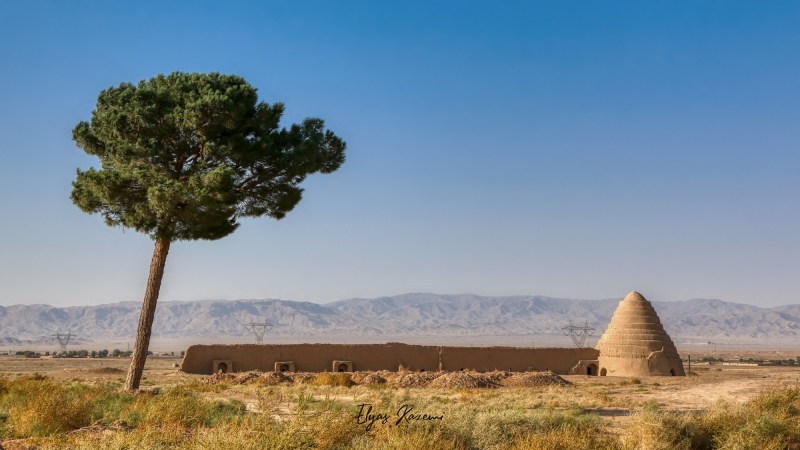
A yakhchāls in Yazd province (by [Pastaitkaen] CC BY-SA 3.0).
By 500 BC, people around Egypt and what is now India would place water in porous clay pots on beds of straw when the night was cold and dry. Even if the temperature didn’t freeze, the combination of evaporation and radiative cooling could produce some ice. However, this was elevated to a high art form around 400 BC by the Persians, who clearly had a better understanding of physics and thermodynamics than you’d think.

The key to Persian icemaking was yakhchāls. Not all of them were the same, but they typically consisted of an underground pit with a conical chimney structure. In addition, they often had shade walls and ice pits as well as access to a water supply.

Solar Chimney

The conical shape optimizes the solar chimney effect, where the sun heats air, which then rises. The top was typically not open, although there is some thought that translucent marble may have plugged the top to admit light while blocking airflow. yakhchālThe solar chimney produces an updraft that tends to cool the interior. The underground portion of the yakhchāl has colder air, as any hot air rises above the surface.
Continue reading “Ancient Ice Production”

An Open Source Client For World Of Warcraft

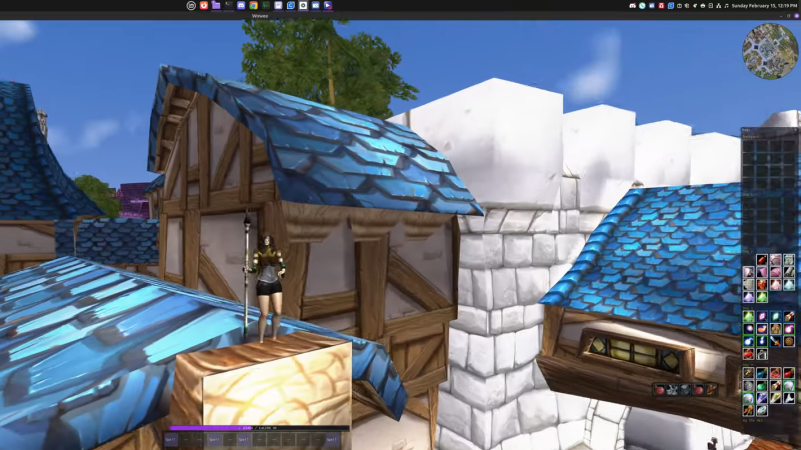
When World of Warcraft was launched in 2004, it became somewhat of a juggernaut in the MMORPG space. Millions of players continue to login every month. [Kelsi Davis] is one such player, but she doesn’t always log in with the regular client anymore. That’s because she put together WoWee—an open-source alternative of her very own.

WoWee is an acronym—World of Warcraft Engine Experiment. Coded in native C++, it’s a homebrewed client that uses a custom OpenGL renderer to display the game world. [Kelsi] notes that it’s strictly an “educational/research” project, built without using any official Blizzard assets, data or code. Instead, it grabs some client data from a legally-obtained install to operate and loads certain assets this way.

It’s currently compatible with the vanilla game as well as The Burning Crusade and Wrath of the Lich King expansions. It should be highlighted how much work this project has already involved—with [Kelsi] needing to recreate various functional minutae in the game, from character creation screens to weather systems and skyboxes. There’s still a lot to do, as well, like adding 3D audio support and making it more interoperable with the quest system.

It’s rare that any MMO gets an open-source client, even less so while the original game is still being actively supported by the developers. Still, we do see some creative hacks in this space.

Continue reading “An Open Source Client For World Of Warcraft

The Raspberry Pi As A Studio Camera

The Raspberry Pi has brought digital camera experimentation within the reach of everybody, with its combination of an accessible computing platform and some almost-decent camera sensors. If there’s a flaw in the Pi as a camera though, it lies in the software, which can be slow and frustrating to use. [Martijn Braam] is here with an interesting project that might yield some useful results in this direction, he’s making a Raspberry Pi studio camera.

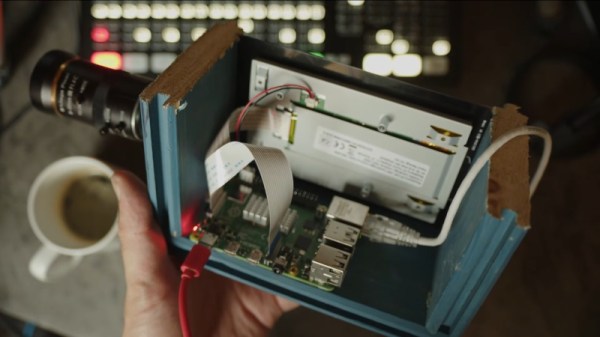
His camera hardware is very straightforward, a Pi 5 and touchscreen with the HD camera module in a rough but serviceable wooden box. The interesting part comes in the software, in which he’s written a low-latency GUI over an HDMI output camera application. It’s designed to plug into video mixing hardware, and one of the HDMI outputs carries the GUI while the other carries the unadulterated video. We can see this used to great effect with for example OBS Studio. It’s for now a work in progress as you can see in the video below the break, but we expect that it can only get better.

The video below exposes the obvious flaw in many Pi camera setups, that the available lenses don’t match the quality of the sensor, in that good glass ain’t cheap. But we think it’s one to watch, and could provide competition for CinePi.

Continue reading “The Raspberry Pi As A Studio Camera”









