Ask Hackaday: How Much Compute Is Enough?

Over the history of this business, a lot of people have foreseen limits that look rather silly in hindsight– in 1943, IBM President Thomas Watson declared that “I think there is a world market for maybe five computers.” That was more than a little wrong. Depending on the definition of computers– particularly if you include microcontrollers, there’s probably trillions of the things.

We might as well include microcontrollers, considering how often we see projects replicating retrocomputers on them. The RP2350 can do a Mac 128k, and the ESP32-P4 gets you into the Quadra era. Which, honestly, covers the majority of daily tasks most people use computers for.

The RP2350 and ESP32-P4 both have more than 640kB of RAM, so that famous Bill Gates quote obviously didn’t age any better than Thomas Watson’s prediction. As Yogi Berra once said: predictions are hard, especially about the future. Continue reading “Ask Hackaday: How Much Compute Is Enough?”

Pixel Camera Puts Lo-Fi Images In The Palm Of Your Hand

Some things have an undeniable appeal, and lo-fi, pixelated Game Boy-camera-like images are one of them. In service of this, [Raul Zanardo] created his handheld pixel camera that goes the extra mile. It implements slick real-time pixel art filters and a number of other useful features.

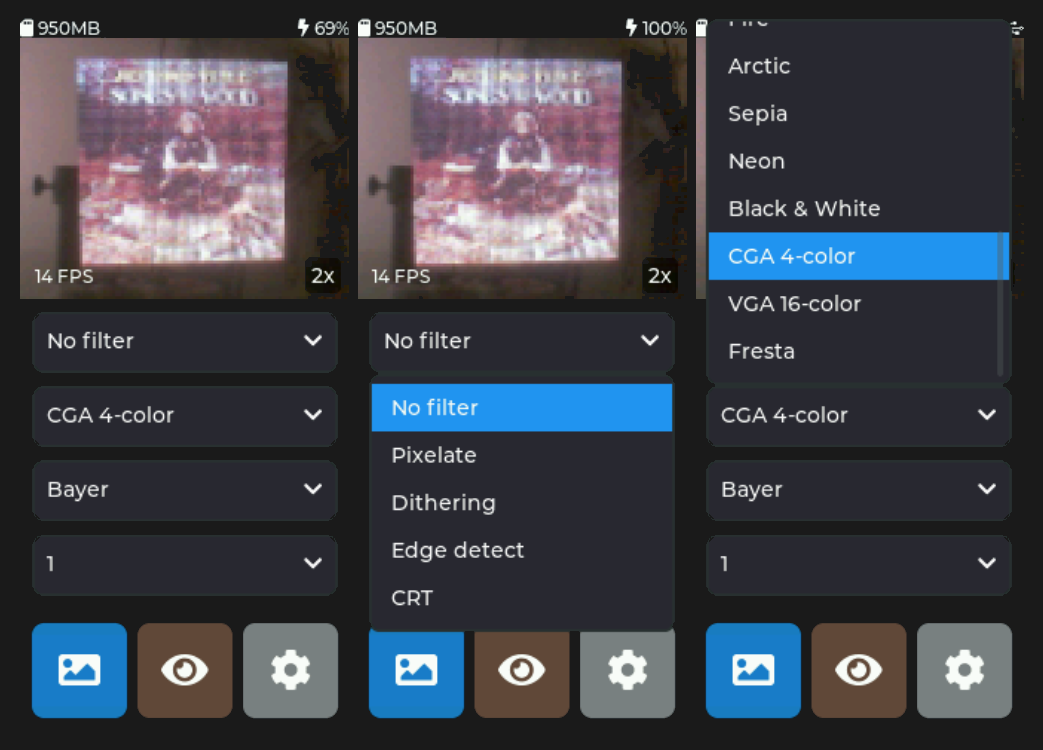
A live preview with real-time filters makes capturing just the right image easy.

For hardware, [Raul] uses a LilyGo T-Display S3 Pro which is an ESP32-based development board, camera, and color touchscreen display in a handheld form factor that vaguely resembles a chunky smartphone. The only change is swapping the stock camera for an OV3660-based camera module. It’s a drop-in replacement, but necessary because some of the features and settings his software uses are not available on the stock camera.

The camera captures 240 x 176 images, but the really neat part is the real-time filter pipeline. There are many configurable choices to play with, including pixelation, dithering, edge detection, CRT scanline effect, and color palette presets. Captures are saved to a local micro SD card and there’s all kinds of handy features like a photo gallery that takes full advantage of the color touchscreen. There’s also USB Mass Storage functionality, so downloading photos is as simple as plugging in a USB cable.

The Game Boy camera’s charming lo-fi imagery has inspired many pixel-camera projects, and this one makes great use of an inexpensive handheld development board and includes truly useful features.

Do you have your own pixel-art inspired camera project? Hit up our tips line and tell us all about it!

Post-Failure Autopsy And Analysis Of An LFP Battery

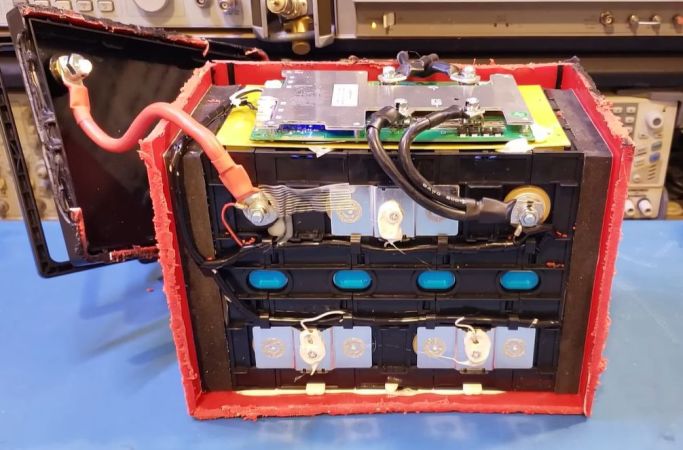
Recently [Kerry Wong] had one of his Cyclenbatt LiFePO4 batteries die after only a few dozen cycles, with a normal voltage still present on the terminals. One of the symptoms was that as soon as you try to charge it, the voltage goes up very rapidly to above 14 V due to what appears to be high internal resistance, and vice versa for discharging. In addition, the Bluetooth feature of the BMS appeared to have died as well, making non-invasive diagnostics somewhat tricky.

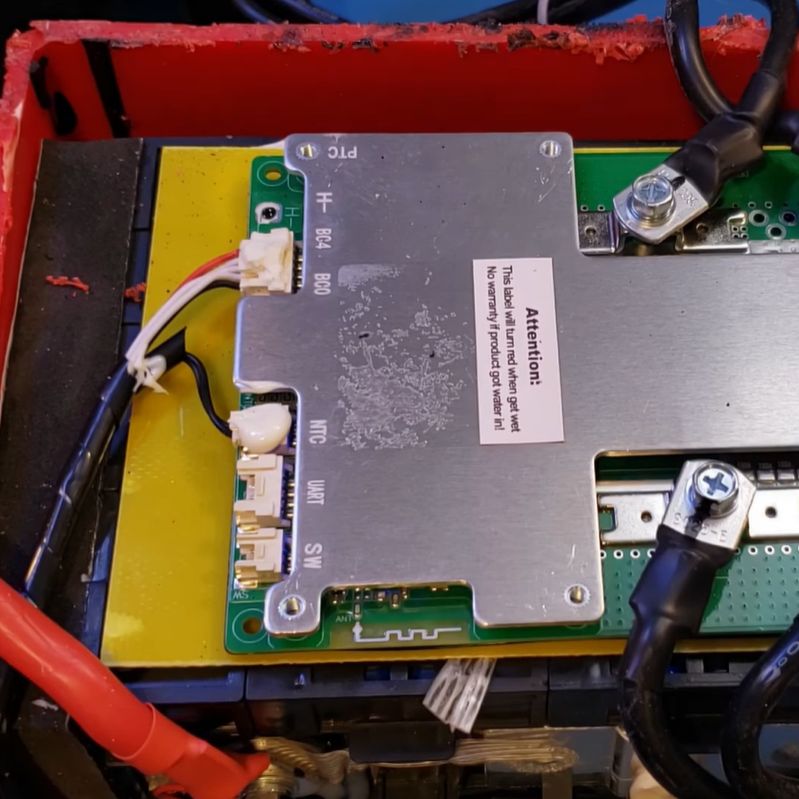
Close-up of the BMS. (Credit: Kerry Wong, YouTube)

After gently cutting open the plastic case, [Kerry] was greeted by the happily blinking blue LED of the Bluetooth module and deepening the mystery. Overall the build quality looks to be pretty good, with no loose cables as seen with certain other LFP batteries.

Cell voltages measured normal, with no significant imbalance. Next was measuring the internal resistance, which showed a clear issue. One of the cells was reading over 3 Ohms, whereas the others were in the milli-Ohm range. This would definitely explain the issues with charging and discharging, with a single bad cell causing most of the issues.

Of course, why the Bluetooth feature failed remains a mystery, and there’s still a lingering question on whether the BMS practiced proper balancing between the cells, as this can also cause issues over time.

Continue reading “Post-Failure Autopsy And Analysis Of An LFP Battery”