
Valve has always designed hacker-friendly hardware, and in that spirit, [NaKyle Wright] released Inkterface, a design for an E-ink faceplate to fit the recently released Steam Machine. As far as projects go, this one is meticulously documented, so give it a peek.
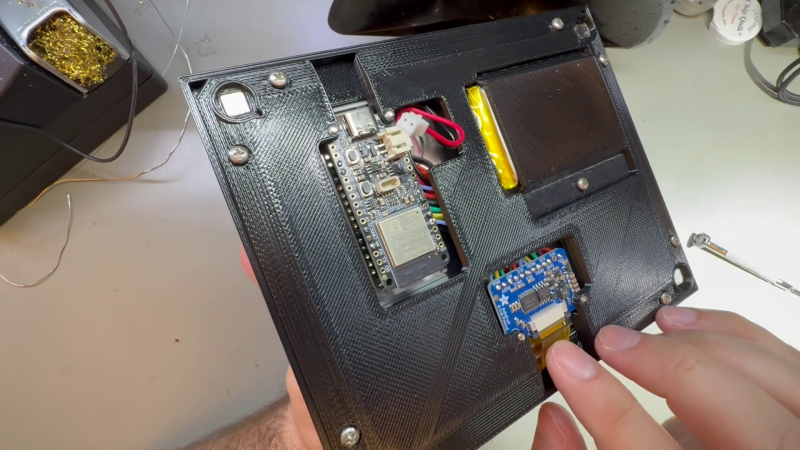
The system uses a selection of components that include a 5.83″ E-ink panel and driver board, a small lithium-polymer battery, and an ESP32-based controller board. A cleverly-designed 3D printed frame and bezel hold everything just so, creating a snug assembly with minimal wiring hassles.
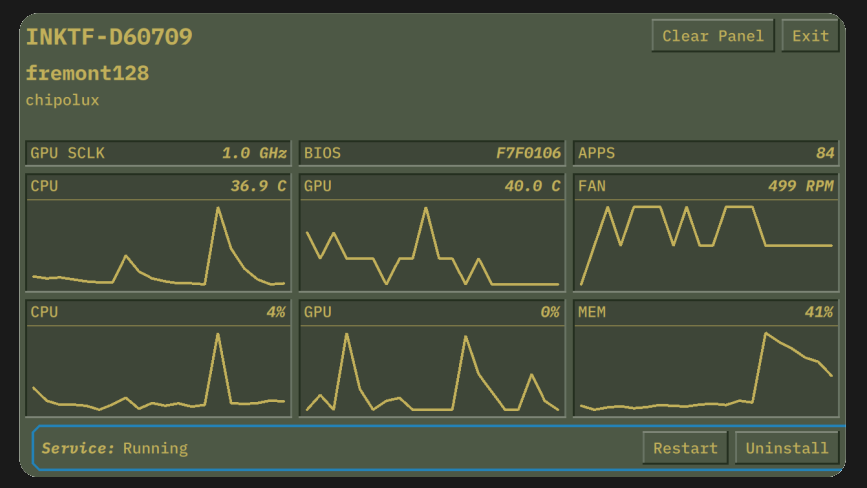
The faceplate is wireless and self-contained, attaching with the help of four magnets. On the software side, the host machine communicates over Bluetooth, and a service takes care of pushing updates. An app for configuring and talking to the display will be available on Steam eventually, but in the meantime one can install that part manually.
[NaKyle]’s bill of materials calls for specific components, but the underlying design is very modular. Should one wish to make hardware or component changes, alterations to the 3D printed parts might be needed as well. Fortunately, [NaKyle] includes the .step files alongside the .stl models. We love to see that, because it makes tweaking or customizing so much more accessible. A homebrewed version of this E-ink panel might be just the thing to complement a homebrewed Steam machine.
Be sure to also check out the repository of Steam hardware, which contains drawings and 3D models of the Steam Deck and Steam Controller, useful for designing holders or custom brackets or whatever else one may need.












How is there not a picture of the thing itself in situ???
Wondering the same myself. Still WIP?
Replaying to myself. I think OP hasn’t yet got his Gabe Cube to actually try it out.
is there a new ban of the word “adafruit” or “feather” it’s odd to leave that out for “an ESP32-based controller board” … why?
Yeah, it doesn’t make sense- like there’s only one kind of esp32 dev board (or entire eco-systems)… It almost has to be deliberate, which is sad. The development you all have done is a huge part of what’s made these little types of boards so ubiquitous.
If the board was made by Seed Studio or WaveShare or Olimex the article would likely still just say “ESP32 dev board”. It’s not that there’s only one, it’s that there are too many doing the same thing. As [Donald] puts it in this article, the “bill of materials calls for specific components, but the underlying design is very modular,” and if that’s the case, why does it matter if the guy bought from Adafruit or Seed or WaveShare or your Uncle Bob making dev boards in his shed? Most of the time, the actual chip is the thing that really matters and who designed the PCB it is sitting on isn’t important info.
If [Donald] is wrong that the design is modular and the project is completely locked into the Adafruit ecosystem, you should call the article out for being wrong about that, but there’s no conspiracy here. As far as I know, though, Adafruit is way too good to create an ecosystem one can get locked into.
Maybe I’m just defensive because I have no idea who made dev board for the last ESP32 project I reported on… because it didn’t seem important enough to mention, or remember.
thank you, appreciate it, (for the other person) it’s not “lock in” to say what/who a board is… it’s how open source works – it’s cool that the board is open source, from adafruit, and feather – with open source good information is the advertising, and that’s why accurate information helps open source makers and users and everyone (kinda why i made hackaday a million years ago).
Hi Phil, everyone.
There is absolutely no ban, but the writer didn’t think that the brand name on the ESP-32 dev board was worth mentioning, or he didn’t recognize it. Aside from pinouts, it doesn’t really matter, right? Frankly, I could see it go either way, but the writer went his way.
A weekend editor chose to insert “Feather” and “Adafruit” into the writeup, on your request. This was a mistake. We absolutely cannot change our article’s contents to insert brand names as a response to corporate requests.
We love you guys, but our editorial independence, and moral compass, means that we had to roll that change back. Hope you understand.
Hackaday does not ever do product placement, or respond to requests to alter our content to fit anyone’s needs other than our readers’.
hmm, i just asked why, i did not ask for it to be changed. and my other comment was removed? any way, i do understand that policy, that’s a good one to say now, but that is not how it’s been on hackaday in the past – and there was no “corporate request” from me (or adafruit). any way, i don’t need a “love you guys” either, i’m sure we can work anything out if there is something, it’s all good, and i do like to see stuff on hackaday now that has something to do with what i do now, it’s pretty cool – and that’s really the story.
I didn’t see the other comment. Feel free to re-post?
It might have been in reply to a comment that got removed, in which case, it gets orphaned and the WP system doesn’t know how to display it.
haha there’s so much i don’t understand about this project. like, you’re putting a battery on a front panel for a pc?? i’m vaguely reminded of when i ran ‘portato’ to use the pc parallel port to control 8-segment LED on the front panel, indicating things like network access and swapping (my PC did a lot of swapping back then). The fact that the PC already came with both the display (its intended function was MHz) and the driver and the power source was a major motivator. Now wireless networking is to the point where someone would consider using a battery powered device as a display for their wall-powered AC? My vision has gone bad, you’re all blurry at this distance.
but i found the answer to the one question that really tickled me — you can buy these eink panels up to about 7.5″, for prices ranging from $20 to $70 depending on reputability of vendor. and this class of ‘small/medium’ panels all seem to use a standardized connector which you can access easily with ‘adafruit eink friend’. now that’s news i can dream about using!